Politics & Government
Bob Gordon Answers the League of Women Voters' 10 Big Questions
Cast your vote on Nov. 8.


Each year, the League of Women Voters of New Jersey asks State Senate and Assembly candidates 10 questions on hot button state topics and then publishes their responses.
Beginning Thursday, Patch will be running this year's candidate responses, one-by-one.
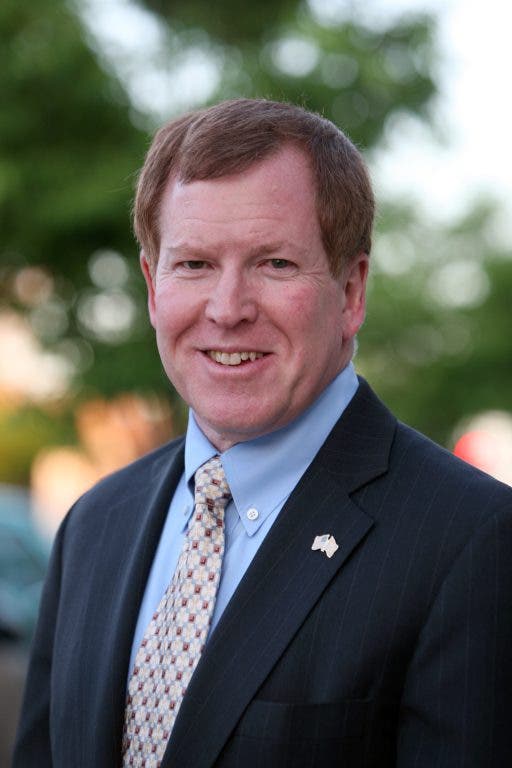
First up is Fair Lawn resident, Bob Gordon.
Find out what's happening in Fair Lawn-Saddle Brookfor free with the latest updates from Patch.
--
Full Name: Robert M. Gordon
Find out what's happening in Fair Lawn-Saddle Brookfor free with the latest updates from Patch.
Age: 61
Party: Democratic
Website:www.njsendems.com/senator.asp?s...
Phone: 201-703-9779
Email :sengordon@njleg.org
1. Property taxes concern many New Jersey residents. Do you think current programs, such as a cap on property tax hikes and rebates, are effective ways of dealing with them? What, if anything, do you think should be done about property taxes?
Robert M. Gordon: I believe the 2% cap will help curb property tax increases. Since the 4% caps were implemented, yearly tax increases moderated from an average of 7% to 3.7%. The lower cap should have a greater impact. I’ve consistently supported relief programs like the Homestead Rebate and Senior Freeze. I opposed cuts to the Senior Freeze and was relieved additional funds were reinstated in the final budget. I believe we should increase funding for the Homestead Rebate program, specifically for low and middle-income households. However, I think other measures must be taken to reduce property taxes. I am a leading advocate of shared services and consolidation. I have sponsored several bills that would help facilitate shared services and make it easier for towns to consolidate.
2. In July, the federal Bureau of Labor Statistics released preliminary unemployment figures that showed New Jersey with a 9.5% seasonally adjusted unemployment rate. While this is comparable to the national average of 9.2%, it is higher than our neighboring states. What is your plan to lower New Jersey’s unemployment rate?
Robert M. Gordon: States like Pennsylvania and New York are more agricultural than NJ and, historically, have reported lower rates of unemployment. To create jobs, we need two parallel approaches. For small companies that have difficulty obtaining financing, we need to enact the Democratic jobs package that provides financial incentives for hiring and capital investment. For larger companies that are now flush with cash, but reluctant to invest in jobs because of uncertain demand, we need to promote consumer spending. I would increase disposable income and consumption by investing in construction projects that would enhance or repair our physical infrastructure.
3. Currently, N.J legislators are working on the “Opportunity Scholarship Act” a pilot program providing tax credits to entities contributing to scholarships for low-income children. Do you support this pilot program and/or expansion of this program?
Robert M. Gordon: I do not support this legislation. Over the past two years, public school funding has been drastically cut. Therefore, I would find it very problematic to divert scarce public funds to private schools. I am also troubled by the fact that the public sector would be subsidizing religious schools.
4. As a result of the current economic crisis and associated budget cuts, municipalities are receiving less state aid. What, if anything, do you propose on the issue of state aid to municipalities?
Robert M. Gordon: The reduction in state aid has lead to increased property taxes and severe cuts in services. For the short term, restoring this aid should be a priority. The economic downturn contributed to decreases in state revenue and subsequent reductions in State aid. Therefore, we must examine ways to raise revenue without hurting middle class families and small businesses. I supported the millionaire’s tax which would have generated roughly $600 million for the State and helped offset cuts in school and municipal aid. Longer-term, we need to achieve significant economies in local government. With 566 municipalities, 616 school districts, and hundreds of utility authorities, we have tremendous redundancy in government, particularly at the administrative level. Again, the answer, I believe, is promoting consolidation and shared services.
5. Do you think the state should fund family planning services? Why or why not?
Robert M. Gordon: I am a strong supporter of protecting family women’s health services. Thousands of low-income New Jersey residents rely on family planning agencies for vital health care services. Providing these centers with funding saves the state money in the long-run. For every $1 spent on family planning services, $4 in Medicaid dollars are saved. Therefore, I support continued funding for family planning clinics.
6. New Jersey’s energy needs are expanding. What is your plan to meet the increasing energy requirements in our state?
Robert M. Gordon: Our economy cannot be sustained if the growth in demand for energy continues to outpace the growth of generating capacity. We need to reduce our energy needs by implementing aggressive conservation measures and by promoting demand management initiatives. On the supply side, we should maintain strong incentives for newer technologies such as solar and wind power, geothermal, combined heat-power, and waste-to-energy. We need to recognize, however, that renewables are not likely to become a major source of energy in the short term, and that we will need to rely on other technologies to fill the supply-demand gap. My preference is to expand our reliance on cleaner burning natural gas facilities and reduce our reliance on nuclear.
7. Charter schools were originally written into legislation to innovate and share those innovations with school districts. Is that the mission you see for charter schools still or do you believe their main purpose should be to provide parental choice?
Robert M. Gordon: Charter schools can offer a valuable option for children who live in low performing districts, and I do believe they can be laboratories for educational innovation. However, I have major concerns that charter schools siphon money away from successful public school districts. At a time when school districts re losing large amounts of state aid and dismantling programs in established public schools, I do not believe it is wise to redirect scare resources to charters.
8. In a 2010 budget report, the United State House of Representatives identified the need for a focused study of hydraulic fracturing. The Environmental Protection Agency is expected to complete the study by late 2014 with initial study results available by late 2012. As a New Jersey legislator, how would you approach the issue of hydraulic fracturing?
Robert M. Gordon: Restricting hydraulic fracturing (“fracking”) in NJ has been one of my legislative priorities. I believe fracking represent the greatest risk to the drinking water of New Jersey. While shale deposits in our state are not currently being exploited, large parts of our state could be at risk if deep drilling techniques become more sophisticated— as expected. Therefore, I am the prime sponsor of S-2576 which bans hydraulic fracturing in NJ. Promoting domestic sources of energy is important, and natural gas is preferable to coal, but we need to improve our ability to protect groundwater before we expand fracking.
9. The NJ Transportation Trust Fund, which funds construction and repairs of New Jersey's bridges, highways, and mass transit system, has been under-funded and in danger of going bankrupt. There has been much debate over how to fund needed infrastructure development and repairs. How would you suggest funding New Jersey’s transportation infrastructure needs?
Robert M. Gordon: We need a stable, sustainable, long-term funding source that can generate the hundreds of millions in revenue needed to finance a capital program that now exceeds $1 billion annually. Given the current economy, I would not support an increase in the gasoline tax at this time. My preference is to rely on a mix of funding sources so that no particular group of taxpayers bears a disproportionate burden. The mix could include additional borrowing and the sale or lease of certain state assets, such as the State Lottery. The final decision will depend on several factors, including general economic conditions, the availability of federal funding and the level of gasoline prices.
10. The legislature has not enacted reforms to the state’s Local Redevelopment and Housing Law, despite recent Supreme Court (Gallenthin v. Paulsboro) and Appellate Court (Harrison Redevelopment Agency v. De Rose) decisions which call the existing statutes into question. If elected, how would you propose to update the state’s land use laws to conform to the above cited court decisions?
Robert M. Gordon: Reforming the Local Redevelopment and Housing Law is long overdue. In 2006, I was a prime sponsor of legislation (A3257) that made a number of improvements in the LRHL. That bill passed in the Assembly, but failed in the Senate. That bill would open the eminent domain process to public scrutiny, greatly increase the specificity of redevelopment criteria, allow the property owner to share the financial benefits of redevelopment, guarantee enhanced consideration of historic and environmental resources, and most importantly, shift the burden of proof regarding the need to declare an area “in need of redevelopment” to the municipality. This bill could be amended to comply with the notice requirements required by the recent Supreme Court rulings.
Get more local news delivered straight to your inbox. Sign up for free Patch newsletters and alerts.