On
August 28 the nation will celebrate the 50th anniversary of the
March on Washington for Jobs and Freedom, one of the largest political rallies in U.S. history.
Crowd estimates vary from 200,000-300,000 attendees. Most people remember
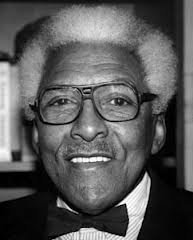
Martin Luther King Jr.’s “I have a dream” speech. Less known is the March’s chief organizer,
Bayard Rustin, who will receive (posthumously) the Presidential Medal of
Freedom in 2013.
Why
do I like this man? He is a model of
integrity, perseverance, and compassion, virtues that grew and developed over
more than fifty years. His commitment to
non-violence, to civil and economic rights for all people, to democratic principles
and processes, and to core Christian values have been a model for me even as I
have never braved the wrath of political and economic systems as he did in his
quest for justice and peace. His essays
on the connections between structures that maintain injustice and techniques
for dismantling them are insightful and practical when so much social change
literature was hopelessly theoretical. Not only that, he is an amazing tenor,
who made three CD’s and sang with Paul Robeson on Broadway in his “spare time.” A number of biographies flesh out the details
of his rich life—here’s a summary (I used many sources, but an accurate two
page bio is found in the annals of the New York Yearly Meeting of the Society
of Friends: http://www.nyym.org/sites/default/files/BRustinBio.pdf).
High
school valedictorian, but arrested for sitting in the “whites only” section of
the local theater. A life-long Quaker with a commitment to non violence serious
enough to lead him to the only existing group opposing the escalation of the
conflict in Europe, the Young Communist League. Three years later at City College, after
having organized a campaign with YCL to end segregation, he broke with them
over their prioritization of party goals and acceptance of Russian
totalitarianism. He worked with A.J.
Muste (founder of the Fellowship of Reconciliation, a religiously based social
justice organization), Norman Thomas (leader in the U.S. democratic socialist
movement, and A Philip Randolph (President of the Brotherhood of Sleeping Car
Porters) to found the Congress of Racial Equality. His lifelong Quaker credentials would have
kept him out of jail as a Conscientious Objector, but he objected to the fact
that people who weren’t members of the traditional “peace churches” couldn’t
apply for CO status, so he went off to jail again for two years.
Find out what's happening in Fort Leefor free with the latest updates from Patch.
Rustin
spent the next forty years organizing anti-segregation protests in Kentucky and
North Carolina, securing (with A Philip Randolph’s Committee against Jim Crow
in Military Service) President Truman’s order to eliminate segregation in the
armed forces, supporting India’s non-violent protests against colonial British
rule, and helping establish democratic processes in independence movements (and
early governments) in Ghana and Nigeria.
His ability to mobilize grassroots participants in non-violent actions
to rectify specific injustices, one by one, was admired by everyone who worked
to improve conditions for people of color and poor people in the U.S. In 1963, in only four months, he organized
(as Deputy Director) the March on Washington for Jobs and Freedom and arranged
for Martin Luther King, Jr. to address the crowd.
He
was often in the background of public protests however because he was openly
gay long before many people were comfortable with that (homosexuality was still
a crime), and because of his early affiliation with the Communist Party—no
matter how he refuted the accusation (three years as a youth and 50 years
denouncing totalitarianism), he could never shake the damaging label. After the March on Washington he spent the
next 25 years organizing people of color, workers, international non-violent
independence movements, and in the last decade of his life speaking out on gay
issues and advocating for a gay rights bill in NYC. He died in 1987.