Arts & Entertainment
Preserving the Past and Present for the Future
If you live in the Historic District, here's a primer on some of the things you can do to your home, and some of the things you can't. Proceed with care.


What’s the biggest misconception about the Historic Preservation Commission (HPC) and homes in the Historic District?
“That we can tell you the color to paint your house,” said Lee Albright, a member of the HPC.
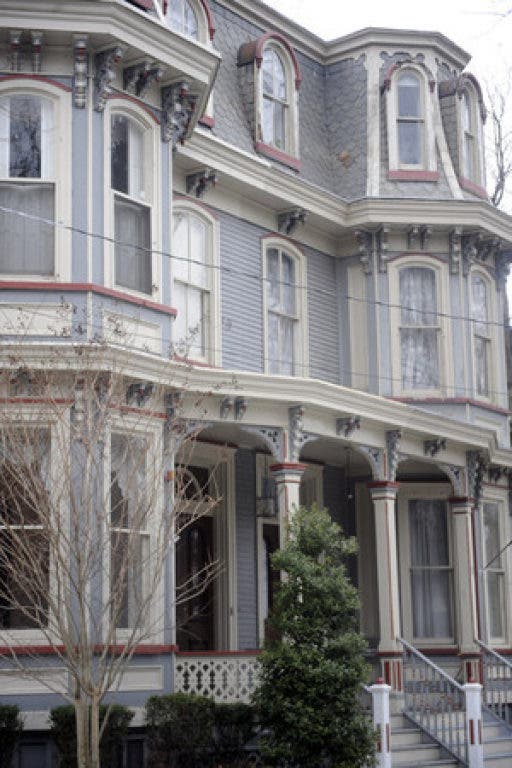
Borough officials may not be thrilled if you coat your Italianate Victorian in shades of magenta, and they may point you to old sketches showing how your home originally looked, but the paint color is ultimately up to you.
Find out what's happening in Haddonfield-Haddon Townshipfor free with the latest updates from Patch.
So, too, are all the furnishings, woodwork and design embellishments in the inside of your house. That means you can chuck your Shaker-style chairs for a modern sectional, if you wish.
“We don’t have any interior restrictive ordinances, only the exterior envelope,” said Dave Gottardi, HPC chairman.
Find out what's happening in Haddonfield-Haddon Townshipfor free with the latest updates from Patch.
So what are the obvious no-nos if you live in the historic district?
“Tear-downs,” said Gottardi.
“Vinyl windows,” said Albright.
“Vinyl siding,” added Gottardi.
And what’s wrong with vinyl siding?
“We don’t want you covering a unique historic fabric, which is wood siding,” said Gottardi, a local Realtor who has worked on many renovation projects.
He noted that it was the tearing down of historic properties that prompted the creation of the district decades ago, a movement lead by the late Joan Aiken.
Gottardi lives in the home once owned by Aiken. It’s an 1859 Victorian, one of the oldest homes on Warwick Road.
That the borough looks the way it does is not by accident, say the preservationists.
The Historic District is listed on both the state and national registers of historic places. It encompasses buildings in the town’s center and nearby streets.
So concerned is Gottardi with preserving the borough’s historic homes that he would like to see the district expanded, to parts of Washington Avenue and the west side of Haddonfield.
For now, there are 488 buildings and sites in the district. The district offers what Gottardi calls protection, a guarantee of sorts, that if you buy a 19th-century home in the district, the 150-year-old building next door to you won’t be leveled and replaced with a Spanish-style McMansion–a change that could destroy the beauty and integrity of the streetscape. Town officials call it a streetscape with “architectural harmony.”
Residents seeking to make most exterior changes, except for minor ones, most go first to the HPC and then the borough’s planning board, which makes the ultimate decision. The HPC serves an advisory function to the planning board.
Gottardi and Albright stressed that the HPC wants to work with the homeowner. The commission can direct residents to pertinent research at the local and historical society libraries. Albright is president of the Historical Society of Haddonfield. Her Linden Avenue home is not in the historic district, but it is an 1868 Victorian.
Owners are urged to talk to the to the town’s technical consultant, an architect, before beginning plans. Gottardi said the HPC is happy to have informal discussions with homeowners before they get started on the approval process. HPC members may be able to make suggestions that will save time and costly do-overs. The commission’s book, Historic Houses in Haddonfield: A Preservation Guide, offers information on everything from façade materials to roofing and gutters.
The HPC regularly sends letters to those in the historic district, reminding them their homes are part of the district, and “an important element in the story of Haddonfield.”
The letter notes that additions to existing buildings and modifications to roofing, gutters and porches are among the exterior items requiring what the HPC calls a certificate of appropriateness.
Preservation issues continue to crop up in the borough. Gottardi said preservationists were instrumental in putting a brake on proposed developments on the Bancroft and Boxwood Hall sites.
Albright said that while some may view the HPC process as onerous, the rules protect the homeowners’ investment and, of course, the beauty and history of the town–much of which has been lost throughout South Jersey.
“Our town looks the way other towns used to look,” she said.
Information is available at haddonfieldnj.org/borough_boards-historic
Do you know any interesting home renovation, addition or architectural project? Send your name and daytime phone number to winnepatch@gmail.com