Health & Fitness
Rare, Dangerous Tick Species Now Confirmed In 7 NJ Counties
Officials in New Jersey are urging residents to take precautions after confirming the presence of a rare, invasive tick in the state.


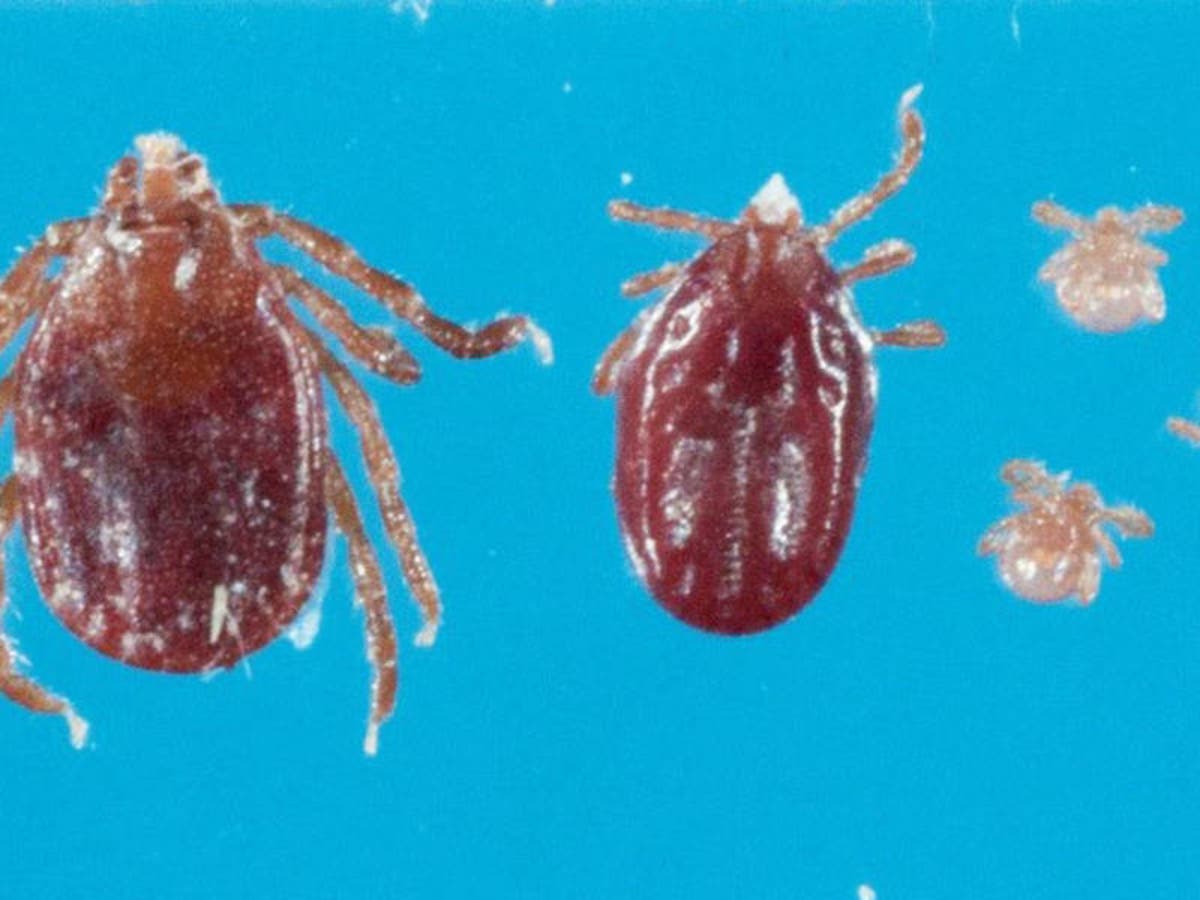
Officials are urging residents to take precautions after the presence of a rare, invasive tick was confirmed in New Jersey's seventh county this week.
The Asian tick, also known as the longhorn tick, was discovered in Somerset County this week, spotted on a dog at a residence. Earlier findings have been confirmed in Bergen, Hunterdon, Union, Middlesex, Mercer and Monmouth counties.
The invasive species congregates in large numbers and can cause anemia in livestock, officials with the state Department of Agriculture said. But cattle, pets, small mammals, birds and humans are all potential hosts.
Find out what's happening in Hillsboroughfor free with the latest updates from Patch.
This type of tick is a "serious" pest to livestock, as well as wildlife, pets and humans, authorities in New Jersey said at the time the tick was first discovered there. This species can carry several bacterial and viral diseases, and has been associated with spotted fever rickettsioses, health officials said. So far, ticks examined in the United States do not carry any infectious pathogens, authorities confirmed.
In July, authorities in New Jersey confirmed one of the ticks had been located on a child; testing revealed no pathogens were in the insect. Read more here: Exotic Longhorned Tick Discovered In Bergen County
Find out what's happening in Hillsboroughfor free with the latest updates from Patch.
The Asian tick infests host animals in dense clusters of numerous ticks. Female Asian ticks reproduce asexually, so a single tick can reproduce and lay 2,000 eggs after feeding on a host, information from the Pennsylvania Department of Agriculture said.
Native to East and Central Asia, the tick was originally identified in the United States in New Jersey, where it was found in large numbers in sheep in Mercer County in 2017. It has also been found in Arkansas, New Jersey, New York, West Virginia and Virginia.
The Asian tick is easily confused with other tick species' its distinctive “horns” may not be visible without a microscope. The tick is dark-brown and grows to the size of a pea when fully engorged, according to the New Jersey Department of Agriculture.
Here is a photo:

Some of these findings have come as a result of residents submitting ticks to the county drop off locations, where they are picked up and sent for testing. A list of county drop off locations can be found at https://www.state.nj.us/agriculture/divisions/ah/pdf/TickCountyDropoffList.pdf
“The public has played an important role in helping us identify areas where this tick may be located,” said Manoel Tamassia, the New Jersey Department of Agriculture State Veterinarian. “The knowledge we have gained from these findings will help us make decisions at local and national levels.”
Public parks where the Asian Longhorned tick has been found in New Jersey include Davidson Mill County Pond Park in Middlesex County, Overpeck County Park in Bergen County, and Watchung Reservation, Houdaille Quarry Park and Briant Park in Union County.
Various local, state, and federal animal health agencies, as well as Rutgers Center for Vector Biology, continue to work together to identify the range of the Asian Longhorned tick in New Jersey. Asian Longhorned ticks that have been collected in New Jersey thus far have tested negative for various human and animal pathogens.
The following tips have been offered from experts:
- Examine animals on a regular basis, and check for ticks after being outside to prevent tick bites and disease transmission.
- Livestock producers and pet owners should consult their veterinarians to develop tick prevention and control appropriate to their specific animals.
- To reduce tick habitat, maintain a nine-foot distance between lawn or pasture and wooded areas, keep grass height low, and remove weeds and brush bordering wooded areas.
With reporting by Kara Seymour
Image NJ Dept of Agriculture
Get more local news delivered straight to your inbox. Sign up for free Patch newsletters and alerts.