Politics & Government
Hoboken Water Main Breaks: Why Do They Happen And What Is The City Doing About It?
Arm yourself with this information for the next time one of Hoboken's century-old pipes break.


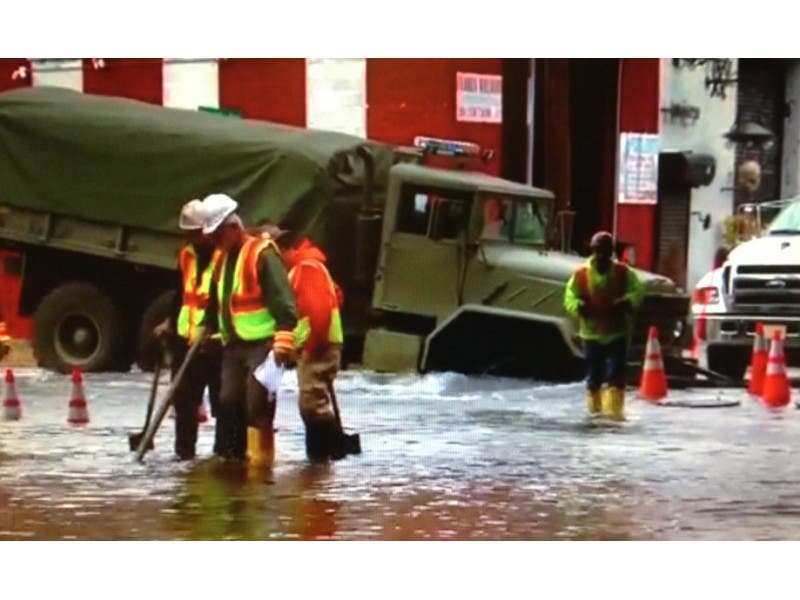
Hoboken, NJ – Why do so many water main breaks seem to happen in Hoboken, and what are city officials doing to address them?
The city has seen its share of water main breaks over the past year, including a large failure that left thousands without water last Thanksgiving and a break that caused a sinkhole that swallowed an unlucky motorist’s car earlier this month.
- See related article: Hoboken Sees Water Main Break, Sinkhole Engulfs Car
- See related article: Hoboken's Water Main Break May Affect Residents Until Thanksgiving
But what are city officials doing to address the issue?
Find out what's happening in Hobokenfor free with the latest updates from Patch.
“As you may be aware, the city and Suez Water have been dealing with more water main breaks,” Hoboken Councilman Ravinder Bhalla wrote in an emailed newsletter on Monday. “I can assure you that the city is working to find a solution to the lack of significant infrastructure improvement to our water system, which is over 100-years-old.”
Bhalla added that the city is also financing upgrades to the system, preparing to re-bid the contract to maintain and operate the water distribution system, and renegotiating the current contract.
Find out what's happening in Hobokenfor free with the latest updates from Patch.
WHY SO MANY BREAKS?
On the municipal website, Hoboken officials write that some parts of the city’s water system are more than 100-years-old.
“As cast iron pipes age, they become brittle and are more prone to break from changes in temperature, pressure fluctuations, or vibrations,” officials state. “There have been no significant investments in Hoboken’s water distribution infrastructure in decades. Through a series of agreements, the city of Hoboken sold the rights to our water system in 1994 until 2024. A 30-year revenue stream of approximately $240 million was sold to United Water (now Suez Water) in exchange for $13.2 million dollars in one-time payments. Rather than invest those funds to improve the water infrastructure, the payments were used between 1994 and 2001 to plug municipal budget deficits.”
In the meanwhile, the city still has several years remaining in a contract that requires Suez Water to make “almost no proactive investment in our water infrastructure,” officials assert.
Sign up for Patch NJ email newsletters here.
Send local news tips, photos and press releases to eric.kiefer@patch.com
File photo: City of Hoboken
Get more local news delivered straight to your inbox. Sign up for free Patch newsletters and alerts.