Politics & Government
Five W's: Hopatcong's Community Resolution Committee
A way to resolve issues without going to court.

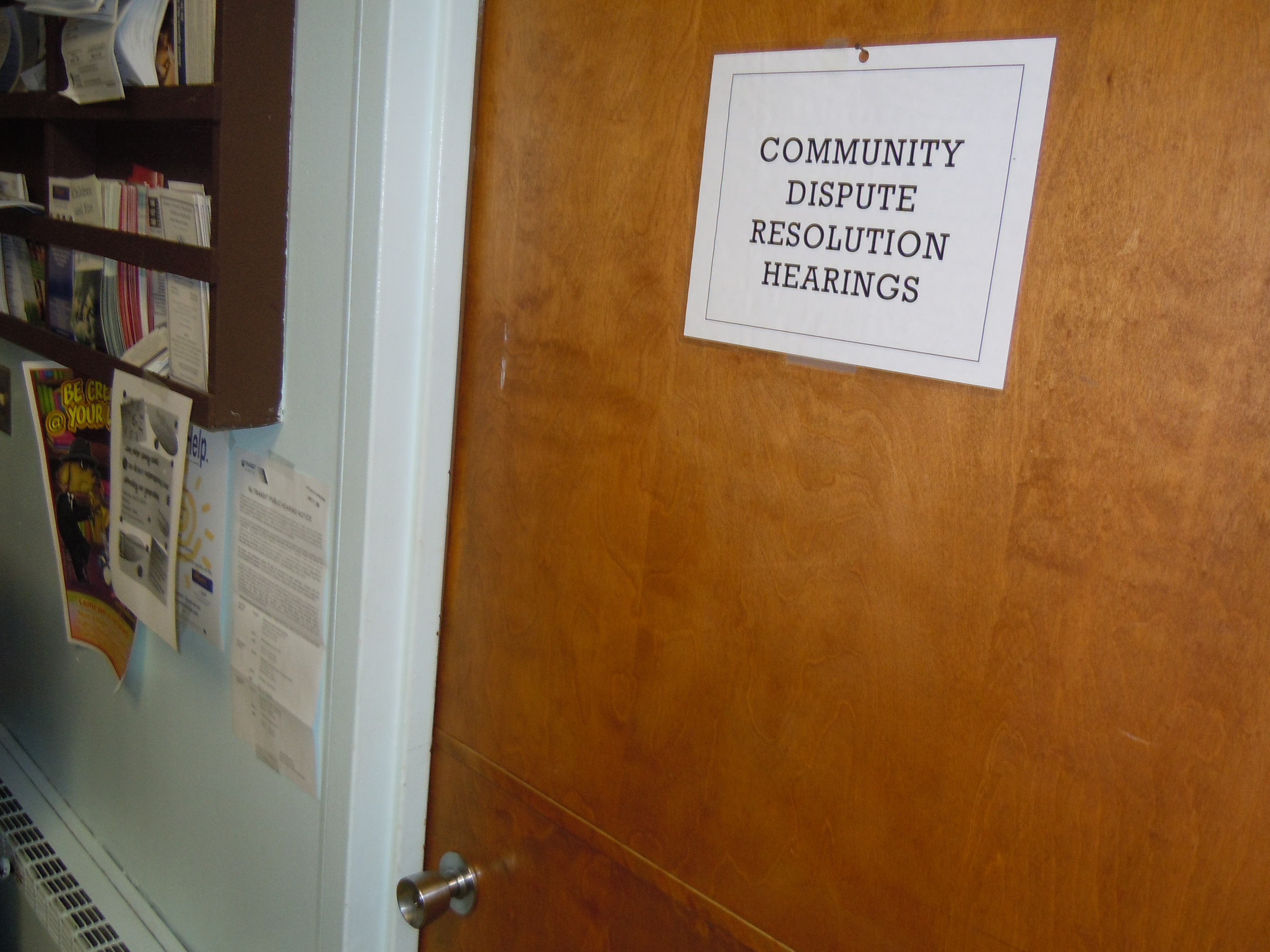
Sometimes, municipal court seems like the only place to resolve an argument with a neighbor.
But not always.
Often, these issues can be smoothed out with help from the community resolution committee.
Find out what's happening in Hopatcong-Spartafor free with the latest updates from Patch.
Not sure what the community resolution committee does?
Here are the five W's:
Find out what's happening in Hopatcong-Spartafor free with the latest updates from Patch.
Who: Hopatcong residents Elide Young, Joan Reilly and Sally Scarola.
What: The community resolution committee is comprised of three trained volunteer mediators who aid residents in disputes.
Young, Reilly and Scarola never decide who's right. Instead, they work toward getting both parties to reach a solution without involving the courts.
"It really works," Reilly said. "I would say we solve probably [75 percent] of the cases."
"And this way there is no court record or anything of these things, so nobody has anything on them.
Young added, "More importantly, it saves the court time. You can be here until 1 or 2 in the morning. The judge doesn't want to be here that late, either."
The committee usually hears neighborhood disputes, such as noise and pet complaints, business-consumer arguments, landlord-tenant disagreements and other smaller issues. All meetings are private.
"You're just trying to get folks to talk to each other, help them learn how to settle a dispute without having anything horrendous happen," Young said.
Most times, the municipal judge or court administrator will refer cases to the committee.
Where: Borough hall: 111 River Styx Rd., Hopatcong, N.J., 07843.
When: Each month's first and third Wednesday at 7:30 p.m.
Why: It can be a better all-around option than court.
"It's folks trying to get together to sit down and talk and try to come to an agreement in a discussion without the need to go to court," Young said. "And to come to an agreement they can both live with—fairly and equitably.
"It's their decision. They make their own agreement. We more or less just guide them to it. That's what we need to do as folks, as people. We need to help each other."
Get more local news delivered straight to your inbox. Sign up for free Patch newsletters and alerts.