Health & Fitness
Lacey Man With Alzheimer's Works To End Its Stigma
His initial diagnosis felt like a 'gut punch.' Then he felt inspired to make the world a better place for people with Alzheimer's Disease.


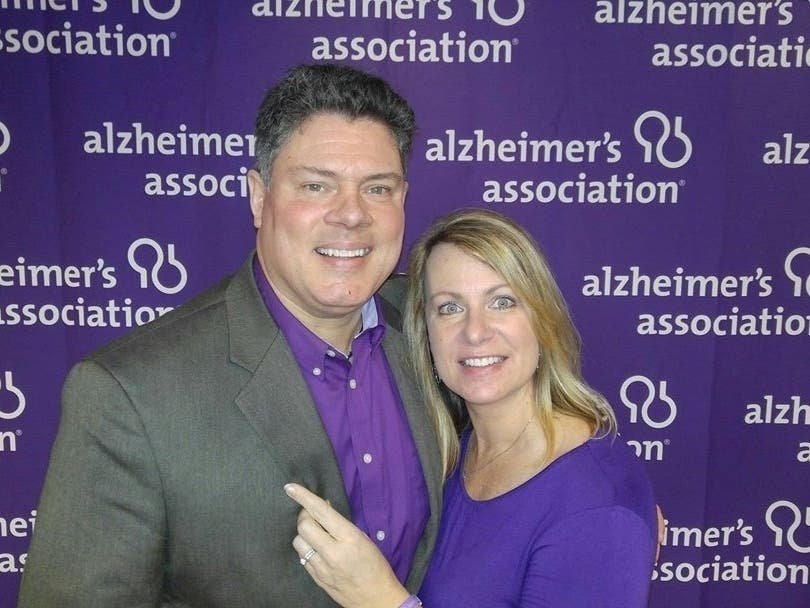
LACEY, NJ — Jeff Borghoff said his initial diagnosis felt like a sharp "gut punch." The Lacey man learned in March 2016 that he has younger-onset Alzheimer's.
Borghoff was 51 — younger than most who learn they have Alzheimer's disease — a type of dementia that causes issues with memory and thinking, which worsens over time.
He worked as a software developer for many large-enterprise projects. He and his wife, Kimberly, got married seven years before that and raised a family.
Find out what's happening in Laceyfor free with the latest updates from Patch.
"Everything you planned for — retirement or your golden years — is just completely squashed," Borghoff said. "Trying to have your young-adult children understand what it’s going to be to them and to the family, it really is a very sad thing."
Borghoff, now 55, felt his life as he knew it just ended. He quickly realized he had new purpose: raising awareness and improving the lives of people with Alzheimer's and similar diseases.
Find out what's happening in Laceyfor free with the latest updates from Patch.
His roles include working with the Alzheimer's Association, serving on the board of directors for its Greater New Jersey Chapter and working on legislative solutions that encourage people to seek early diagnosis. Reaching that point required his own journey with the disease.
'New Normal'
Borghoff made immediate, major changes after diagnosis. He needed to retire, and he chose to give up his driver's license because of how Alzheimer's affected his cognition.
Going from a very social, active life — more or less, I’m kind of homebound now," Borghoff said. "I try to make a lot of opportunities for myself to get outside and do things."
Borghoff's family calls it a "new normal." The father of three explained to his family that their lives would never be the same now that he's battling Alzheimer's.
But the neurologist who diagnosed Borghoff already "planted the seed" that the Lacey man could make an impact.
"I was young. I was in the very early stages," Borghoff said. "I had a lot of life left in me. He said we were very close to a cure and that I should contact the Alzheimer’s Association and also possibly get involved with a clinical trial."
Borghoff began the clinical trial for aducanumab. He found the drug significantly improved his cognition and memory, slowing down the effects of Alzheimer's.
But the promising drug faced issues. Biogen Inc. halted its development last March after preliminary tests indicated it wasn't likely to benefit Alzheimer's patients, compared to a placebo, according to Time.
Further analysis, however, showed the aducanumab reduced clinical decline in patients given higher doses, according to CNN. So Biogen restarted the process in October of trying to get Food and Drug Administration approval.
"Hopefully it’ll get a fancy name soon with a nice commercial jingle from the 70s," Borghoff joked.
Borghoff's "new normal" reinvigorated his life's purpose.
"My wife and I believed that we could still maintain a level of control over (Alzheimer's)," he said. "That’s why she and I decided to become active in advocacy, so that we could create a new purpose for my life."
Building A Community
Borghoff says two things tend to happen to people with Alzheimer's: they lose confidence in doing things they used to do, and they lose friends.
"A lot of times people just don’t know how to communicate to a person with the disease," he said. "Or they may think, ‘I don’t know how to be that person’s friend anymore’ because they have dementia."
That's part of why Borghoff started The Shore Memory Cafe. The program meets from 10:30 a.m. to noon the second Saturday of each month at the Lacey Library. The program will hold a Valentine's Day event this Saturday, featuring crafts.
The Memory Cafe provides people with early-stage memory loss and their care partners the chance to talk to peers in a relaxed environment. It gives people the opportunity to discuss things that might be bothering them, such as trouble sleeping or the lifestyle adjustments that come with earlier sunsets during winter.
Not only do people get to express themselves, but the activities stimulate memory and conversation.
The Alzheimer's Association Greater New Jersey Chapter also holds a monthly educational program at the library, Borghoff says. They discuss topics such as warning signs of Alzheimer's or dementia, caregiver stress and financial planning.
The resources help people figure out certain activities to help their memory, cognition, multitasking abilities and executive functioning. Borghoff even still programs software sometimes, just for kicks.
"It’s actually helped me with staying as mentally acute as I am right now," he said.
Creating A Future
Borghoff felt lucky to get an early diagnosis, but the future offers no certainties.
"I still have a very gratifying life," he said. "I’m able to do things, and I constantly remind myself that, at any point, this disease could take a downward spiral and cause me to be much worse than I am."
It can happen to anyone.
Alzheimer's Disease is the sixth-leading cause of death in the United States, according to the Alzheimer's Association. According to the organization, 5.8 million Americans live with Alzheimer's, and the figure projects to 14 million by 2050.
But many people don't want to admit to themselves that they might have the disease, Borghoff says.
"Because of the stigma and stereotypes," he said, "they’re afraid that they might lose their job or there could be problems in their family, or they might feel like they'll be ostracized."
Borghoff still remembers the gut punch, the diagnosis, the time before he figured out how fulfilling his new life would become. Because for all intents and purposes, Borghoff was diagnosed with a terminal brain disease, he says.
But the earlier it's detected, the better. Borghoff recommends people get a free memory screening at the Advanced Memory Research Institute of New Jersey in Toms River.
He calls it "the best place for that in New Jersey." They'll help you figure out if you might need treatment, or if you just forgot where you placed your keys and there's nothing to worry about, Borghoff says.
"Early detection for your brain is as powerful and important as early detection for your heart or liver," he said. "We’re not yet there with really having people understand the importance of brain health. What I try to do is tell people it’s important to get yourself checked."
He has also worked with state legislators and Congressman Andy Kim. They're working to make it more customary for people to get their memory or cognition checked at around age 50.
Borghoff learned that declining memory and cognition doesn't mean life is over. There's more hope than ever before.
"It really does give me hope that we are close to a way to slow the progression of the disease," Borghoff said. "As the research development continues to evolve in the understanding of why the disease happens, then ultimately we can move forward with a cure."
Visit Borghoff's website to found out more.
Click here to get Patch email notifications on this or other local news articles or get Patch breaking news alerts sent right to your phone with our app. Download here. Follow Lacey Patch on Facebook. Have a news tip? Email josh.bakan@patch.com.
Get more local news delivered straight to your inbox. Sign up for free Patch newsletters and alerts.