Schools
Rider Students Take Part in Barnegat Bay Study
Rider students traveled to Barnegat Bay for one week every month from May through August to capture, tag and release crabs as part of the study.
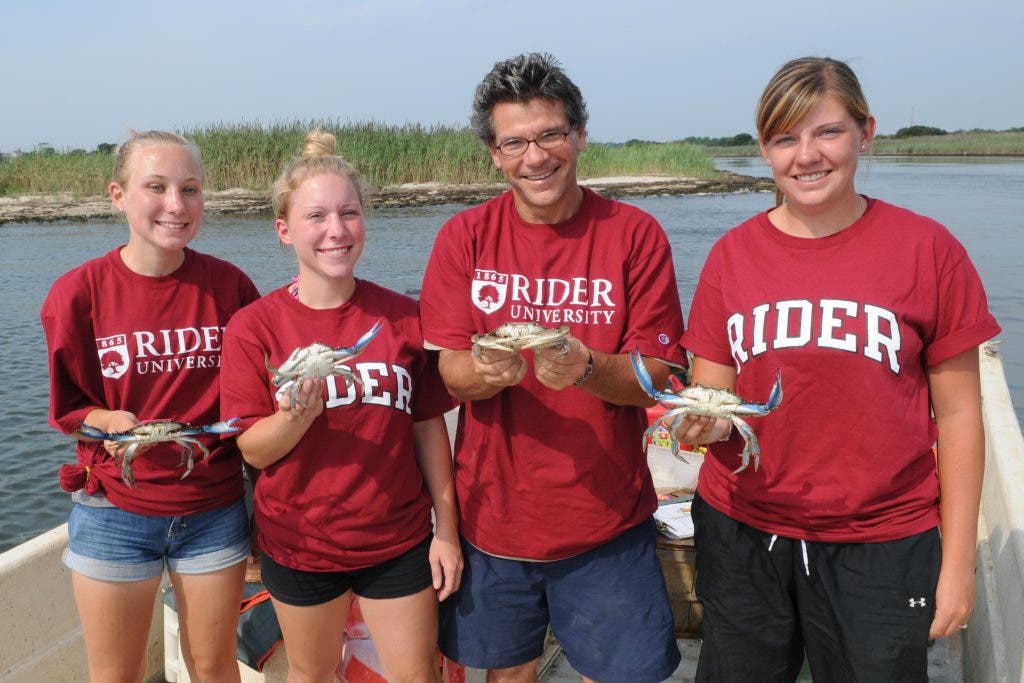

As the mercury levels rose to record-breaking temperatures this summer, Rider University students, accompanied by their biology professor, set out to study crabs living in Barnegat Bay.
The study, funded by the New Jersey Department of Environmental Protection as part of the state’s 10-point Barnegat Bay Restoration Plan, partnered Rider and Rutgers University Field Station to determine the effects of urbanization on fish and crab species in the bay.
"There are a number academic and government scientists working on different projects in the bay to try and understand how the bay works, and how we can make good decisions about managing it in the future," said Dr. Paul Jivoff, associate professor of biology and behavioral neuroscience at Rider.
Find out what's happening in Lawrencevillefor free with the latest updates from Patch.
Jivoff and the Rider students traveled to Barnegat Bay for one week every month from May through August to capture, tag and release crabs in three different areas: high, moderate and low urbanization zones.
The students also examined and documented the captured crabs' width, sex, age, sexual maturity, molt stage, and the loss and regeneration of limbs, according to a Rider news release.
Find out what's happening in Lawrencevillefor free with the latest updates from Patch.
"Each month they did very similar things," said Jivoff. "The challenge is to repeat your activities with the same precision even though you might be uncomfortable, so that you're getting accurate measures across the month."
The project offered the Rider students hands-on experience in scientific research. Aside from handling crabs, identifying fish and driving a boat, the students had to deal with real world scenarios like inclement weather.
"You're out in the field, so even though you might have a field schedule of 'we're going out Monday through Friday,' you have to be cognizant of things like weather," said Jivoff. "You have to be flexible and have alternate plans."
Jivoff also used the government funding aspects of the project to teach the students about accessing money from grant organizations.
The Rider and Rutgers Field Station collaboration received $233,297 in grant support, according to a Rider news release. The project is schedule for three years, according to Jivoff, but he says he's taking it one year at a time.
"We've been approved for a second year of funding, so we are definitely going to do it next year," said Jivoff. "I'm hoping at the end of next summer, we'll find out that it will receive funding for a third year."
The research will continue for students Julie McCarthy, a marine sciences major; Jade Kels, an environmental sciences major; Amanda Young, a marine sciences major; and Laura Moritzen, a marine sciences major. They are working in Jivoff’s lab this fall, dissecting crabs collected from the bay in order to compile more data for the research projects.