Health & Fitness
The Drought is Going to Hit Everyone's Wallet
This year's severe drought across most of the U.S. will affect food prices and the average family's budget for the next 6-12 months
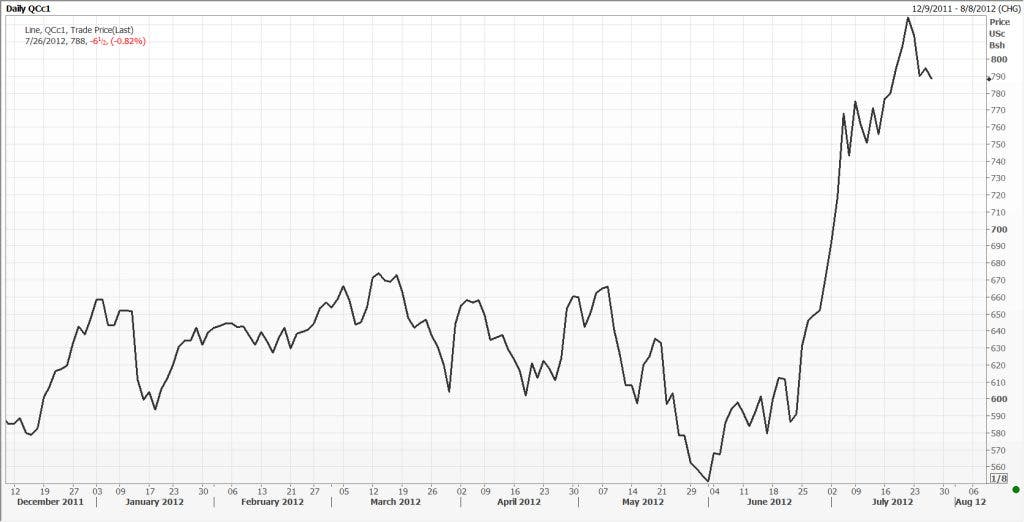


Everyone knows the weather can be very fickle. What I think is less clear is the impact the weather has on the average person’s wallet every day. I operate in the world of commodities and energy and no other segment of the financial world impacts the day-to-day lives of the average consumers like commodities and the weather plays a huge role in the price of commodities. Sure, we all follow what the stock market is doing, but for most Americans, fluctuations in their investment portfolios and retirement accounts don’t affect them today, next month or even next year. Significant changes in the price of commodities, either up or down, affect every American household, whether they realize it or not and changes in the weather are a big factor in how much we pay for the food we eat
This past winter proved to be one of the mildest on record. At first that was good news for U.S. farmers and you and me–they were able to get fields plowed and planted early and all indications were for a big bumper-crop come harvest time. But then the weather took a nasty turn for the worse. Drought conditions have gripped most of the country for the past few months. The forecasts for how much corn, wheat and soybean crops will be harvested have all plummeted resulting in higher prices for each on the futures market. It seems pretty straightforward: fewer crops harvested means that prices for those crops move higher, it’s basic supply and demand. According to some weather forecasters there is no drought relief on the horizon, so not only will prices stay high, there is a good chance for them to move even higher.
So people who eat a lot of corn, wheat and soybeans will suffer as a result? Yes … but not just them, everybody who eats is going to pay more and that means all of us. Corn is fed to cattle in order to fatten them up and make them taste good. Higher corn prices mean higher meat prices, so even hamburger is going to be more expensive in the coming months. And don’t forget about dairy. Milk, cream, butter and cheese also comes from our bovine friends who also exist on a largely corn diet, so they will all be more expensive, as well. Also, don’t forget about ethanol, that darling of the renewable energy crowd; it’s made from corn as well and accounts for an ever-increasing portion of the corn harvest. The continued high demand from ethanol production will help keep corn prices inflated.
Find out what's happening in Long Valleyfor free with the latest updates from Patch.
The price increases won’t be limited to just the grocery store. The effects of the drought will cary all the way through the food chain. Consider that staple of the American diet: Pizza. Pizza dough is made from wheat flour … ka-ching–more expensive. The cheese we already covered … ka-chng–more expensive. The tomato sauce … well tomatoes are also subject to the drought, though to a less degree, so still … ka-ching–to a lesser degree. All this adds up to higher prices for pizza and most other foods.
As if the drought and high grain prices weren’t bad enough, anyone who has filled their tank at the gas station in the past few weeks has seen a sharp reversal in gas prices as well. Just as prices were starting to approach the $3/gallon level, they are now pushing higher. The culprit this time around is the recent heated rhetoric out of Iran. On July 1, the EU sanctions against Iranian oil imports went into effect. While at first there was little impact on the price of oil, recent comments and military activity in Iran have pushed prices higher. Higher oil prices means higher gasoline prices. This is like rubbing salt in a wound. In addition to more cash out of your pocket to fill your tank, higher oil and gas prices are felt at the dinner table as well.
Find out what's happening in Long Valleyfor free with the latest updates from Patch.
My brother in law runs a small family farm in Indiana where he raises chickens, pigs, a few head of cattle and plants corn and hay to feed the animals. Recently we were discussing the drought and it’s impact on his crop yield. He informed me that the price of nitrogen fertilizer (a by-product of oil) has risen dramatically every year for the past several years. So now farmers have to pay more for fertilizer. The fuel to run the tractors and combines is more expensive, the diesel that powers the trucks that transport both the raw and finished foodstuffs to market is also more expensive. All of these increased costs will eventually be passed on to the consumer, taking an even bigger bite out of the family budget.
The bottom line here is that we can expect to see many of the foods we eat every day increase in price over the next six to 12 months. For the average American household that means more of the family budget will go toward food and fuel. In these tough economic times, that will present a real hardship for many people. The weather can be fickle and it can be cruel and this summer it will be reaching into everyone’s pocket.