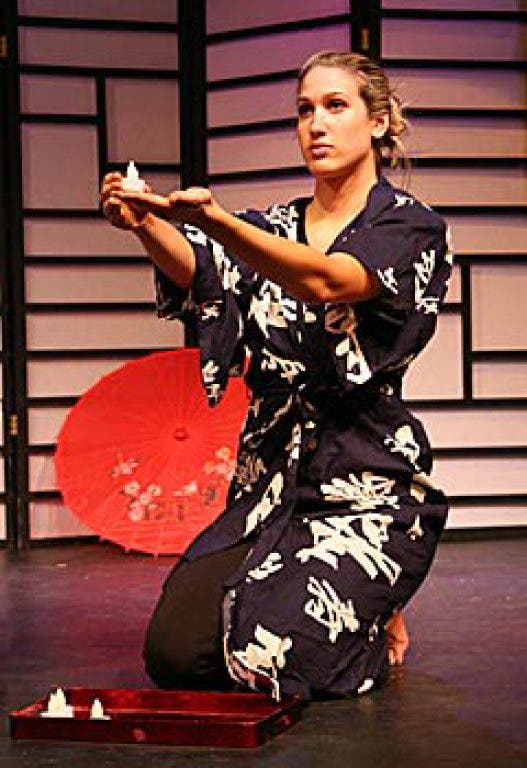
A Thousand Cranes is based on the true story of the young Japanese girl Sadako Sasaki who inspired an international peace movement. A poignant and highly stylized piece, A Thousand Cranes combines Japanese and American language, music and dance, and highlights Japanese society in the after-math of World War II.
The inspiration for a monument in her name both in Hiroshima Peace Park and Seattle’s Peace Park, the story of Sadako Sasaki is said to have inspired peace throughout the world. It was adapted for the stage by Kathryn Schultz Miller from a story about Sadako written by Eleanor Coerr, and the play has won numerous awards.
The heroine of the story is Sadako Sasaki, two years old when the bomb fell on her home of Hiroshima. While she seemed to be unharmed, as she grew older she grew ill from the effects of the bomb. With boundless optimism, she takes an old story to heart: If a sick person folds a thousand paper origami cranes the gods will grant her wish and make her well again. Her wish: "that there would never be another bomb like that again." Today children in Japan and all over the world fold a thousand cranes and lay them at the feet of Sadako's statue in the Hiroshima Peace Park. Their wish is engraved at the bottom of the monument: "This is our cry/ This is our prayer/ Peace in the world."