Community Corner
Opioid Prescription Must Come With Narcan: Attorney General
Attorney General Gurbir Grewal said that move is being made to curb fatal overdoses.


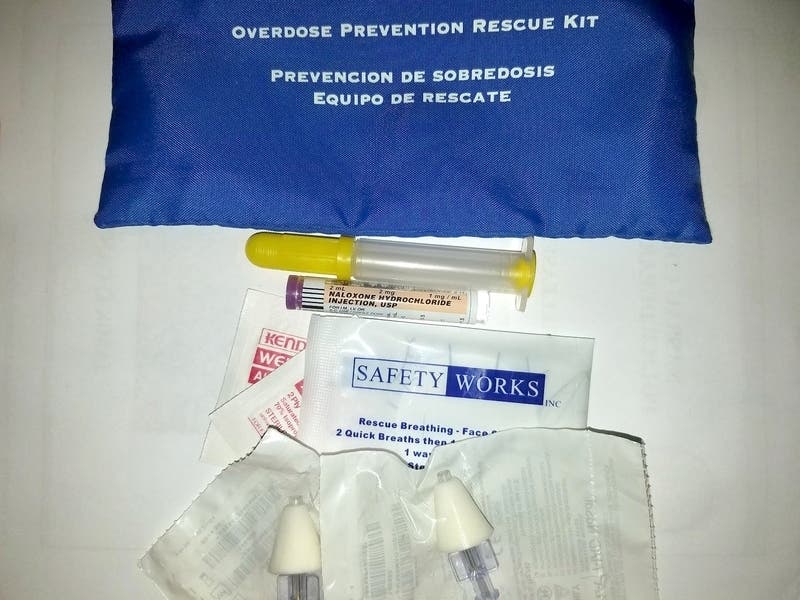
NEW JERSEY – An administrative order has instructed New Jersey physicians, dentists, and other healthcare practitioners who prescribe opioids for the management of chronic pain must also prescribe the opioid antidote naloxone to certain at-risk patients during the COVID-19 crisis.
New Jersey Coronavirus Updates: Don't miss local and statewide announcements about new coronavirus precautions. Sign up for Patch alerts and daily newsletters.
Under the order, prescribers must co-prescribe naloxone to any patient continuously receiving opioids for chronic pain management if the patient has one or more prescriptions totaling 90 morphine milligram equivalents (MME) or more per day, or is concurrently taking an opioid and a benzodiazepine. These patients face heightened risk of a fatal overdose, officials said.
Find out what's happening in Long Valleyfor free with the latest updates from Patch.
“The COVID-19 pandemic presents new challenges for individuals struggling with substance abuse disorder, and we are committed to protecting both them and the first responders who are typically called to treat drug overdoses,” said Attorney General Gurbir Grewal.
The order also applies to prescribers licensed by the State Boards of Dentistry, Nursing and Optometrists and responds to concerns that individuals with respiratory diseases may be more susceptible to opioid overdoses, that increased isolation and anxiety brought on by the COVID-19 crisis may increase rates of drug abuse, and that the pandemic may disrupt addiction treatment and support systems, officials said.
Find out what's happening in Long Valleyfor free with the latest updates from Patch.
“Co-prescribing naloxone gives chronic pain patients and their families ready access to a lifesaving antidote to reverse an opioid overdose,” said Sharon M. Joyce, director of NJ CARES. “This is critically important at a time when the very necessary social distancing and stay-at-home orders are in effect to stop the spread of COVID-19.”
In addition, by promoting the availability of naloxone among the public, the order may reduce how frequently law enforcement and Emergency Medical Services (“EMS”) first responders are called upon to respond to overdoses and use personal protective equipment to do so, authorities said.
“The action we are announcing today will enable us to save more lives, and to do so with fewer deployments of law enforcement and EMS first responders, so that we can preserve personal protective equipment that remains in high demand,” Grewal said.
Statewide, there were 253 suspected drug overdose deaths in March 2020, up from 215 in March 2019, and there were 241 suspected drug overdose deaths in April 2020, compared with 209 in April 2019. Naloxone administrations are also up. In March 2020, there were 1,237 naloxone administrations by law enforcement and EMS statewide, up from 1,139 in 2019. In April 2020, there were 1,197 naloxone administrations, up from 1,054 recorded in April 2019.
“Co-prescribing naloxone to at-risk patients is widely recognized as an effective way to reduce overdose deaths, and New Jersey was already moving in that direction,” said Paul R. Rodríguez, acting director of the Division of Consumer Affairs. “The administrative order announced today allows us to expeditiously expand the availability of this live-saving drug at a time when we need it most. This measure will help reduce overdose deaths and increase the ability of our law enforcement and first responders to respond to other emergencies during this critical time.”
The Administrative Order on co-prescribing may be in effect for the duration of the public health emergency or the state of emergency declared by Governor Murphy, whichever is longer.
Underscoring the need for at-home access to opioid antidotes, information gathered from naloxone administrations by EMS from Jan. 1 through March 31,indicates hesitancy on the part of individuals with substance use disorder to be treated at hospitals during the public health emergency.
Thanks for reading! Learn more about posting announcements or events to your local Patch site. Have a news tip you'd like to share? Or maybe you have a press release you would like to submit or a correction you'd like to request? Send an email to russ.crespolini@patch.com
Subscribe to your local Patch newsletter. You can also have them delivered to your phone screen by downloading, or by visiting the Google Play store.
Get more local news delivered straight to your inbox. Sign up for free Patch newsletters and alerts.