Community Corner
Russ's Ravings: Bad Information, Bad Thought Process, Bad Outcome
Spreading bad information is problematic in regular times. These days it can be downright deadly.


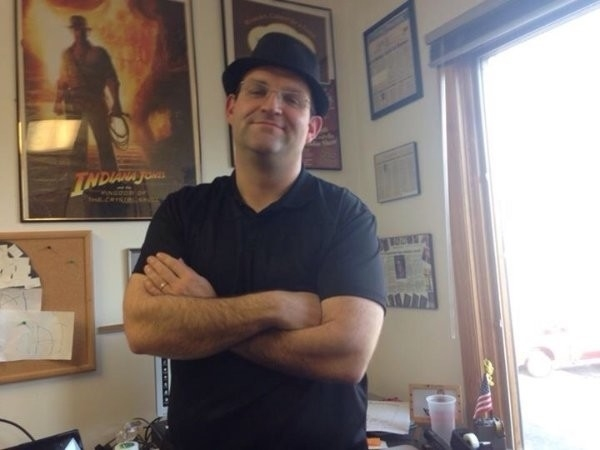
Editor's note: The following is Patch Field Editor Russ Crespolini's, hopefully, weekly column. It is reflective of his opinion alone.
Normally when we see misinformation or a lack of media literacy it is problematic, but now, as we cope with a pandemic it can be dangerous and even deadly.
What many of you lovely readers don't know is I am on a multitude of private Facebook boards set up throughout the communities that I cover. I am also on one such board in the community where I live, which is not a Patch town.
Find out what's happening in Long Valleyfor free with the latest updates from Patch.
As you can imagine, these boards which are a hot bed of whining and complaining during regular times have gone downright insane since the pandemic has descended upon us to wreak its havoc.
This week however, it was nutty conspiracy week on social media, and I was inundated not only on the boards I monitor for work, but my personal page, my town page and my work email. Many of you know what I am talking about, that thoroughly debunked piece of fiction known as Plandemic. There are so many writers who handled dismantling this YouTube video so efficiently I won't bother with that here. You can search for them pretty easily.
Find out what's happening in Long Valleyfor free with the latest updates from Patch.
But despite that, there will be many people who will buy into the conspiracy theory and believe there is a nefarious plot at work.
This column isn't going to reach those people.
But there are many people out there just unsure of what to believe with all of the information being shoved down their throats daily. So maybe I can help.
What I am going to try to do, very briefly, is to stem the tide with some media literacy basics. Obviously we don't have time in this column to go over all the details, you would need an entire course for that. I know because I've taught it. So let us just grab a few essentials.
For our purposes, media literacy is identifying different types of media and understanding their the messaging.
Technology has made it incredibly easy for anyone to create media and thus we don't always know why the media was made, whether it is credible and who is behind it. So it is important that we look at everything critically.
Even the stuff I write. What is my intention in writing this? Pretty simple, my intention is to give you some tools to look at things you presented to you at more than face value. And also to not dismiss material that doesn't fit into your worldview.
All media is constructed and recognize that media has both embedded values and a point of view. What is key, is recognizing that point of view and seeing what is included and excluded and why.
For example, does a story lack information because it is sourced from a single interview with no verification or does it lack information because of privacy laws. Was there an effort to portray both sides in the narrative or was it just a series of one-sided interviews. These are things we can, and should, take notice of.
Good media literacy involves questioning the veracity of everything, and also knowing where your messages are coming from.
What many don't know is that places like Facebook track your usage and those you connect with in order to give you content they feel you will like in order to keep you engaged on the site. If you tend to lean in a certain direction politically and interact with certain posts you will see similar things to those posts.
It is why you see some people sharing numerous links from CNN and the Washington Post and other people tend to share things from The Washington Times and Fox News. Depending on your habits those are the things you are likely to see on your feeds.
The danger of this, is that it plays into your own confirmation bias and helps you create an opinion silo by which all you hear are just echoes of your own opinions without ever challenging your own beliefs.
So I am going to suggest you practice some media literacy basics. Ask yourself why a headline is written a certain way, why certain information might be included or excluded and do further research on topics that matter to you. Take some time and expand your horizons a bit. If there is a topic that interests you, check it out on sources you might not normally. At Patch, I am often accused of being liberal or conservative.
Spoiler alert: liberals are always calling me conservative and conservatives are always calling me liberal. I'm neither. I find labels and surrendering yourself to any dogma insufferable.
But that reaction is great, because that means I am handling things right if everyone is annoyed. Good journalism in general is like that. We annoy you with what you need to know.
I very often will have conversations with angry readers demanding certain data points, especially during this pandemic, that we simply cannot access because there are issues of privacy. And sometimes because it is an issue of taste.
But outside us, check out some large publications home and abroad and see how they cover the same issue. You will find very quickly where the answer lies.
Now of course this won't solve all the problems we see cropping up on these boards and throughout social media with these practices. But perhaps it will help us from fracturing further as we work our way through the rest of this health emergency.
Because it is going to take us all to do so.
Russ Crespolini is a Field Editor for Patch Media, adjunct professor and college newspaper advisor. His columns have won awards from the National Newspaper Association and the New Jersey Press Association.
He writes them in hopes of connecting with readers and engaging with them. And because it is cheaper than therapy. He can be reached at russ.crespolini@patch.com
Get more local news delivered straight to your inbox. Sign up for free Patch newsletters and alerts.