Schools
Students Prove 'Christmas Tree Phenomenon,' Work Published in National Science Journal
Two months of studies leads young scientists to data proving hypothesis.



Spring is here and it’s time to open the windows and let in the fresh air to rid your home of germs.
Or, maybe, your home just needed to be void of the Christmas tree that took up a corner of the room for more than a month.
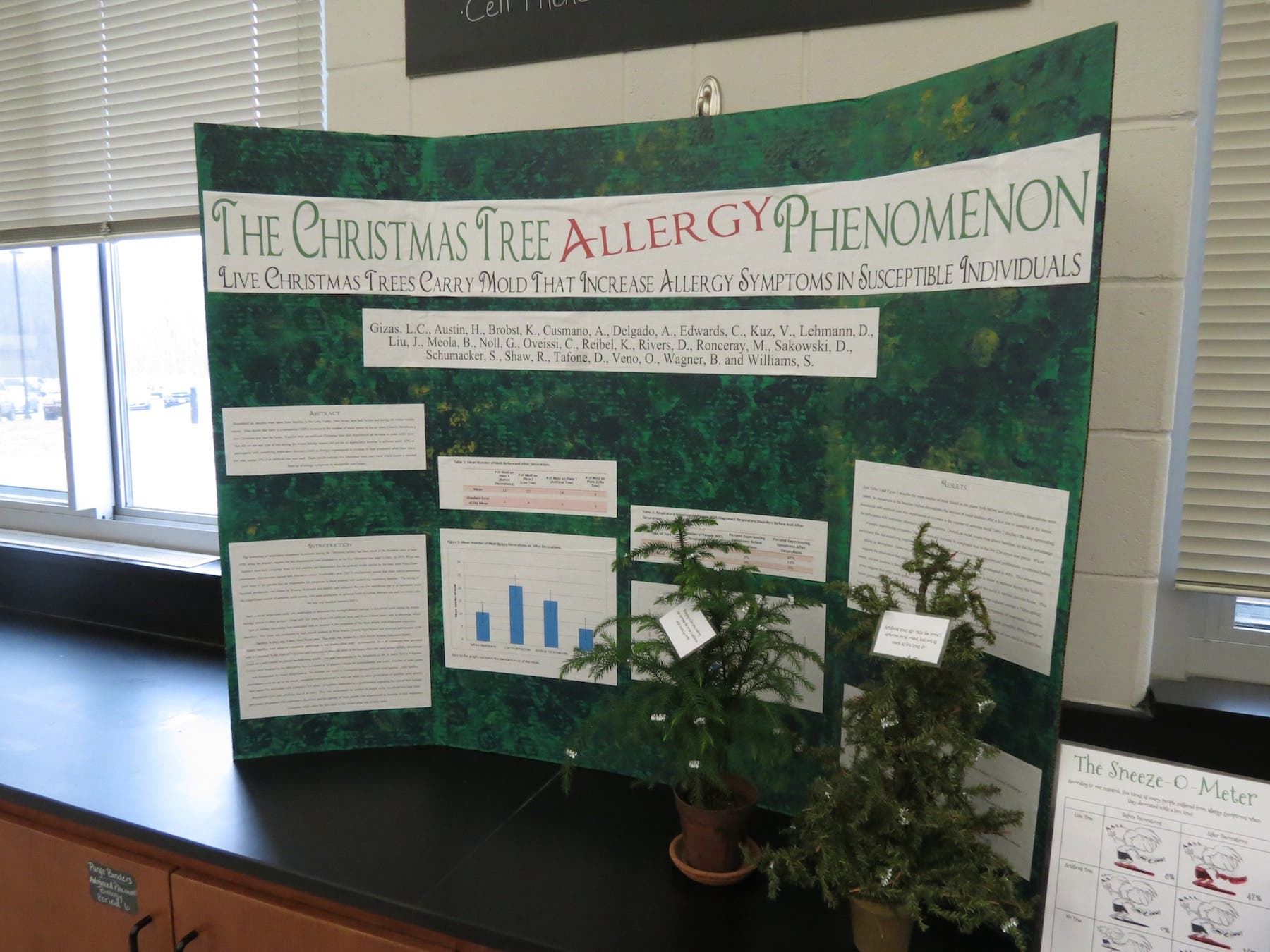
According to the results from a season-long science project conducted by one of West Morris Central’s Advanced Placement Biology classes, the “Christmas Tree Phenomenon” is alive and well.
Find out what's happening in Long Valleyfor free with the latest updates from Patch.
The class, working with a $5,000 BASF grant, studied the potential addition of mold and allergens to homes due to Christmas trees – both real and artificial – learned firsthand the dangers of having the seasonal décor inside your home.
The young scientists’ original hypothesis asserted that mold will grow inside the home when the trees are present, leading to increased respiratory issues such as asthma and bronchitis.
Find out what's happening in Long Valleyfor free with the latest updates from Patch.
The results were staggering.
In homes participating in the study – belonging to students and their families from the West Morris Central community – eight percent with live trees showed respiratory issues prior to the live tree coming inside.
After putting the tree in the stand and decorating? That number soared to 42-percent, a five-fold increase.
The mold spores that showed up in the students’ test were equally impressive. The average home showed 11 mold spores in a test. Once the tree was brought inside, that home doubled to 22 mold spores. Homes with artificial trees weren’t immune, either, having an increase of 11 mold spores to 18, and 13-percent of homes showing respiratory issues after the trees were constructed.
Students said they initially expected a large margin of error but were pleasantly surprised when they realized the information and data that came of the project was accurate and reliable.
As a result of the months-long project, the work is being published in The National Journal of High School Science, teacher Lisa Gizas said.
Of course the 21 seniors and one junior in the class have done more than a science project, they’ve paved the way for future Central classes to potentially garner the same BASF grant going forward to conduct their own experiments.
Subscribe to Long Valley Patch’s free daily newsletter for more local news, and breaking news alerts delivered to your inbox, by clicking here.
Get more local news delivered straight to your inbox. Sign up for free Patch newsletters and alerts.