Schools
Joyce Kilmer’s William Howe Trying to "Change the World"
Sitting down with some of the school district's employees for an insider look at what's happening at school.
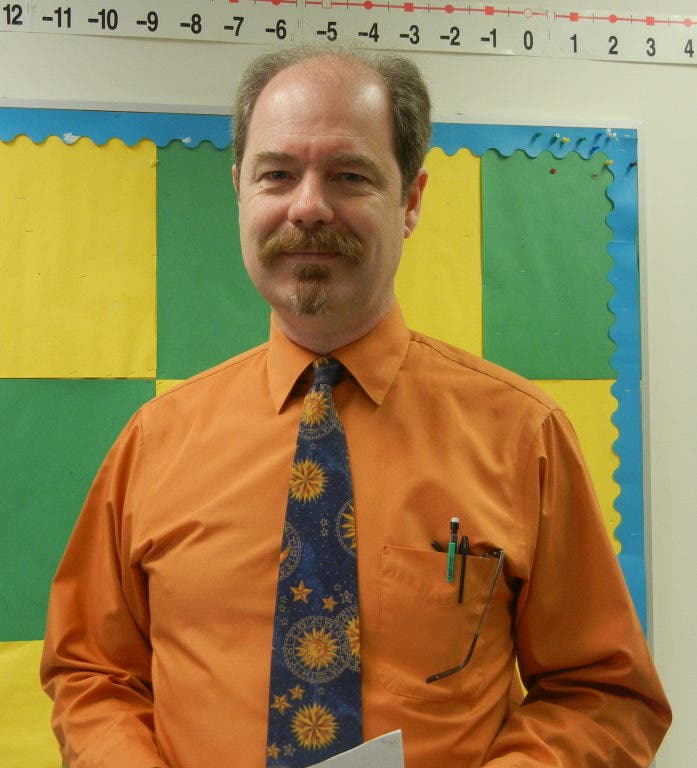
Each week Patch sits down with individuals who contribute to the high standards of education in Mahwah, and asks them a few questions to get to know them better.
William Howe is one of those individuals. He empowers students to challenge themselves and continually make new discoveries, asking questions and searching for answers. He also shares his love of nature and the environment in and outside the classroom.
How do you keep teaching fresh?
Find out what's happening in Mahwahfor free with the latest updates from Patch.
WH: “Every day there are new challenges; every year the kids are different. What works one year may not work the next. After 5 or 6 years, you start to develop an encyclopedia of successful teaching strategies that will help you adapt to classroom dynamics and individual learning styles. Basically, it is the student’s intelligence that keeps me fresh. I need students to challenge and question me and themselves, to discover the wonder of learning, discover something about themselves, and most importantly, I love being surrounded by other professionals who are dedicated to the growth of intelligent young minds. Just as the students learn from me, I learn from them. Outside of work is also important, I need the sanctuary provided by nature, the stars, ocean, trees, birds, the sky, the marshes, the hills and mountains and my home, where my heart lies. That “escape” gives my mind creative freedom and reminds me that the classroom and students are not mine, but rather, I have a chance to influence and change their lives for the better.”
What is the most unconventional teaching method you’ve used and was it successful?
Find out what's happening in Mahwahfor free with the latest updates from Patch.
WH: “Allowing kids to do science experiments at home. The students see this as their opportunity to try something they always were interested in or we adults thought they couldn't do. I have kids discovering concepts and asking questions that seem way beyond their years. And the parent(s) love to help out; they get involved in the learning. Without good parenting our job is that much harder. I'm trying to create future scientists or at least students who love questioning and searching for answers. It’s a win, win situation for all of us.”
What animals do you have in your classroom and why?
WH: “Fish and Snakes ... fish because they are easy and calming …snakes… kids love snakes... They love that their parents are afraid and they aren't. When they hold it they feel unique and trusted. For many girls it is a break away from their moms’ world of yucky, screeching science, to a new world of biology. Sorry moms, truth be told it’s often/ usually you who share your heebee geebees - but on the contrary, I've had moms over the years who are stellar science role models. I appreciate them more than I can tell.”
Do you believe in giving hours of homework?
WH: “I fluctuate but never hours. 10-12 minutes per grade is nationally recommended. Occasionally, I stack the HW on ... I want kids to know what the real world is like. Like our lives... sometimes we are busy other times not. When there is no HW I always tell my students to get outside. Kids learn more by interacting with other kids, making rules, getting dirty and making mistakes than they do in front of a video game.”
What’s the most important lesson you hope your students take away from your class at the end of the school year?
WH: “One, life is about learning. And two, learn to work hard, then relax, and enjoy the life you have.”
What’s the funniest thing that’s ever happened to you at school?
WH: “Most days there is laughter. I once had a student allow the snake to go into their shirt and it pooped. We were all unsure if we were allowed to laugh, the person laughed and we all joined in because we knew it could have happened to any one of us. There was a lesson in this. It showed that me that kids can be taught to be kind and empathize feelings. They didn't laugh at the person, they laughed with the person. Self laughter is a good teacher of humility.”
What’s one thing about you that may surprise people?
WH: “I'm an environmentalist! Okay that’s not a surprise. I'd be surprised if anyone was surprised by anything I do or have done. I pride myself on being eclectic (and a bit eccentric). One surprise though is that I'm nonpartisan...Both political sides have good ideas that can be melded into action. I believe in action and not rhetoric, production and not posturing.”
Finish the sentence, “It’s been a successful school year if…”
WH: “I've changed the lives of three or more kids.”
Why did you become a teacher?
WH: “Others told me I'd be good at it. I resisted at first but when I took my first master’s class in teaching, I immediately understood the teaching strategies and educational philosophies they spoke of... and I knew I belonged as a teacher. It is my calling.”
What do you like to do during your free time?
WH: “I’m just trying to change the world, so most of my energy goes there… helping two environmental commissions, being a union representative, attending and taking care of the facilities at my Paramus Unitarian church, and driving the town ambulance on Friday nights. Otherwise, I love landscaping, gardening, repairing my house, kayaking, rock climbing, reading periodicals and magazines, finding nature, and because my daughter is my direct link to the future, I spend as much quality time as I can with her. Sometimes I’m surprised at how much I get done.”