Politics & Government
Murphy Signs $15 Minimum Wage Bill Into Law: 3 Problems Raised
Here's what will happen now that NJ Gov. Phil Murphy has signed the $15 minimum wage bill into law (as well as 3 potential problems cited).


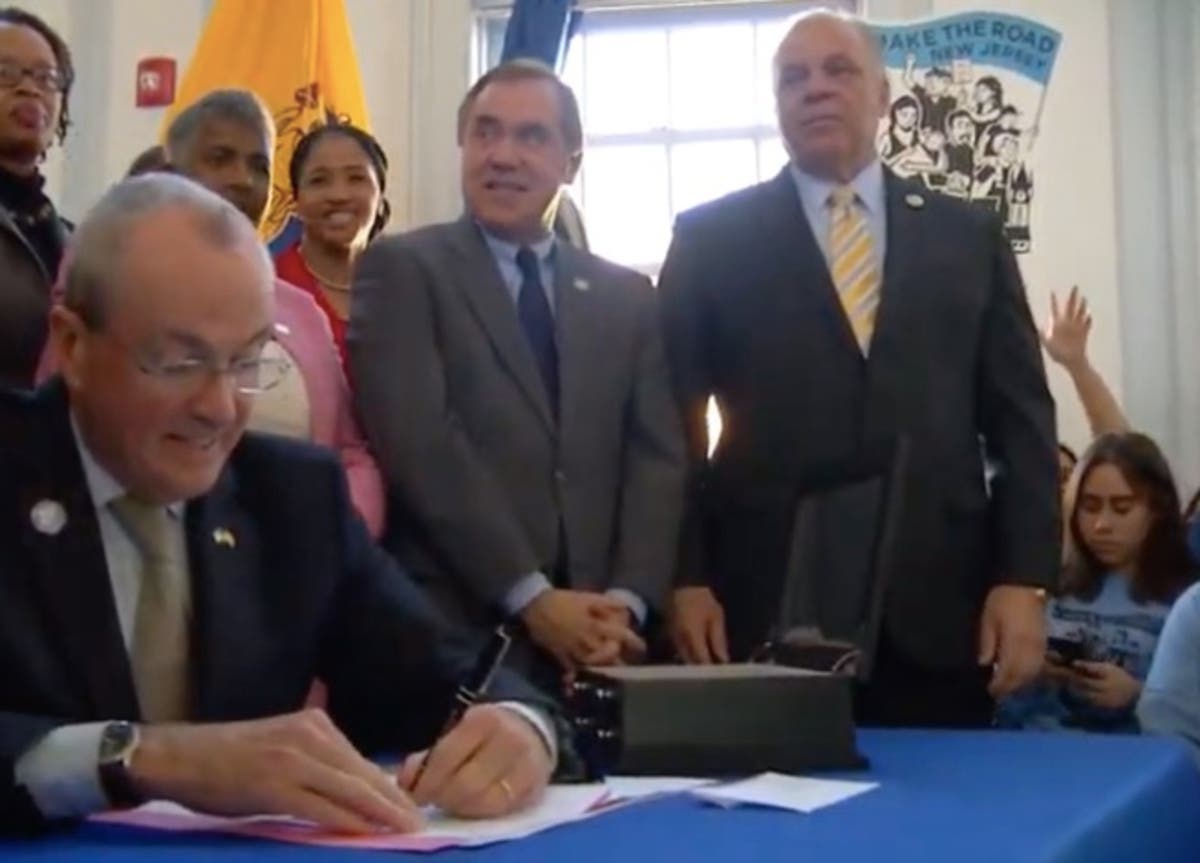


New Jersey Gov. Phil Murphy signed a bill into law on Monday that will raise the minimum wage to $15-an-hour. But even as the legislation was praised, the new law raised concerns – particularly from small business owners who say they'll struggle to pay for the increase.
"I am honored to be surrounded by families who will be rewarded with a fair and living wage," Murphy said as he spoke to a cheering audience.
For a pizzeria, he said, it'll mean more customers. One father, he said, indicated he would use his raise to take his child bowling and to buy him pizza.
Find out what's happening in Manasquan-Belmarfor free with the latest updates from Patch.
"This is about making New Jersey more affordable," he said.
Read more: 6 NJ Laws That Should Have A Big Impact On Your Life In February
Find out what's happening in Manasquan-Belmarfor free with the latest updates from Patch.
The state Assembly approved the legislation by a 52-25 vote, and the Senate by a 23-16 vote, on Thursday.
The law was approved largely along a party-line vote. Sen. Declan O’Scanlon, R-Monmouth, condemned the bill, saying it will have "widespread" negative impacts for New Jersey.
“This law will have disastrous consequences for our business community and minimum wage workers. It simply goes too far too fast,” O’Scanlon stated. “I serve on the bipartisan manufacturing caucus and we heard from every single manufacturer that it was impossible for them to absorb this increase without losing jobs.”
Here are some of the potential pitfalls people in the business community, along with Republicans who opposed it, have cited:
Raising prices
Alli O'Neill, the owner of Colonial Bakery in Lavallette, told The Asbury Park Press that she crunched some numbers recently on the impact of a $15-an-hour minimum wage and said she will need to raise the price of a dozen doughnuts from $11 to $21 to maintain her profit margin.
O’Scanlon said he's had service providers for developmental disabilities like the Arc "terrified about how this will shut down their programs and organizations unless we can give them more funding."
"These people do the most noble work in the state and serve the most vulnerable among us. They are already operating on a stretched budget, and they simply cannot absorb what this increase will do to their operating costs,” he said.
Minimum wage earners will very rapidly find themselves kicked off many of the programs they rely on: CHIP, FamilyCare, LIHEAP, SNAP, he said.
"These are the sort of negative unintended consequences that we haven’t fully accounted for. Leadership has all but admitted they haven’t fully considered these unintended consequences by setting up a panel to study them. Forging ahead blindly without knowing all of the ways this will impact the very people we are trying to help is irresponsible.”
Business survival
"Its not a question of operators making more money," Anthony Catanoso, president of Steel Pier, an amusement park in Atlantic City, told The Asbury Park Press. "In some cases it's operators surviving. There's just not enough of a margin. We struggle every year. This is just going to make it harder."
The amount of job loss that we are going to see among small businesses will be "tragic,” O’Scanlon said.
“New Jersey is basically famous for not wanting to pump our own gas. In fact, I’ve previously received phone calls making sure to let me know that ‘Jersey Girls Don’t Pump Gas’! Well, we better be prepared to start pumping our own gas soon because one of the industries that is bracing for massive losses is our fuel merchants," he said.
"Local gas station owners testified before us that they cannot sustain employees and keep their businesses open without bringing in self-serve gas.”
Competitive wages
Business owners told The Press that they still would need to pay a competitive wage to attract teens who could find higher-paid work at a Starbucks or Dunkin' Donuts.
Here is what the legislation will do:
- The minimum-wage base for New Jersey workers would increase to $10 an hour on July 1, 2019. By Jan. 1, 2020, the statewide minimum wage would increase to $11-an-hour, and then would increase by $1-an-hour every January 1st until it reaches $15 an hour on January 1, 2024.
- For seasonal workers and employees at small businesses of five workers or less, the base minimum wage would reach $15 an hour by Jan. 1, 2026. By Jan. 1, 2028, workers in these groups will receive the minimum wage inclusive of inflation adjustments that take place from 2024 to 2028, equalizing the minimum wage with other New Jersey workers.
- For agricultural workers, the base minimum wage would increase to $12.5 an hour by January 1, 2024. No later than March 31, 2024, the New Jersey Labor Commissioner and Secretary of Agriculture will jointly decide whether to recommend that the minimum wage for agricultural workers increase to $15 an hour by Jan. 1, 2027, as specified in the bill.
- If they cannot come to an agreement, a third member, appointed by the governor with the advice and consent of the Senate, will break the tie. If there is a recommendation to disapprove of the scheduled increases or suggest an alternative pathway, the Legislature will have the ability to impose that recommendation by passage of a resolution.
Senate President Stephen Sweeney said raising the minimum wage is a "shared priority for Governor Murphy, (Assembly Speaker Craig) Coughlin and me that will put more pay into the pockets of working people so they are better able to support themselves and their families."
"The plan is good for workers, businesses and the economy," he said. "Lifting the livelihood of minimum wage workers is the right thing and the smart thing to do."
Coughlin, D-Middlesex, said the Assembly and Senate passed legislation "to help working-class families across our state."
"We are standing up for families living paycheck-to-paycheck and for protecting future generations," he said. "I look forward to standing with the governor and Senate president for the signing of the bill to gradually raise the minimum wage into law and give New Jersey families the living wage they deserve."
The minimum-wage bill was passed just days after the Murphy and legislative leaders had a well-publicized discussion – which involved an awkward encounter with an opponent of the legislation – at the Ocean Bay Diner in Sayreville.
There, Murphy, Coughlin and Sweeney were confronted by Teddy Lutas, the diner's owner, who told the lawmakers that the increase would force him to cut back on his expenses and, quite possibly, go out of business.
Lutas's concerns echoed those of many Assembly Republicans who said Thursday that the legislation will damage small businesses and hurt the state's economy.
"We just believe this bill goes too far, too fast," said Sen. Declan J. O'Scanlon, R-Monmouth. "This is a bad idea."
Republican Assemblyman Hal Wirths offered his own minimum wage proposal as a substitute, one that would have cut business taxes and provided workers with a wage above $15 by 2023.
"I have a very reasonable bill accepted by the business community that will help the working poor get up to fifteen-dollars an hour," said Wirths, R-Sussex, a former state labor commissioner. "It is a quicker and fairer bill."
Here is the video of the bill signing:
Murphy photo
Get more local news delivered straight to your inbox. Sign up for free Patch newsletters and alerts.