Politics & Government
Fairies vs Trolls: Racist Vandals Plague Beloved New Jersey Trail
WATCH: A beloved New Jersey "fairy village" is plagued by racist trolls. It's a battle for the human heart on South Mountain Reservation.


MILLBURN, NJ — Talking to Therese Ojibway, the whimsy-loving architect of the South Mountain Reservation Fairy Trail, is like having a conversation with a hummingbird. The New Jersey transplant – a Lansing, Michigan native - speaks beat-to-beat, a perpetual optimism powering each word that comes out of her mouth. And when you ask the 61-year-old Millburn resident to talk about the beloved local landmark that she created six years ago, it’s like adding nitrous oxide to a race car.
The mile-long trail is located near the Locust Grove picnic area of the Essex County South Mountain Reservation, just a short walk from the bustling suburban shops of downtown Millburn. (Here’s how to get there)
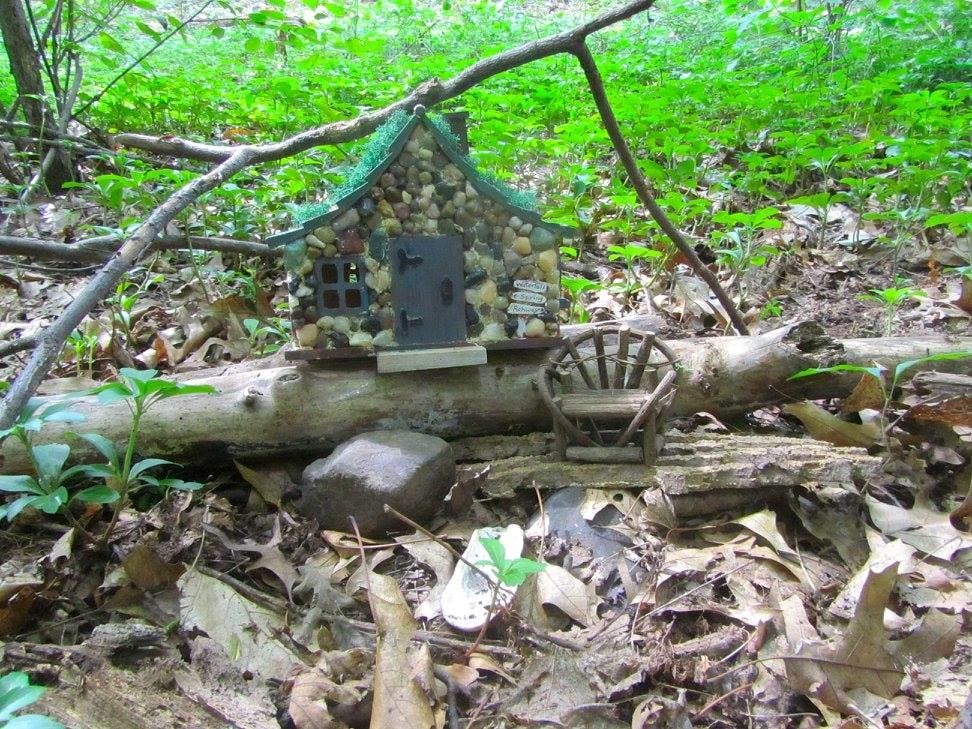
Nestled in a rustic, wooded area of the reservation, the trail includes an entire village of handcrafted “fairy houses” hidden away in the nooks and crannies of the surrounding forest – all built from natural materials such as twigs, moss and rocks. In true Frank Lloyd Wright fashion, the tiny, handcrafted homes blend almost seamlessly into the woods, always a half-step hidden behind the nearest tree root or boulder.
Find out what's happening in Millburn-Short Hillsfor free with the latest updates from Patch.
Move too quickly and it’s easy to miss the couch made of a hunk of mushroom… the doors constructed out of tree bark… the chairs crafted from acorns.
Ojibway, a special education teacher, told Patch that she tries to work on her ever-evolving magnum opus whenever possible after she gets home in the evening. Much of her time is spent simply fixing up deteriorating furniture or repairing damage after a bad storm. Nothing is permanent on the Fairy Trail; that’s part of the magic. But that also means that the project needs constant mending.
Find out what's happening in Millburn-Short Hillsfor free with the latest updates from Patch.
And it was during one of these routine maintenance visits that Ojibway found her first evidence of the trolls that would soon come to plague her beloved sanctuary.
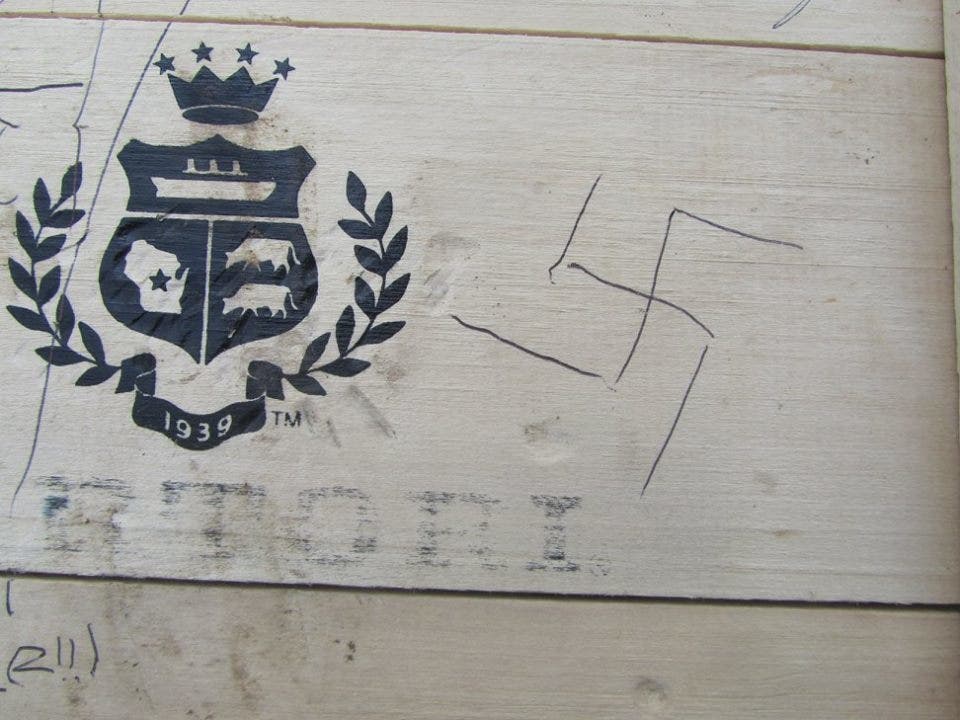
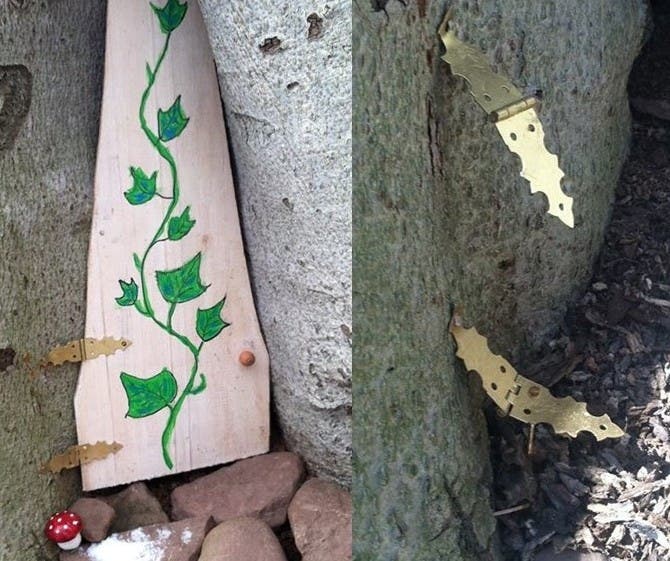
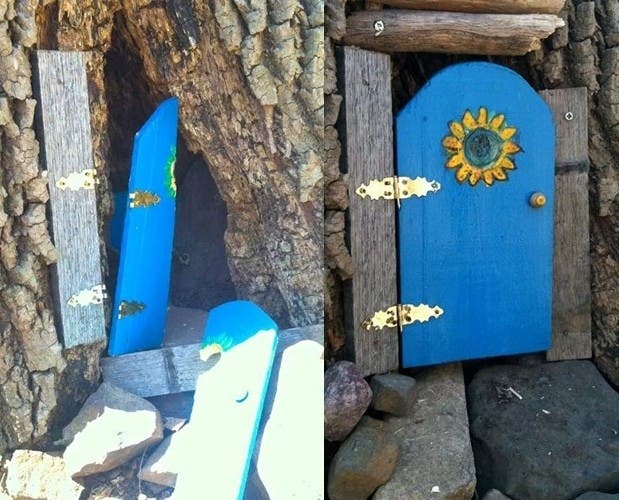
“I’d made this nice, little house with chairs and things,” Ojibway remembered. “When I got to the trail, I saw that the house’s door had been ripped off and placed on its side. I went over and picked it up. And that was when I realized that some of the visitors to the trail must have turned it over so people wouldn’t see what was on the other side.”
Swastikas.
Ojibway recalled flipping over the door to find an ugly smorgasbord of racist epithets, including white power slogans and a sloppily scrawled, hate-filled declaration: “I Hate N******.”
“It made me feel sad,” she remembered. “It felt like a violation. What a cruel and nasty thing to do to something that’s meant for children and done in such a positive spirit. I don’t understand that mentality.”
But as she started to repair the damage done that day, Ojibway was unaware that the mysterious act of destruction was just the opening salvo of an epic, storybook struggle in suburban New Jersey.
A battle for the heart of South Mountain Reservation had begun.
THE TROLLS COMETH
To Ojibway, the notion that her masterwork might inspire hatred in someone’s heart – not love – is almost unfathomable. The Fairy Trail attracts all types of nationalities, all racial groups, a “really good cross section of the community.” Her adult son, Clinton, who was diagnosed with autism, is just one of the people who have used the trail as a much-needed escape from stress and structure since Ojibway began anonymously building the fairy houses.
Even after half a decade of building, Ojibway still gets a kick out of being able to step back and walk the trail as an anonymous visitor on a busy day at the reservation.
“Part of the reason that I’ve kept this up is because of the looks on people’s faces,” Ojibway emphasized.
For years, the trail remained one of the area’s coolest, locals-only landmarks – a special project that was Ojibway’s little secret – until a 2016 New York Times article revealed her identity and garnered national news attention.
And that’s when the fairy lovers really started to show up.
Though foot traffic on the trail soared as word spread – and some moss occasionally got stomped on - there wasn’t any malicious vandalism until that first instance in the spring of 2016.
But once that first door was defaced, it seemed to open the floodgates, Ojibway said.
After the vandalism became a regular occurrence – and visiting children began to ask questions about why their favorite fairy homes were suddenly missing – Ojibway began telling them that “ogres” were the culprits. When parents overhead Ojibway telling kids that the trail got yet another visit from the ogres, they all knew what the code word meant.
The vandals struck again.
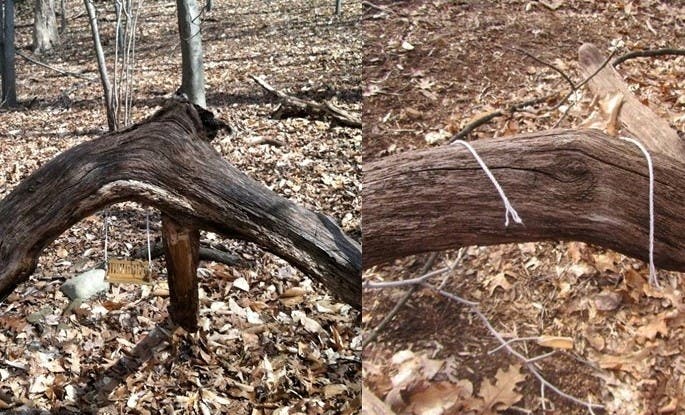
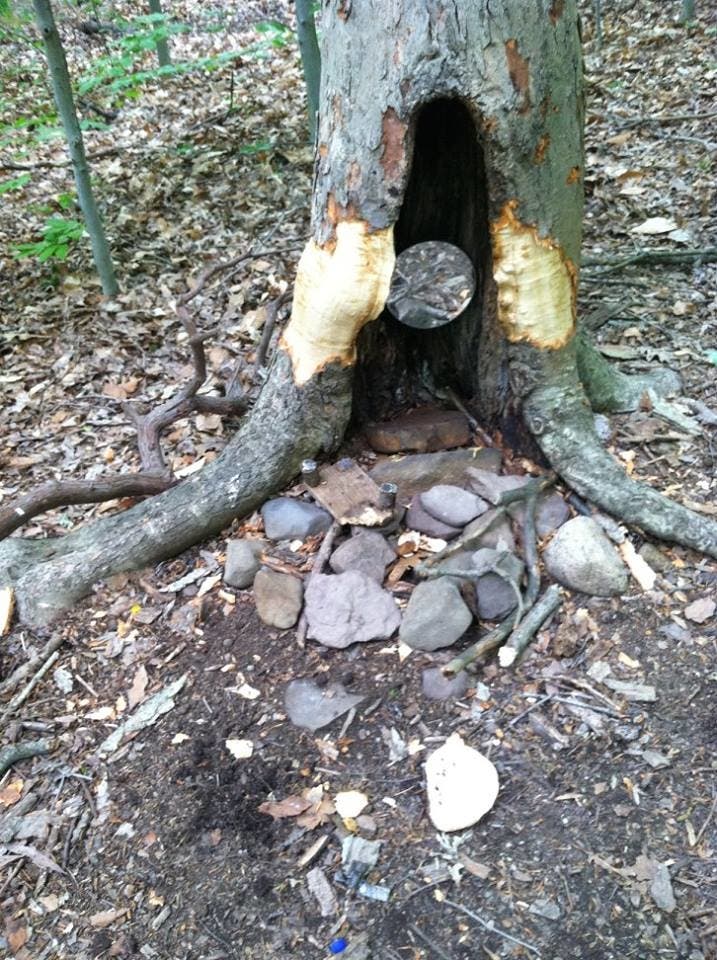
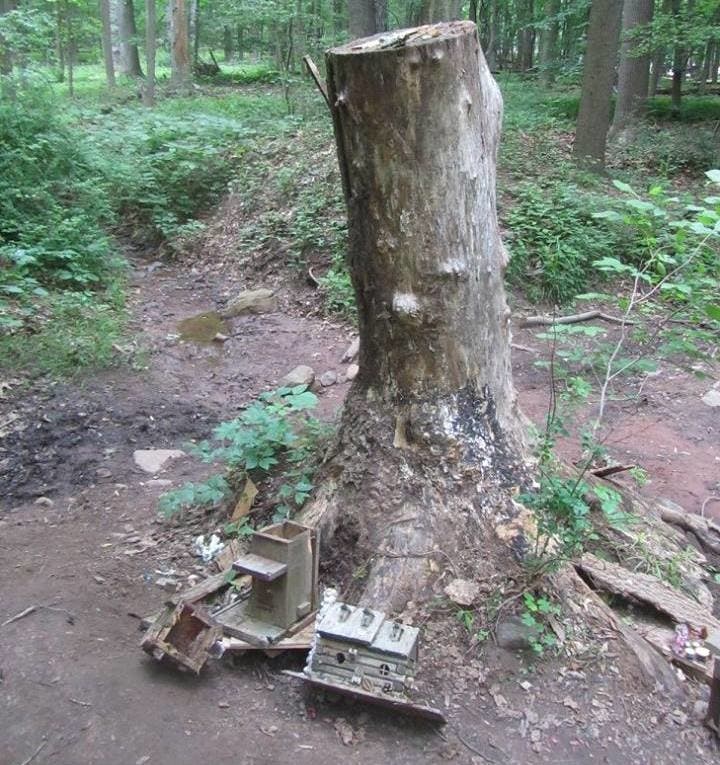
At first, Ojibway thought that the saboteurs would eventually get bored and find another outlet for their frustrations. But as time went on, the destruction got progressively worse, almost as if the trolls were trying to prove their strength.
‘A PANDORA’S BOX’: ANGER IN ESSEX COUNTY
The culture clash on South Mountain Reservation isn’t taking place in a vacuum, Ojibway points out.
Essex County – the location of the Fairy Trail – is about as socio-economically diverse as you can get in New Jersey. The county was one of 78 in the United States in which no single racial or ethnic group is a majority, according to a 2015 study from the Pew Research Center. And just miles from the trail, mansions that house some of the nation’s richest residents exist parallel to the frigid streets where the state’s largest homeless population dwells.
- See related article: 10 Essex County Men Named Among N.J.'s Richest In 2016
- See related article: Essex County Had Most Homeless In New Jersey For 2017
The county’s rapidly evolving cultural mix is often cursed and praised in the same breath. One day, its largest city is enthusiastically named among the “most diverse in America.” A few months later, the next town over makes national news headlines when its school board cancels Halloween due to “diversity.”
Ojibway told Patch that the first instance of vandalism at the trail took place right around the time that Donald Trump’s 2016 presidential run against Hillary Clinton began to ramp up.
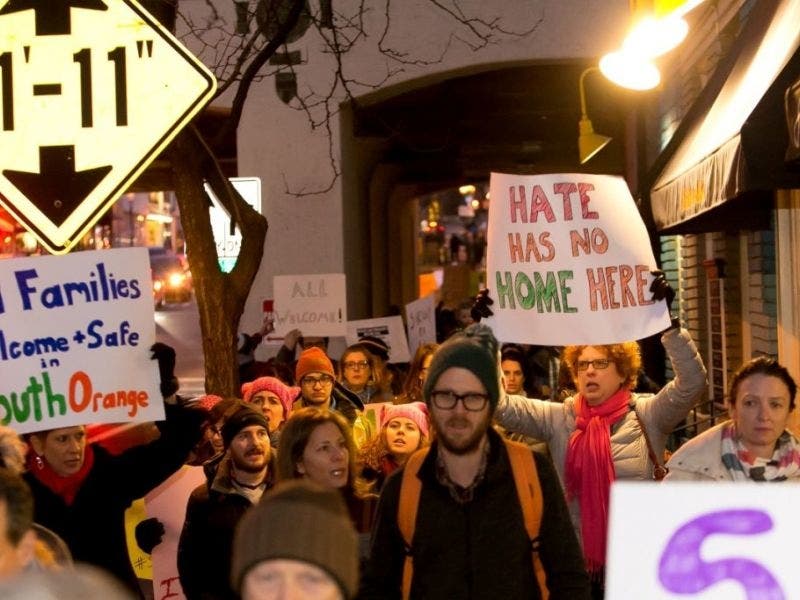
“I think that it opened a whole Pandora’s Box,” she opined, lamenting the vile rhetoric that took place on both sides of the political spectrum during the election. “People felt emboldened. Somehow it became cool to express [hateful] things.”
A quick Google search illustrates what Ojibway is talking about. At the same time the Fairy Trail was seeing swastikas and mean-spirited vandalism, the same type of racial and political tension was flaring in other hotspots throughout Essex County.
- May 2016 - Two Columbia High School students posted an Instagram photo of themselves in what appeared to be blackface makeup. Meanwhile, students at South Orange Middle School created a social media post that featured swastikas surrounded by Stars of David, symbols of the Soviet Union, raised middle fingers and a photo of the collapse of the World Trade Center.
- July 2016 - Emotions ran deep after police videos showed Maplewood officers using excessive force against a group of black youth after the township's Independence Day fireworks event. Several officers were disciplined as a result of the violence.
- August 2016 - A racially charged argument may have been a factor in the beating of a Trump supporter in Bloomfield. At the heart of the argument? A Donald Trump t-shirt.
- November 2016 - The self-proclaimed founder/CEO/owner of "The Redneck Club of America" reported that someone slashed two tires on his 2006 Ford F-150 as he ate with his family at a Bloomfield diner. According to police, three black males around 15-years-old were allegedly seen by the truck shouting obscenities about Trump after the slashing.
- December 2016 - A New Jersey state employee at a Newark job development center allegedly snatched the hijab off a Muslim woman's head and threw it to the floor in an "act against the Islamic faith" earlier this month, city officials said.
- Winter/Spring 2017 – Throughout the winter and early spring, the debate over sanctuary cities and protection for immigrants raged in Essex County. Many embraced the concept (Newark, Maplewood, South Orange, Montclair, Bloomfield, Montclair State University’s president). Others did not (West Orange, Montclair State University’s student body).
- January 2017 - An Essex County Jewish community center stepped up security on its property in the wake of a series of multi-state bomb threats.
- February 2017 – An anti-Muslim, anti-liberal priest in Essex County and a snowflake-bashing Belleville councilman made news headlines with controversial social media posts.
- March 2017 – The same week that a middle school in South Orange reported multiple incidents of racist graffiti in its bathroom, an elementary school in the district set off a firestorm of controversy when its fifth graders put mock advertisements for a "slave auction" on display inside the building.
- March 2017 – An explosion of anti-Semitic graffiti and swastikas near South Mountain Reservation caused an uproar in the community and inspired condemnation from several local authorities.
- March 2017 - An Essex County jury found a West Orange man guilty of bias intimidation after he repeatedly hurled racial epithets at his teenage neighbor while mocking his sexual orientation.
- April 2017 - A Newark woman allegedly attacked a married, white couple from Massachusetts with a hammer at a Virginia gas station near I-95. During the encounter, the woman allegedly yelled racial slurs at the couple, screamed about their "fancy car and boat" and spat at them.
- June 2017 - The superintendent for the Caldwell-West Caldwell Board of Education confirmed that a swastika and other obscenities were painted on Lincoln Elementary School property.
- June 2017 - "Racism can't be fought with more racism." That's the rationale that administrators at Essex County College used to justify the firing of an adjunct teacher at after her controversial appearance on the FOX News show Tucker Carlson Tonight.
- June 2017 - A student at Columbia High School in Maplewood raised the ire of some teachers when she choreographed a dance that attempts to raise awareness about African-Americans' daily struggles with racism and police brutality.
‘PEOPLE NEED THIS’
These days – as in the beginning – it’s largely Ojibway who maintains the trail. Humbly, she won't say that she’s “in charge,” instead preferring the euphemism of “creator.”
But as the vandalism has increased on the trail, another more hopeful phenomenon has also emerged, Ojibway said. Dozens of like-minded fairy fanatics – some children, some adults - have come forth in recent years, all seeking ways that they can pitch in and help maintain one of their favorite urban escapes.
“The ogres are certainly outnumbered by friends of the fairies,” she gleefully pronounced.
The contributions have been both surprisingly large and inspiringly tiny. For instance, Ojibway regularly sees “gifts” appear from local children inspired by what they see, including baby teeth left for the tooth fairies.
From the adults, the contributions have been more grandiose. Ojibway recalled several cases of visitors leaving astonishingly detailed houses and furniture behind, all handmade and designed from all-natural materials just like the others.
“There were several that I met through the [trail’s] Facebook page,” she said. “One person from Pennsylvania left a beautiful house. Someone else left a cornstalk doll going up a ladder. Another person made a long, elaborate ladder that was a true work of art. Some of this craftsmanship is really extraordinary.”
And when people got word about the ongoing vandalism, there was a rush of volunteers who stepped forward with a single question: “What can we do to help?”
Inundated with requests on the trail’s Facebook page (still the best way to get in touch for questions and offers of help), Ojibway recently decided to try her hand at hosting a “fairy house building workshop” at South Mountain Reservation on Nov. 4. The event ultimately drew dozens of eager, smiling volunteers.
- See related article: South Mountain Event: 'Fairy House Workshop'
Ojibway said that all contributions to the trail are welcome, as long as they follow the cardinal rule: only “natural” materials are allowed. In other words, it’s not a place to leave Smurf dolls and G.I. Joes.
According to the South Mountain Conservancy, a local nonprofit that helps maintain the reservation, new homes should follow the “local fairy house rules”: natural materials only, with no plastic or glass and no markings on trees (though some older homes have small green markings nearby).
And though it’s more of an unwritten rule, there’s definitely something else that visitors to the trail should leave at home… politics. The absence of angry, swollen jingoism – liberal or conservative - is precisely one of the draws of the fairy trail in the first place. It’s a place where Essex County residents can come to escape from the skunky vitriol of the political zeitgeist in New Jersey, a refuge from hatred in a sea of chaos.
“I think that fairies are part of a lot of childhoods,” Ojibway said. “It brings a lot of parents back to a part of their past that they want to expose their kids to. It makes people look at things in a different way, spurs the imagination. I think that people need the fairy trail as a relief from the awful stress and news that we’re faced with every day.”
In fact, one of Ojibway’s favorite stories about the trail involves a visit from a reporter and a photographer in 2016, both of whom were interrupted mid-tour with breaking news about a bloody, attempted military coup in Turkey.
Both the reporter and the photographer had personal connections to the situation, students and friends on the ground and in harm’s way, Ojibway recalled. But when she offered to reschedule her tour of the fairy trail, they both told her that the interview must go on. “People need this,” they said.
It was something that she still remembers to this day.
CAN FAIRIES AND TROLLS CO-EXIST?
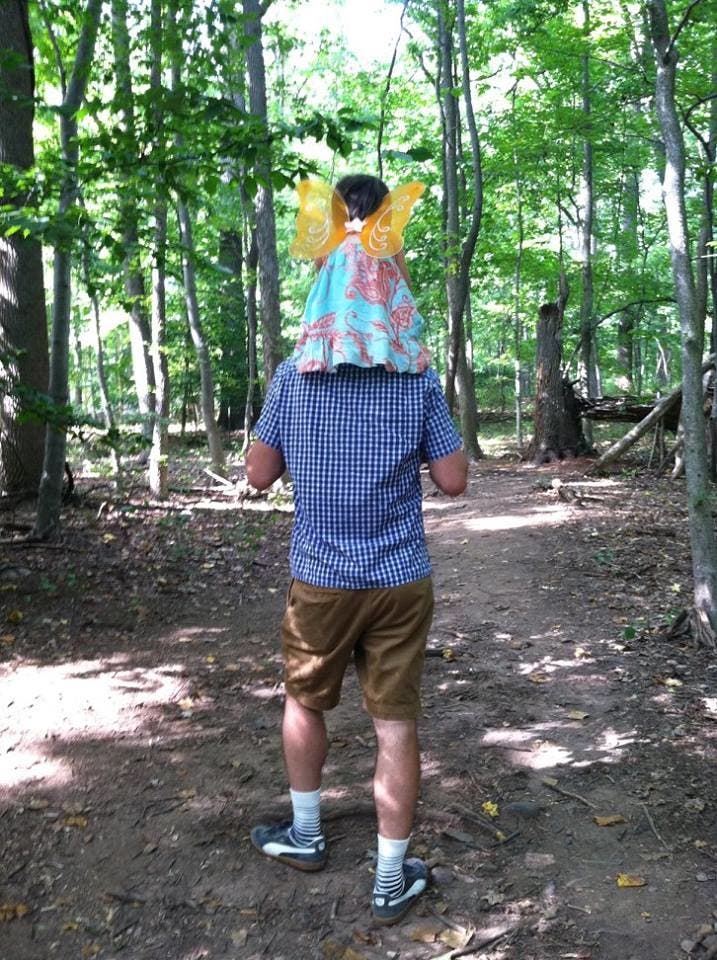
Can fairies and trolls learn to co-exist at South Mountain Revervation? The answer to that question may be standing on the shoulders of another… just who are the “trolls,” anyway?
When asked if she thinks there are multiple vandals or just a lone wolf, Ojibway just shrugs. “It’s really hard to know,” she said. But ask her to give her opinion about the potential culprits, and here is what she offers: it’s teenagers.
Her biggest smoking gun? A taunting note left behind during one vandalism episode with handwriting that looked suspiciously “like a young person’s.”
“I think it’s just one of those things that kids do to show off,” Ojibway said. “It’s like bullying without people involved. At least that’s how I see it.”
If so, there’s only one way to deal with the vandals, she says. Give them something positive to believe in.
“I think that if these kids understood that we put these things out here for everyone to share and enjoy, maybe this will end,” Ojibway said.
And if they’re reading this article, here’s what Ojibway would tell them.
“You don’t know the joy that it brings people to do these things for others, so maybe try it. Try getting involved in something. Try creating instead of destroying and see how it makes you feel. You might be surprised.”

Send local news tips and feedback to eric.kiefer@patch.com
Photos: South Mountain Fairy Trail Facebook page, used with permission
Get more local news delivered straight to your inbox. Sign up for free Patch newsletters and alerts.