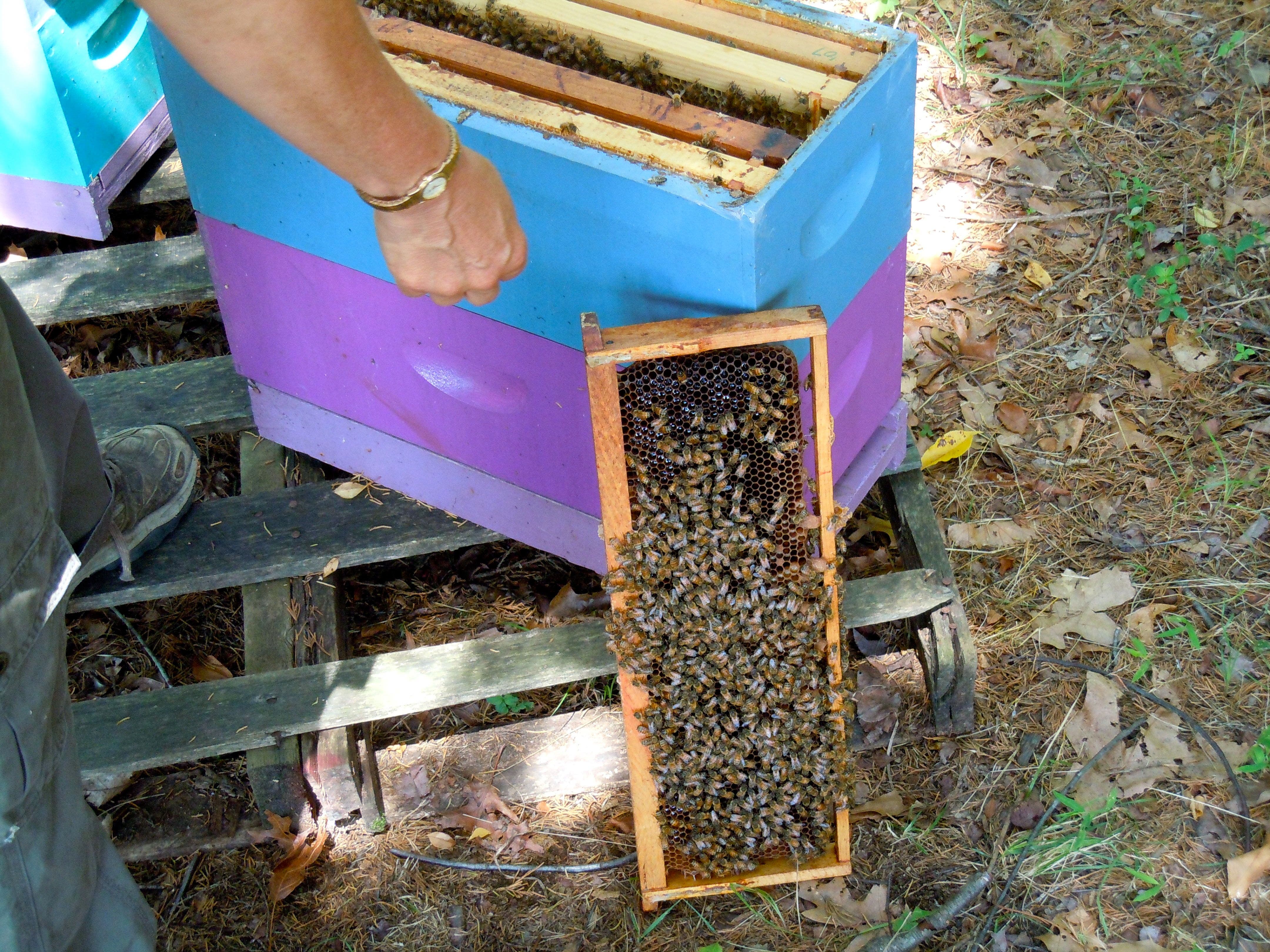
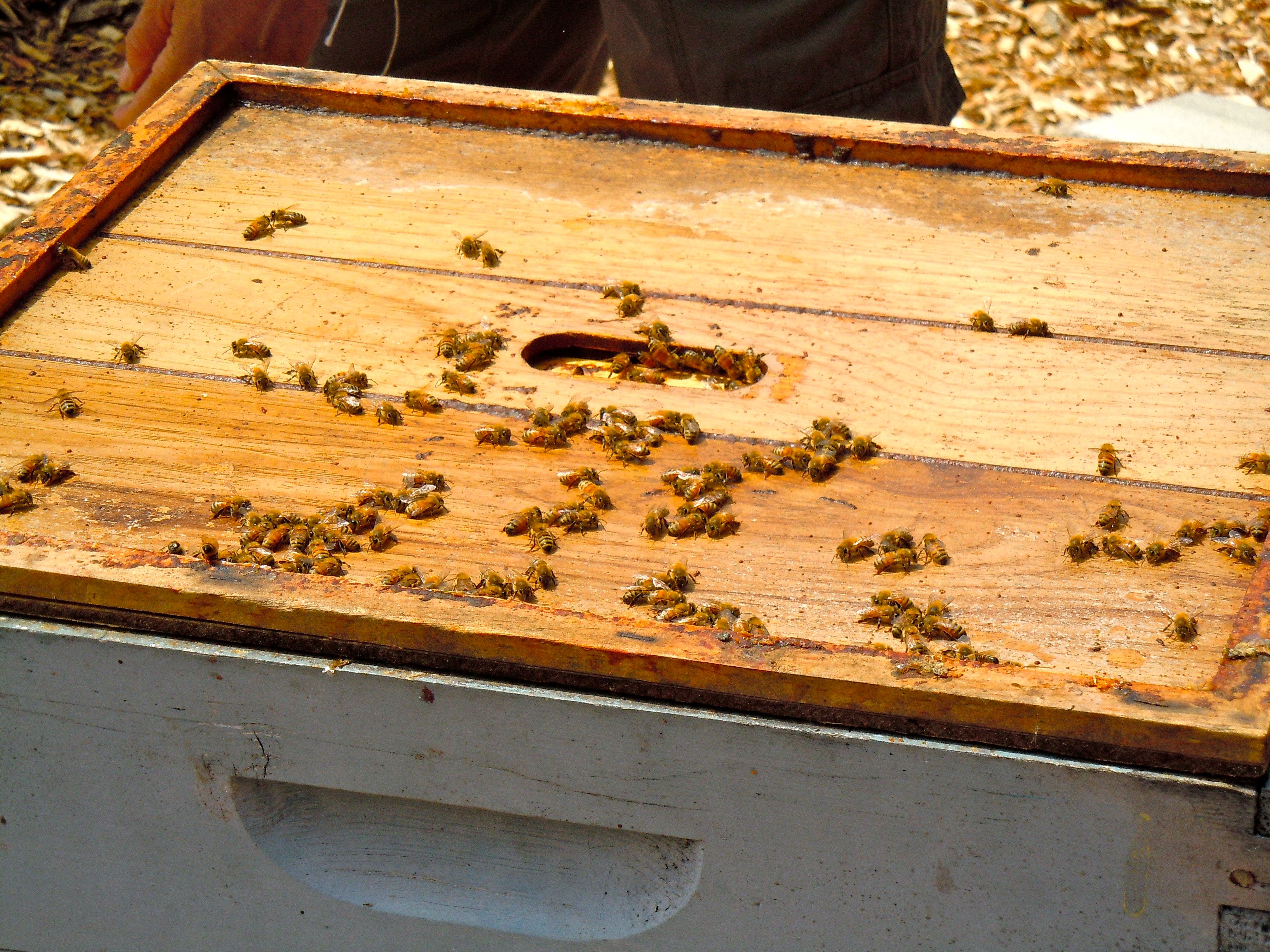


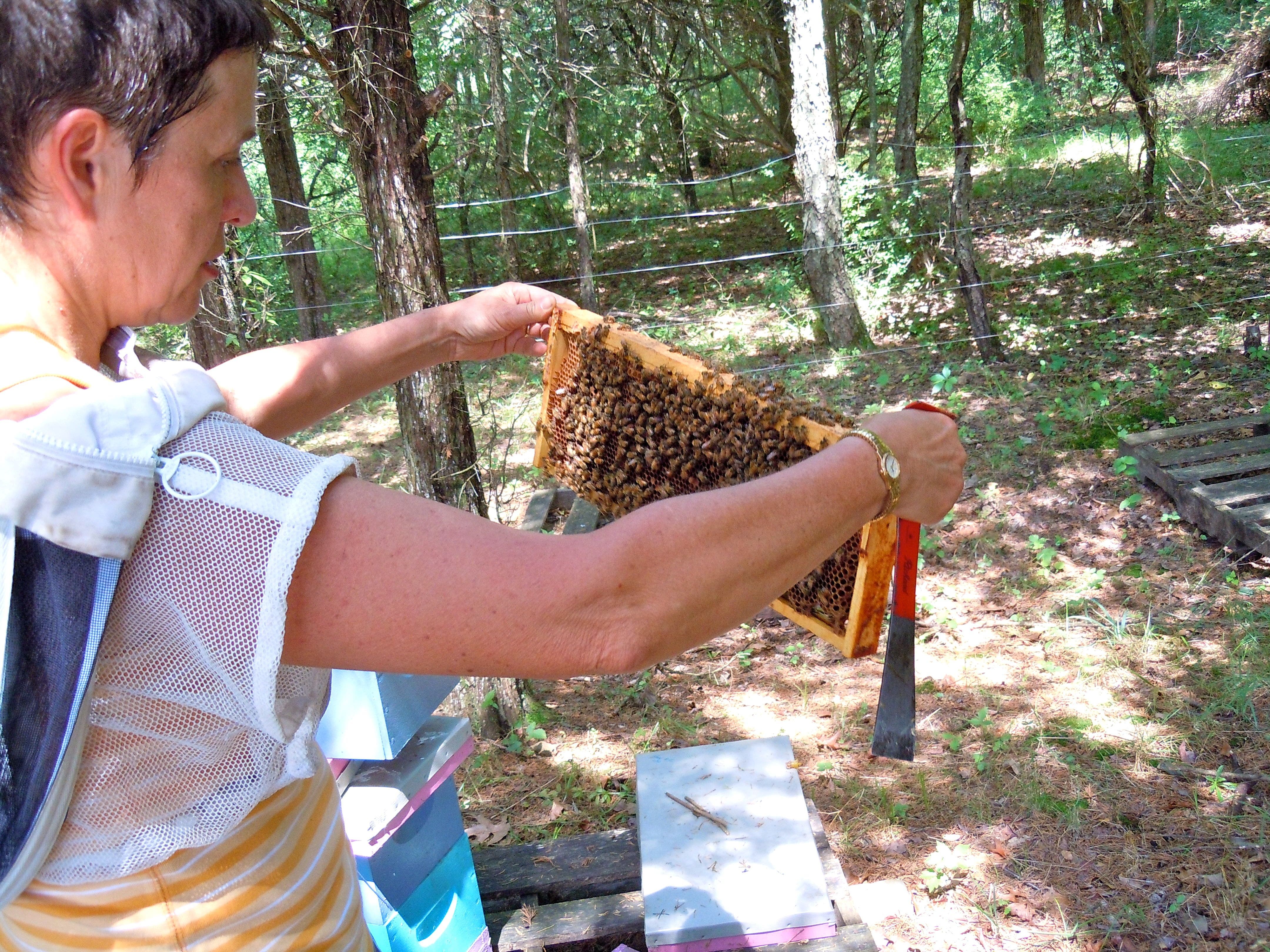

For most people, standing in the middle of a field with over 50,000 bees would be a stressful enterprise. For master beekeeper Landi Simone, its what she does after vacation.
"I just got back from climbing Mount Washington," she said. "It's a lot of fun, but I needed to get back and check on bees."
Simone maintains Gooserock Farm in Montville, including its 80 honeybee colonies across seven apiaries scattered throughout the township. The farm has bee yards in Pine Brook, Towaco, Montville and Boonton.
Find out what's happening in Montvillefor free with the latest updates from Patch.
According to Simone, her interest in beekeeping was born out of her love for gardening.
"I've been an avid gardener my whole life," she said. "I have two degrees in engineering and even had a consulting firm in Montville, but I retired when my daughter was born. I started an organic produce co-op after that to keep myself busy."
Find out what's happening in Montvillefor free with the latest updates from Patch.
Simone started taking a course on beekeeping at Rutgers not long after the birth of her daughter. Now, 15 years later, Gooserock farm is full commercial operation, selling honey, wax and even small starter colonies for others interested in raising bees.
"There are maybe a half-dozen places in the state that raise queens," she said. "It's not something everyone can do, It takes a fair amount of knowledge and a large colony."
Simone keeps several different kinds of colonies for different production results, and each colony is a little different. For example, one of her "starter-finisher" colonies, which is a colony set up solely to raise queen bee cells, might contain as many as 60,000 bees working to that singular focus. According to Simone, the average colony size is between 30 and 40 thousand bees.
Despite being surrounded by so many potentially painful animals, Simone's affection for what she calls her "good little girls" and her "sweeties" is obvious.
"It took me a few years to get over a fear of being stung," she said. "I still do get stung, but it's a price I'm willing to pay for the privilege of working with the bees. They're really fascinating animals."
While some beekeepers choose to wear a protective veil around their heads, Simon abandons the mask quickly, relying only on her skill as a beekeeper and some smoke to dull the bee's natural communication pheromones.
"Beekeeping is the oldest known form of agriculture," she said. "There are cave paintings in Spain of beekeeping that are 10,000 years old. The Egyptians had bees. Humans have been breeding bees for gentleness for millennia. Sure, there are some strains, like the Africanized bee, that are more aggressive, but our average European honeybee is quite gentle.
Besides the commercial output they provide, Simone is interested in the relationship between humans and bees, as well as the complex systems the honeybees have for communication.
"You have no idea how complicated bees are," she said. "We like to think we have a complex society. It almost pales in comparison to what bees have."
She explained that when bees are looking for a new hive location, they will continue to search for a suitable spot until the entire swarm approves of the spot.
"Think about what it would take to get 300 to 500 people to agree on a location," she said. "[The bees] have objective standards, there is no ego involved."
In recent years, it has been more difficult for Simone to keep her bees alive. She cites new diseases and untimely weather patterns as reasons for the decline, but suggests that the bigger reasons are unknown.
"I wish I knew exactly why the bees are declining," she said. "It's getting more and more difficult to keep them alive."
Get more local news delivered straight to your inbox. Sign up for free Patch newsletters and alerts.