Health & Fitness
Home for the Summer
Every year, the house wren makes its way north to New Jersey for the summer. The least I can do is try to make it a pleasant stay.
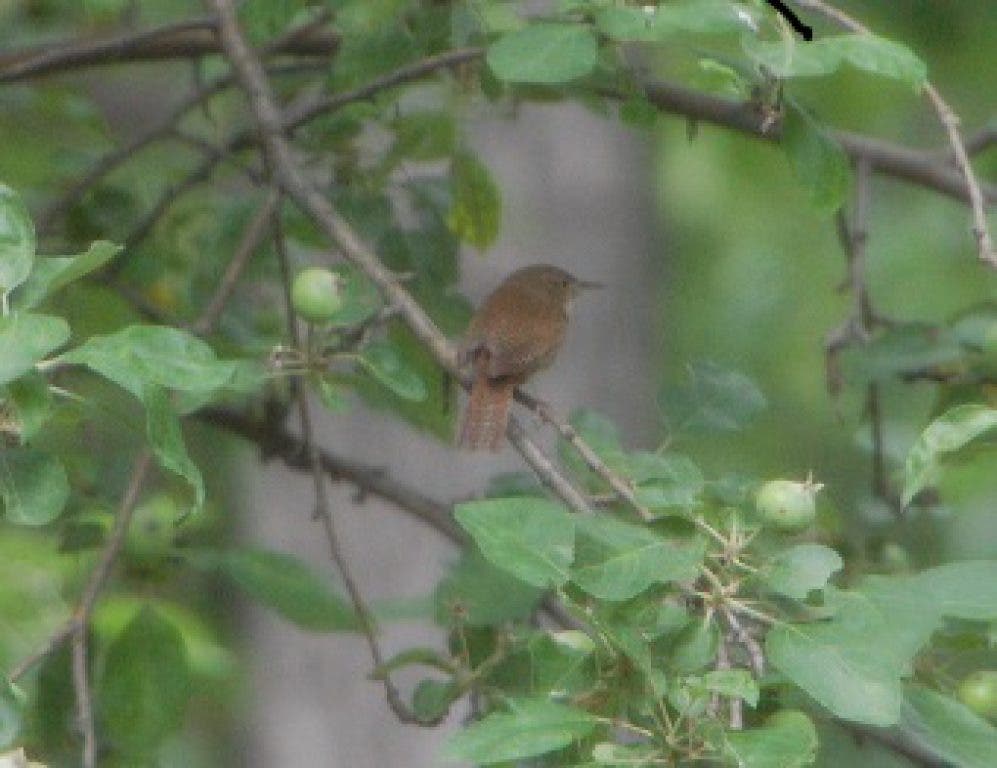

Several years ago, not long after we moved to Morris Plains and started watching the feeder birds, a friend gave me a tiny, decorative bird house she’d bought at a craft fair.
Find out what's happening in Morris Township-Morris Plainsfor free with the latest updates from Patch.
Not knowing what else to do with it, I hung it in one of my apple trees.
About a week later I noticed a twig coming from the opening. When I looked closer a house wren flew to the branch above me and scolded me for being too close.
Find out what's happening in Morris Township-Morris Plainsfor free with the latest updates from Patch.
It hadn’t occurred to me this little house would actually draw a bird. But I’ve learned a house wren will build a nest in just about anything that is the right size.
Unlike its slightly larger and more colorful cousin the Carolina wren, which will stay in our part of northern NJ over the winter when there is food and it isn’t brutally cold, the dull, brown house wren is a migrant. One day there’s quiet, the next you hear its bubbly call for hours.
That first year, after the house wren went south, I took the birdhouse in for the winter. The next spring I put it in a different apple tree, where the late summer sun would be better blocked. Another wren came and claimed it. This continued for the next five years, until the little house fell apart. At that point, I bought a bigger, sturdier box built especially for house wrens.
This year, I put the box out in mid-April, during a spate of unusually warm weather. Almost immediately we had a change. Any northbound migrants were blocked by winds from the northeast. Many early migrants flew north via other routes, bypassing my area.
Where are the birds? I wondered.
I would hear the occasional house wren on my morning walks, but the closest was in a yard across and up the street. House wrens are very possessive of their small territories, so I knew this one would not be coming to my backyard. It took weeks until the winds again shifted, opening the floodgates for the warblers, rose-breasted grosbeaks, vireos and other migrants to make a beeline for New Jersey and points northeast.
Thus on May 10, several weeks later than usual, I awoke to the bubbly song of a house wren in my backyard. Soon it was bringing nesting material to the box. The male puts in a few twigs, then brings its mate around. If she likes it, she continues furnishing the nest. Then the laying, brooding and feeding begin.
Environmentalists would say I am being a “citizen scientist” because I have been studying the habits of the house wren for years. Some would say I am helping to continue the species, even though house wrens are far from endangered despite the many dangers they face.
Perhaps. My motives are more selfish: I enjoy their company and song. They have come a long way to my yard, and that lifts my spirits.
The very least I can do is continue to provide a summer home.