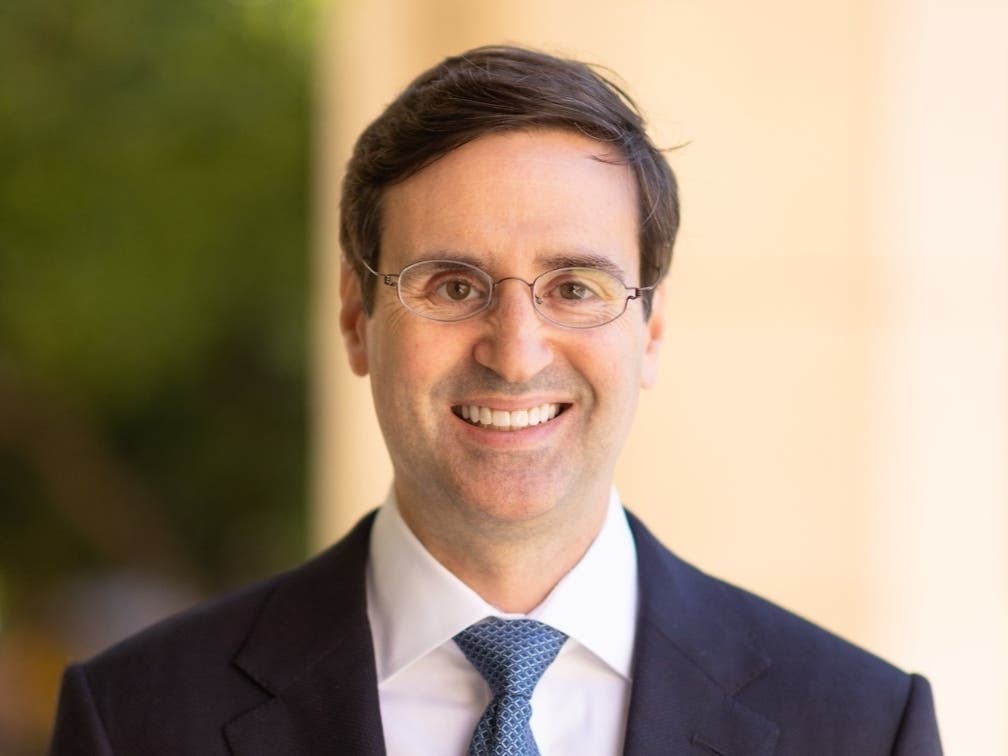
Rutgers University has announced its first chancellor of Rutgers Biomedical and Health Sciences (RBHS), and he reportedly makes more money than the University President, according to a recent report on nj.com.
Brian L. Strom, M.D., M.P.H., will become the RBHS Chancellor as of Dec. 2, Rutgers President Robert L. Barchi announced on Thursday. Strom is a renowned epidemiologist, award-winning teacher and clinician, and longtime academic leader at the University of Pennsylvania, Barchi said.
According to nj.com, his salary will be $675,000, which is $25,000 more than Barchi makes. He will also be eligible for $101,250 in annual bonuses and another $40,000 in deferred compensation if he remains in that position for at least five years, according to the report.
Find out what's happening in New Brunswickfor free with the latest updates from Patch.
He currently makes $688,000 as the Executive Vice Dean for institutional affairs at the University of Pennsylvania’s Perelman School of Medicine, where he recruits outstanding senior faculty to the Perelman School of Medicine, according to the report. He makes an additional $259,000 in bonuses.
The contract provides for a two-bedroom apartment for Strom while he looks for a house in the area, and a $12,000 annual housing allowance, a car and a driver, according to the report.
Find out what's happening in New Brunswickfor free with the latest updates from Patch.
“I have known Dr. Strom for many years. He is an internationally recognized scholar and researcher, a distinguished educator and a proven academic administrator,” Barchi said in a prepared statement. “His leadership will guide Rutgers Biomedical and Health Sciences during this unprecedented transition and establish RBHS as a model for research and education in the biomedical and health sciences. Brian has enjoyed a remarkable career at Penn, and his vision and leadership will be invaluable as the new Rutgers transforms higher education in New Jersey.”
Interim Chancellor Christopher J. Molloy will continue to serve in this capacity until Dec. 2, and then will become Rutgers University’s senior vice president for research and economic development
RBHS was created by the New Jersey Medical and Health Sciences Education Restructuring Act, which transferred seven of the eight schools at the University of Medicine and Dentistry New Jersey (UMDNJ) to Rutgers. The merger took effect July 1.
Those schools were combined with existing Rutgers University units like the Ernest Mario School of Pharmacy; the Rutgers College of Nursing; and the Institute for Health, Health Care Policy and Aging Research to form Rutgers Biomedical and Health Sciences.
“Bringing together the faculty, students and staff from the many schools and institutes that form the new Rutgers Biomedical and Health Sciences creates a division of extraordinary breadth and depth, positioning Rutgers University to excel in biomedical research, medical instruction and health care delivery,” Strom said in the statement. “Our ability to take new discoveries from the bench to the bedside – from research in the lab, through clinical trials, into the hands of doctors – will transform higher education in the biomedical and health sciences and will change the face of health care in the State of New Jersey.”
While at Penn, his work has helped strengthen clinical care, research and leadership in the Philadelphia Veterans Affairs Medical Center, which is affiliated with Penn.
Strom also established a program in clinical epidemiology and biostatistics. He helped found the International Clinical Epidemiology Network, which assists clinical faculty in developing nations grasp the impact of disease and improve the health of the citizens of their country.
He oversaw “Bridging the Gaps,” a multi-institutional program that focuses on the needs of underserved populations and trains community health and social services professionals.
He also developed a university-wide program in global health, Barchi said. He’s developed four degree programs; helped rewrite American Health Association guidelines regarding the prevention of endocarditis; and established the Center for Clinical Epidemiology and Biostatistics at the University of Pennsylvania, which is staffed by more than 550 faculty, staff and trainees. It has a budget of $67 million.
He is George S. Pepper professor of public health and preventive medicine, professor of biostatistics and epidemiology, professor of medicine, and professor of pharmacology at Penn, and he maintains a primary care practice as a general internist, according to the University.
He earned a Bachelor’s Degree in Molecular Biophysics and Chemistry from Yale University, a Master’s Degree from the Johns Hopkins University School of Medicine and an M.P.H. in Epidemiology from the University of California, Berkeley.
He was elected to the Institute of Medicine of the National Academy of Sciences in 2001, according to the University.
Molloy came to Rutgers in 2007 as as dean of the Ernest Mario School of Pharmacy. He became interim provost for biomedical and health sciences in 2011. He oversaw the integration of Rutgers and most of UMDNJ.
In his new position, Molloy will be in charge of oversight and strategic planning for the University’s annual research expenditures and management of Rutgers’ research resources, totaling about $700 million.
His office will focus on on expanding the commercialization of research through patents, start-ups and the transfer of technology to industry.
He earned a Bachelor’s Degree in pharmacy from Rutgers, and earned his Ph.D from the Rutgers-UMDNJ Graduate Program in Toxicology. He was a post-doctoral fellow at the National Cancer Institute at the National Institutes of Health, according to the University.
Get more local news delivered straight to your inbox. Sign up for free Patch newsletters and alerts.