Politics & Government
Mayor & Council Question Borough Planner on United Water Property
Dennis Kirwan returned on Monday night to address questions raised during his last presentation

The potential development of the 16-acre tract of land, 13 acres of which are under contract to be sold by United Water to S. Hekemian Group, took another step down its long approval path Monday night.
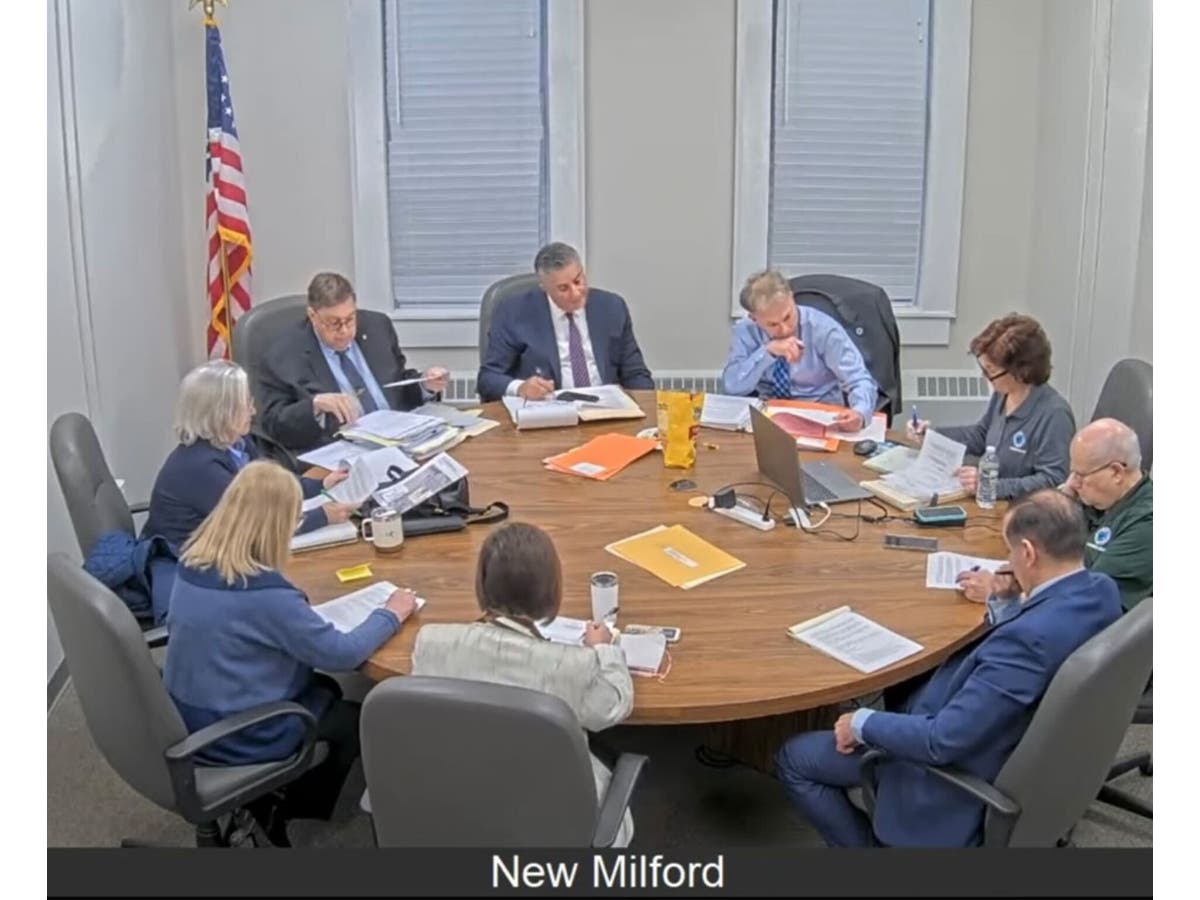
Borough Planner Dennis Kirwan appeared before the governing body and answered Mayor Ann Subrizi and the council members questions about the specifics of the project, leaving the New Milford council members with differing opinions on how the venture should move forward.
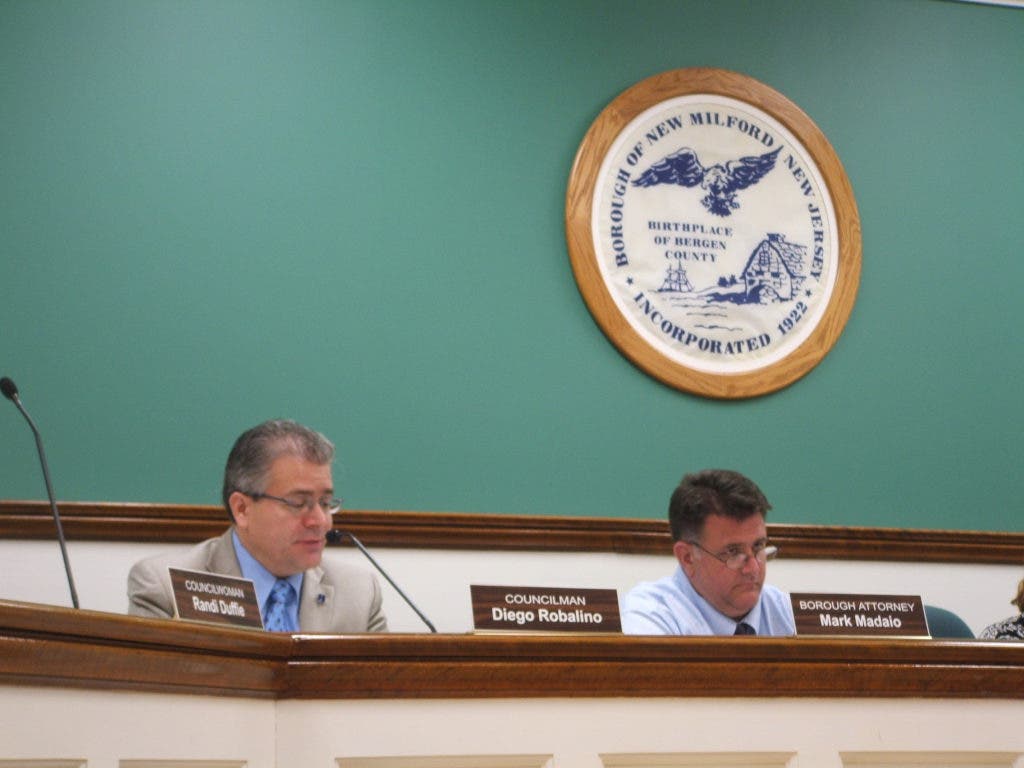
“We know what the developer wants and we are going to give this to him in whole or in part or not at all,” Borough Attorney Mark Madaio said. “At some point we are generally going to need to pick a horse and ride.”
Find out what's happening in New Milfordfor free with the latest updates from Patch.
The property, which sits on the corner of River Road, Milford Avenue and Madison Avenue, has been under debate for years and as it stands now the development is at a stage where it “can go one of three ways,” Madaio said.
One option would be for the town council to create a new ordinance that would re-zone the property to be used for commercial buildings – allowing the developer to move ahead with their plan to construct a new Shoprite, a family restaurant, bank and 10,000 square feet of commercial space for local merchants.
Find out what's happening in New Milfordfor free with the latest updates from Patch.
Also included in this option is a gift to the town of New Milford – approximately one third of the property that hugs Milford Avenue - that Mayor Subrizi said could be used to create a new athletic field.
Kirwan told the council if the land, which is currently slated as an area that would satisfy New Milford’s Council on Affordable Housing (COAH) requirements, is re-zoned for commercial use other areas of town would need to replace the approximately 43 units the town is expected to provide as affordable housing.
Kirwan was confident in the town’s ability to find other areas in town that could be slated for affordable housing projects and fulfillment of the COAH requirements.
“I think you’re in a good position,” Kirwan said. “You only have 43 units to spread over possibly two or three sites.”
Councilman Diego Robalino, Councilwoman Celeste Scavetta and Councilman Dominic Colucci offered their concerns about the commercial development which ranged from the placement of the proposed bank, the inclusion of a strip mall and ensuring the development fit aesthetically with the neighborhood.
“I’m not confident in the plan as it exists right now,” Scavetta said. “I want to examine the closer points.”
The second option would be to keep the current zoning structure for the land and allow for a developer to create 38 single family homes that would be zoned across the 13 acres that are under contract for sale.
Councilwoman Randi Duffie, who said she would support keeping the land zoned as residential under ideal circumstances, said she worried about the town’s lack of open space and ability to relocate the COAH units.
“Our town open space is poor,” Duffie said. “It’s fewer than 10 percent. We need to think in realities.”
Kirwan said the creation of 38 new homes on the property would put a burden on New Milford’s school system, as the single family homes would be purchased by families with children who would enter various New Milford schools.
Kirwin used a Rutgers University study to estimate that 42 children would enter the system; however Mayor Subrizi and Madaio believed the number would be higher.
Scavetta was concerned with the school’s ability to handle the increased number of students.
“We don’t want our kids to be taught in trailers,” Scavetta said. “I’ve seen that in other towns.”
The final option discussed by the council was a possible mixed-use zoning ordinance; however both plans that do not re-zone strictly for commercial use would negate the gift given to New Milford, and Mayor Subrizi hoped a “land swap” with the high school might be a solution to fulfilling the COAH requirements lost in the re-zoning process.
“I don’t think it’s big enough for mixed use,” Subrizi said. “Perhaps we could swap football fields with the high school and put high density housing higher up off the soggy area where the field is now.”
No final decision was reached, but the council decided to discuss the matter further in their next meeting on Tuesday, August 23.