Schools
School District Launches New Science Curriculum
In order to better prepare Paramus students for learning in the 21st century, the district overhauled it's science curriculum to create a more cohesive learning experience.
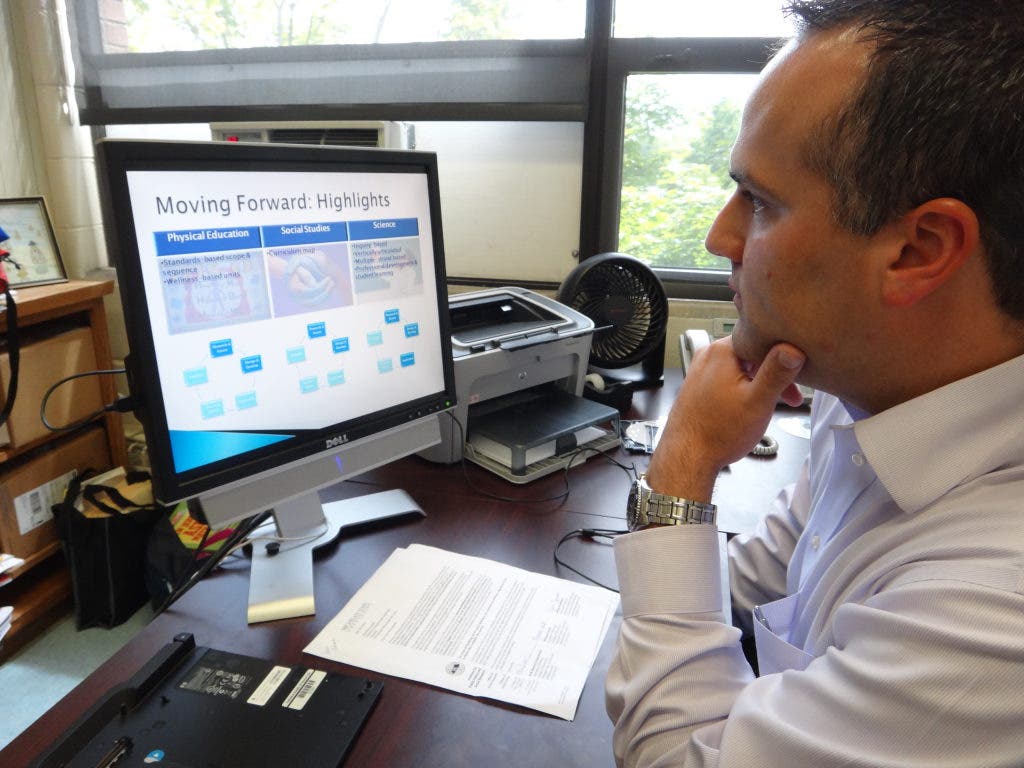
When Paramus students return back to school in September, the school district will introduce several new curriculums designed to help them compete in the global market.
Sean Adams, the district’s supervisor of secondary education, outlined how the new programs will align with older ones also slated for future revisions.
One of the most significant areas of change will be K-12 science program. Five years ago the district took a look at the district science program, as well as test data, teacher feedback, and student feedback.
Find out what's happening in Paramusfor free with the latest updates from Patch.
“We consulted with university professors and other districts in the area that have been identified as having exemplary science programs, such as Northern Highlands,” said Adams, who revamped the curriculum with Gail Wiser, Supervisor of Elementary Education.
“We started looking at ways to create that level playing field to unify the science experience for all students in the district and increase the rigor our students are exposed to," Adams said.
Find out what's happening in Paramusfor free with the latest updates from Patch.
Adams, who was hired as an English teacher in 2001, and when on to lead the English Department in 2009 before becoming supervisor of secondary education, said after two years of research and development of the new science curriculum, the result was a revamped K-8 science program, with a phased-in implementation of a revised high school program.
“In K-8, we wanted to provide a commonality of experience for all of our students regardless if they are in second grade at Midland or Memorial elementary school,” Adams said. “And we want to ensure the third grade curriculum anticipates and builds upon the second grade curriculum in our elementary schools.”
Adams said the new curriculum will also create a strong common base as students move from elementary, into middle school so that there is consistency throughout the district when they enter high school.
Traditionally, K-5 students were taught three strands of science each year: life, earth and physical science, but in 6th grade, the district moved away from the multiple-strand based approach and moved to strand-specific curriculum.
Six grade students learned earth science, 7th graders focused on life science, while eight graders only learned physical science.
“It wasn’t a fully cohesive experience for the students,” Adams explained. “By the time they got to eighth grade, they hadn’t had earth science since sixth grade, and they started to lose that connection among the three strands.”
The district also noticed a disconnect between the students, the three strands of science, and the NJASK 8 test data. According to Adams, NJASK only tests science in fourth and eighth grades.
“When eighth grade students took the NJASK 8 science test in May, and we took a look at the questions that dealt with earth science, they were lost,” Adams said. “It had been over two years since they had earth science.”
As a result, the district overhauled the entire K-8 science program to make it more cohesive in order for sixth, seventh and eight grade students to be exposed to all three strands of science.
Moving forward, kindergarten through eighth grade science strands will follow a very specific line to truly create a foundation students can build upon successfully through eighth grade.
In the coming days, Paramus Patch will look at other curriculums that have been redesigned for the district.