Politics & Government
Officials: Parsippany Is Safe and Protected Post-9/11
New technology, training and planning make the town better prepared for a crisis than it was 10 years ago.




Mayor James Barberio and several township officials say Parsippany is safe and well protected 10 years after 9/11. They credit Parsippany’s emergency preparedness to improvements in planning, training, communication, equipment and the unwavering dedication of hundreds of volunteer emergency responders.
“We have 95 police officers, 250 volunteer fire fighters, 30 fire truck engines, 100 volunteer and paid EMS and rescue, 9 ambulances, a citizen’s emergency response team and the Public Works. In any type of emergency we will come together,” said Barberio. “The volunteers in this town are very committed. They love the fact that they can be here to help. Their mission is to keep the town safe and out of harm’s way. They know that. You can see it in their faces and in their eyes.”
Barberio says he has gone to several fires in town, including incidents at Vreeland Tire and Baldwin Oaks Manor and says he keeps a watchful eye on the town.
Find out what's happening in Parsippanyfor free with the latest updates from Patch.
“I took an oath that public safety is at the forefront of my administration,” he says. “I am working 24/7. I drive around town at night sometimes at 1 to 2 a.m. to check certain areas of town. I’m very hands-on.”
Parsippany is much better prepared because of improved technology, according to Barberio. He cites his cell phone which enables him to receive emergency text messages, Facebook and Twitter accounts of the Parsippany Police Department; MCUrgent, a Morris County alert system; and a new resident concerns email option on the Mayor’s Action Center page at municipal website Parsippany.net. He also points out that emergency notifications post to the township site across a breaking news banner in red.
Find out what's happening in Parsippanyfor free with the latest updates from Patch.
A major challenge facing the mayor is maintaining police staff despite retirements and budget constraints. He says he does not want police personnel to drop below 90.
Parsippany Chief of Police Anthony DeZenzo is new to the job, having been sworn in Sept/ 1, but he is a 29-year veteran of the force. He said the 9/11 attacks made his department better prepared to respond to emergencies in a more organized and efficient fashion.
"Law enforcement is in constant contact with other agencies such as the Morris County Prosecutor’s office, the joint terrorism task force, and FBI. We have created open lines of communication with the public to report any activity," said the chief. "Communications now enable interoperability between police, fire, EMS, the office of emergency management, and the county. An Incident Command System nhelps emergency services respond in a more organized manor.”
Emergency Management and Homeland Security
U.S. Sen. Frank Lautenberg, vice chair of the Senate Appropriations Subcommittee on Homeland Security, recently announced nearly $158 million for homeland security programs in New Jersey. The funding will be used to secure high-risk urban areas, ports, transportation networks, critical infrastructure and toward improving emergency communication, preparedness and response efforts throughout the state.
Scott DiGirolamo, Office of Emergency Management Coordinator for Morris County, said New Jersey has received homeland security grants since approximately 2003.
“Since these grant programs started, we received about $15 million and another $5 million related to bioterrorism prevention, public health, pandemic preparedness, strategic stockpiles. We’re close to about $20 million for the benefit of the entire county of Morris,” DiGirolamo said.
The County Grants Working Group determines how grant money is spent in Morris County. This group is comprised of representatives from police, fire, EMS, emergency management, the prosecutor’s office and sheriff’s department, hospitals and public health and individuals from Parsippany and Morristown, the cvounty's two largest municipalities.
DiGirolamo explained that early on, the county bought gas masks for every police officer in the county, protective breathing hoods for every first-aider, decontamination equipment for the fire departments. He said an important lesson from 9/11 was the need to protect responders from getting ill or being killed while rescuing civilians.
Interoperable radios were then purchased for every police car, fire truck, and ambulance that works on the county system. DiGirolamo said that after 9/11 officials leverage technology that everyone can use instead of purchasing their own system. After 9/11, he said the county also developed the Reverse 9-1-1 alert system.
Parsippany Emergency Management Coordinator Eric Hubner said in Parsippany, his team's job is to protect lives and property from large scale disasters whether they are natural, technological or man-made.
“I’m responsible for planning, activating and coordinating the conduct of emergency management operations in this town,” said Hubner.
The OEM coordinator delineated four phases of emergency management:
- to identify and mitigate any potential threats
- to prepare plans to deal with disasters
- to coordinate responses to disasters
- to proceed with recovery efforts after disasters take place.
In compliance with the U.S. Department of Homeland Security and the Federal Emergency Management Agency, Hubner said Parsippany has an Emergency Operations Plan and a Local Emergency Planning Council which enable the town to receive federal reimbursements.
The Local Emergency Planning Council is comprised of the police and fire departments, EMS squads, Public Works, administration, rescue and recovery, hazmat, public utilities, schools, and social services.
“We all sit down and we’re charged with putting this plan together because the town has got 400-500 employees. We all do business everyday for the benefit of our community," Hubner said. "We talk about if something were to happen how would we all work together, and thankfully we work very well together."
The Office of Emergency Management got its start during World War II, when it was called the Civil Defense Disaster Control. The name change came after FEMA came about in the 1960s, said Hubner.
“Parsippany is well protected today, and it’s primarily due to the great teamwork of everyone in town, the town employees, plus the tremendous amount of volunteer fire [fighters], EMS and rescue folks," he said. "If you throw in the police, there are probably 400 well-trained first responders to help protect Parsippany every single day.
“In Parsippany we never forget. On 9/11, the world changed for us that day. We don’t look at things the same way. It’s just natural that we all have that extra suspicion about us.”
Hubner said he wants to get public more involved in emergency planning.
He explained that after Sept. 11, 2001, the federal government instituted the National Incident Management System as the standard for how the nation will deal with any kind of incident. All town employees must now take this training so that they understand what goes on in any large-scale incident.
Hubner leafs through a brochure: Morris County Office of Emergency Management Equipment Guide, March 2009, which pictures and describes Morris County equipment purchased after 9/11 that benefits Parsippany and all of Morris County. Included are a mobile command post, radio interoperability vehicle, portable surveillance cameras, variable message boards, "decon" trailers, crowd control barricades, a CART trailer for animal rescues and more.
The OEM coordinator works out of Parsippany's Emergency Operations Center. He oversees three groups of volunteers: the Radio amateur Civil Emergency Service, the Community Emergency Response Team and Hazmat, a team that deals with hazardous materials. CERT training is open to the public. These activities are described on www.parsippanyoem.org.
The School System
Parsippany has two high schools, two middle schools, and 10 elementary schools with approximately 7,400 students and 1,000 staff. Dr. LeRoy Seitz, superintendent for the Parsippany School District, said student safety is the number one priority.
“We are working as a team with local authorities, police, emergency management, the county prosecutor’s office and state and federal officials so that we are prepared and can react when a situation occurs,” said Seitz. “We also recognize the importance of communication and the need to get information to the parents and students when appropriate and as soon as possible."
The superintendent said numerous changes have taken place within the schools to improve security in the past decade.
"We have reinforced our buildings. We have installed a number of security cameras and are continuing our efforts to reduce harassment, intimidation and bullying. Terrorists from abroad a major concern, but we have threats right here in our own state and in our country," he said.
The first major shift in school emergency preparedness before the 9/11 attacks. Seitz said the 1999 Columbine school shooting served as edcuators' wake-up call. Since then, regulations now include not only fire drills, but lockdowns and evacuation drills. Schools also have drills for armed intruders or when an unauthorized person is on the grounds, plans if a criminal or a bear is in the area, and if there’s a toxic spill.
Prior to Columbine, he said, the attitude toward school security was laissez faire. Afterward, detailed plans and training for all staffers became the norm.
Additional post-9/11 security measures include providing the county prosecutor’s office with detailed specifications including layouts and pictures of each school to increase preparedness of responders, random safety checks by the superintendent of each school’s door locks and security cameras. New technology includes the EdAlert system for texting and emails.
On Sept. 11, 2001, Seitz was in charge of 3,000 students at the Hunterdon Central Regional High School. He managed them with a team and even though communications went down and students saw the event unfold on television, a crisis management team ensured everyone’s safety.
Emergency Medical Technicians
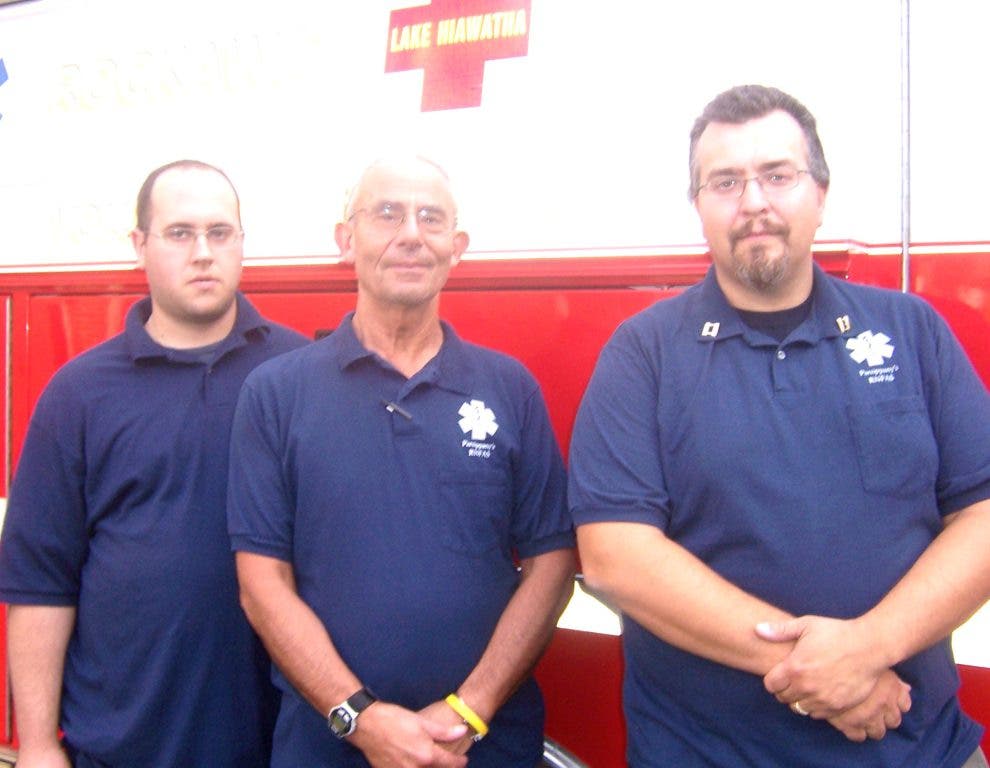
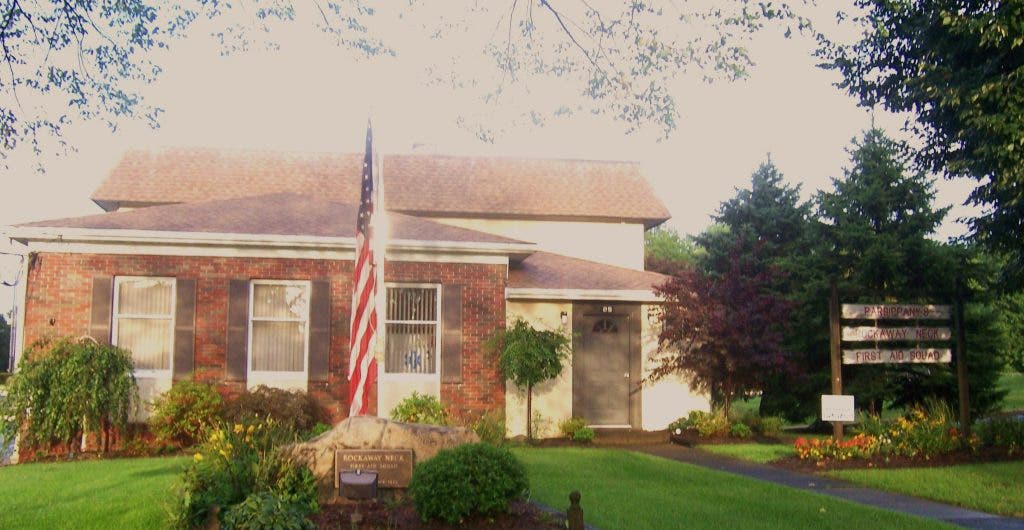
Marianne Willis-Cucchiara, a lieutenant in Parsippany’s Rockaway Neck Volunteer First Aid Squad, recalled going to Liberty State Park with a paramedic unit out of Mountainside Hospital on that fateful day. There, she saw hundreds of ambulance trucks from surrounding areas.
“It was a beautiful sight seeing so many people there just waiting to help,” Willis-Cucchiara remembered.
EMT Rob Greenberg was in Manhattan on 9/11. He was a manager at Marsh & McLennan on Avenue of the Americas when the computers shut down and wouldn’t re-start. His company suffered a high number of casualties because it had many workers located in the towers. Greenberg said that people don’t forget the big scope of the event, but over time, they heal and people become complacent.
EMT Danny Fucito said he saw the attacks unfold on television in his high school classroom. He was 16 at the time. The experience gave him the urge to help people, so a few years after he graduated high school he became an EMT.
Capt. Christopher Brown, a 22-year veteran of EMS, left his post as chief technician at a dialysis center to rush to the squad house on 9/11. He remembers leaving work to meet up with others who were getting ready to deploy to New York.
Brown said after 9/11, EMTs practiced more mass-casualty drills, more training for weapons of mass destruction and preparedness for areas of interest. He noted that the threat of another attack always exists, but he feels more comfortable living in Parsippany than in a large urban area.
Willis-Cucchiara said the sense of urgency and alertness is just as real today.
“You’re more alert now because you see what can happen," she said. "You were always taught about it, but to see it first hand and being so close to it, you know it could have been us.”
Fire Prevention and Safety
Parsippany fire prevention officials say since 9/11, recordkeeping, inspections, evacuation plans and accountability have all improved. Fire Marshall Gene Iandolo said accountability is for stored units in commercial settings and for people. On 9/11 no one knew who was in the buildings and who got out, so this is one of the bigger changes, he said.
According to Fire Official Michael D’Alessandro, the Division of Fire Prevention does 4,000 inspections and makes the fire department aware of any hazards that are in commercial buildings. His office has records of each stored unit and company’s evacuation plans.
Tommy Strunck, fire chief of the Lake Parsippany Fire Department, is a 32-years in fire fighting. He's also considered a hero: He's known for having run into a burning house with no suit on and saving a woman. He received the 200 Club award for excelling in public service.
Strunck also works for the township's Sewerage Utility. He says after 9/11, “he’s always looking for different things that shouldn’t be there.”
Thirty-eight-year veteran Gabe Yaccoriano, fire commissioner for Fire District #3, speaks of his comrades with pride.
“Parsippany has the finest fire companies in the state. They have the best personnel, the equipment and the best training," he said. "Residents don’t have anything to worry about. If they call us, we’ll be there and we’ll do the best job that anyone can do to take care of their problem.”
Strunck points out the Rescue and Recovery office across from his firehouse on Halsey Road in Lake Parsippany. They are volunteers who perform extractions from vehicles and collapsed buildings, scuba diving and pumpouts from flooding. They also cut trees that have fallen into the street.
David Cavaliere, chief of Parsippany Fire District 5, has served 24 years as a volunteer firefighter and 11 years as a police officer. He went to Ground Zero on Sept. 13, 2001, and spent hundreds of days there as part of the bucket brigade. He found fingers in the cleanup. A woman’s torso lay inches from him. After seeing what the victims went through that day, Cavaliere says he has no fears.
Cavaliere suggests hotlines and intersection billboards will help communicate with the public in emergencies.
Working Together Makes the Difference
Dedication and the interdepartmental teamwork of everyone involved in Parsippany emergency services is credited alongside all the latest technology and training, new personal protective gear, radios and trucks.
The teamwork and tenacity of Parsippany's police, school, emergency management, fire fighters and rescue volunteers was on full display during the recent flood crisis created by Hurricane-Tropical Storm Irene.
The traits manifested during that situation leads Parsippany's chief executive to feel confident in the face of any emergency that threatens the township.
Applauding his multifaceted team, Mayor Barberio saluted the courage of the men and women who work to keep Parsippany safe.
“You can train people to do things," he said, "but you can’t teach them to be brave.”