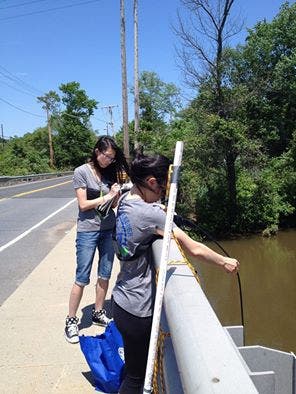
Starting in May, volunteers with New York/New Jersey Baykeeper will be testing Raritan Bay for pathogens, specifically human or animal fecal bacteria.
"Volunteers will go out with a water collection instrument and collect samples, and those samples will be tested for bacteria in a lab," explained Meredith Comi, Oyster Restoration Program Director at NY/NJ Baykeeper. "What we're testing for is enterococcus, or human fecal bacteria."
Unfortunately, it's not uncommon for sewage runoff to drain into bays, rivers and oceans. After periods of heavy rain, storm water mixes with wastewater due to the way New Jersey's sewers are designed, and the combined sewer overflow can flow into bodies of water. Sometimes, sewage treatment plants are even intentionally allowed to dump partially or untreated sewage into waterways, Comi said.
Find out what's happening in Woodbridgefor free with the latest updates from Patch.
The state and county routinely tests all bathing beaches along the Raritan Bay and Sandy Hook area for enterococcus bacteria. But Comi's volunteers are testing beaches that aren't usually used for swimming, but instead kayaking, boating, fishing and walking.
"We'll be testing 10 sites alog the Bayshore: 3 in Perth Amboy, 1 in Cliffwood Beach, 1 in Keyport, 1 in Keansburg, 1 at the Naval Weapons Station Earle, 1 in Highlands, 1 in Atlantic Highlands and 1 in Union Beach," she said.
Find out what's happening in Woodbridgefor free with the latest updates from Patch.
They will be testing once a week, 20 times total, from May through August, and especially after a heavy rainfall. The testing is funded with a New York New Jersey Harbor & Estuary Program grant.
Photo: Volunteers test Raritan Bay water last summer.
Get more local news delivered straight to your inbox. Sign up for free Patch newsletters and alerts.