Neighbor News
The Holistic Benefits of Dance Education
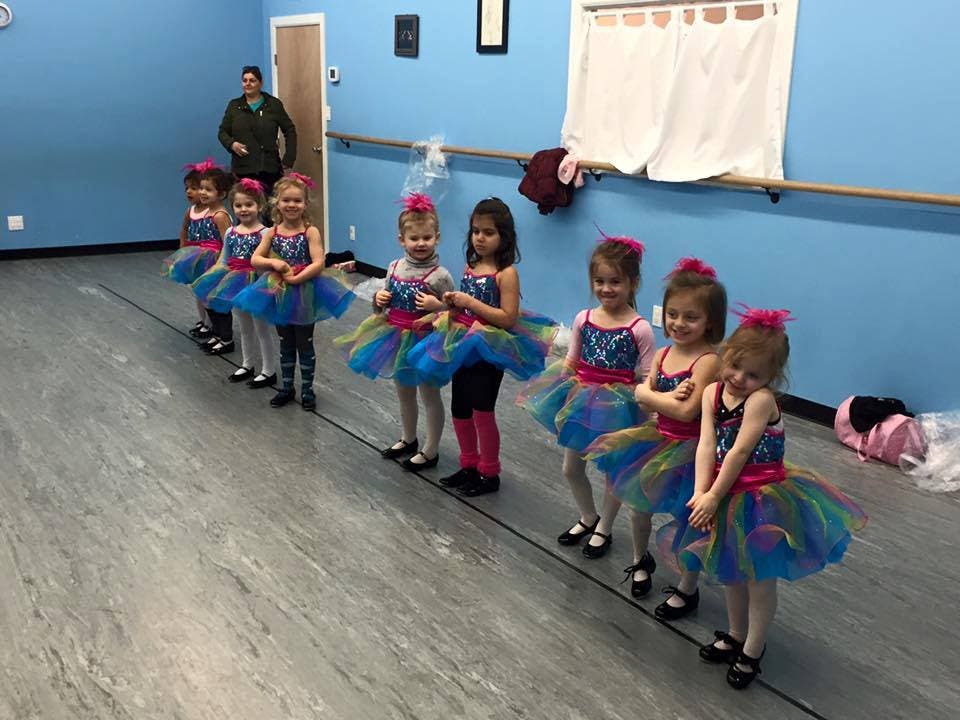
Dance helps children with language acquisition, social skills, self-esteem, physical health, and cognitive development.

By Kelly Peckholdt
While it is common knowledge that dance is a great form of exercise and an even better creative outlet, few people are aware of the holistic benefits of a quality dance education. Children naturally love to move, and they move to achieve mobility, to express a thought or feeling, or because it simply feels good. Movement, however, also helps their language acquisition, social skills, self-esteem, physical health, and cognitive development.
Studies show that dance helps children develop literacy skills and language acquisition. Literacy involves the translation of movement and communication into words, so over time young dancers internalize the necessary movements as well as learn how to articulate themselves more clearly. Through teaching young dancers the correct terminology that corresponds with the movements they are performing and by teaching it through fun songs and games, dance fosters children’s cognitive development from an early age. It is common to see toddlers and preschool age dancers join class in September with limited spatial awareness and verbal skills, and by June the child has grown in leaps and bounds.
Find out what's happening in Babylon Villagefor free with the latest updates from Patch.
According to the Journal of Physical Education, Recreation, and Dance, not only is dance great physical exercise, but it also has a significant impact on higher-level thought processes. The brain learns fastest and most efficiently between the ages of four and twelve. As we move, our muscles produce proteins that travel through the bloodstream and support the mechanisms necessary for higher-level thinking and creativity. Additionally, practice, discipline, and focus are required skills for a dancer, and these skills are useful across many other areas of children’s lives. Since dance helps to develop many essential life skills and foster creativity, students who regularly participate in dance classes tend to perform better academically than some of their peers.
Dance class is also a great way for children to learn a routine, develop various social and communication skills, make lifelong friends, and learn to be part of a team. In a supportive environment, children who tend to be shy and reserved fit right in, and everyone learns how to work together as a team. Dance can also be a therapeutic outlet for children who are physically or mentally disabled. The benefits of dance for disabled children are countless and incredibly valuable. Music is fun for all children but can be especially helpful for children with special needs in allowing expression and improving mood. There is, unfortunately, still a stigma associated with special needs, so interacting with other children with similar needs in a non-judgmental setting encourages social integration and confidence. Some disabilities also have motor skill delays, so children who participate in dance class can practice their motor skills.
Find out what's happening in Babylon Villagefor free with the latest updates from Patch.
Despite all of these wonderful, often unknown benefits of dance education, dance is very often overlooked in the public school system. Unfortunately, there is often a lack of funding for extra programs like this. There are ways to incorporate this kind of movement into our education system, however, without requiring funding for separate facilities and programs. There are many ways in which dance can be used as part of an interdisciplinary education in our schools. Dance can be used to enhance lessons in history, language, and culture. When we dance, our bodies move through space in arcs, circles, and patterns, so dance movements can be incorporated into math lessons, too. In science, dance is useful for children to learn anatomy. Children start to consciously think about the muscles that they are using and how to manipulate their bodies to perform certain movements in class.
As childhood obesity rates remain high in this country, consider a more holistic approach to your child’s development. The physiological, social, intellectual, and aesthetic benefits of a dance education are limitless.
Kelly Peckholdt is an educator and the owner of Positions Dance Studio in Babylon Village. She is also a certified Personal Trainer, Fitness Instructor, and Health Coach.