Community Corner
Talking About Childhood Obesity: When To Use The “F” Word With Your Kids
Is it finally time to talk honestly with kids about the dangers of becoming fat?
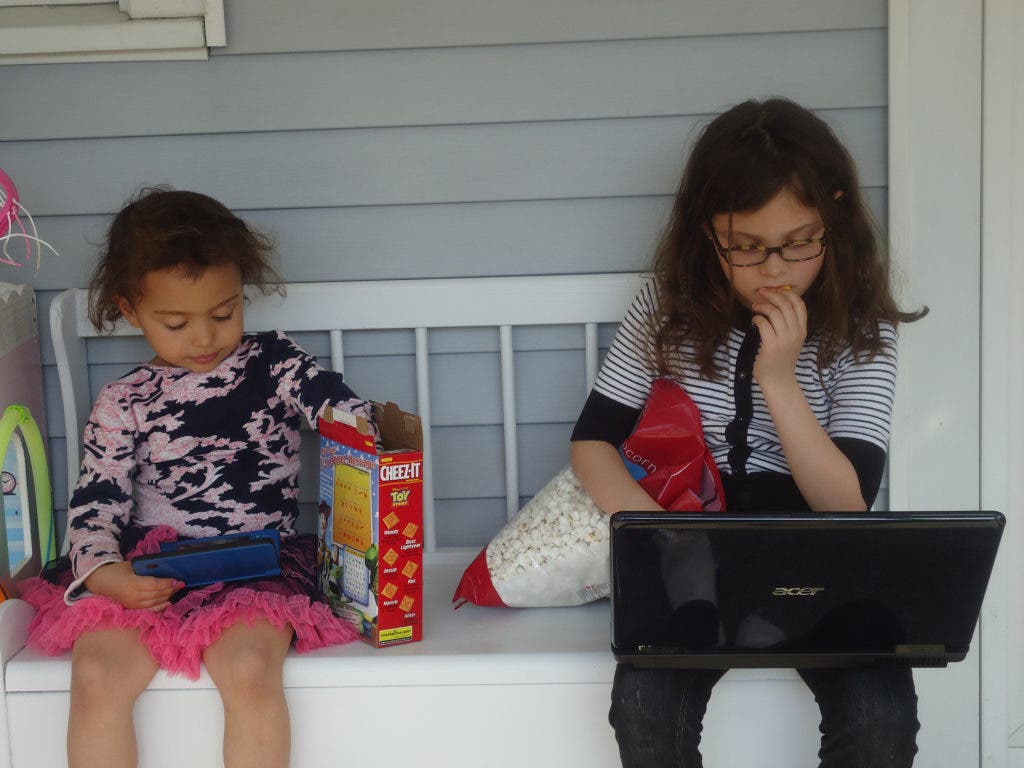
Today, about one-third of all children in the U.S. are considered to be overweight, and childhood obesity has leapt to the top of the pile of health concerns for many American parents.
A new study by the University of Michigan points to children’s unhealthy eating and TV watching habits as a possible cause of the obesity epidemic among children. The study suggests that bad habits are more closely related to obesity than genetics, Science Daily reports.
For parents, the statistics are both scary and a little confusing because—unlike more concrete dangers such as talking with strangers or using drugs and alcohol—talking about weight with kids can be a taboo topic.
Find out what's happening in Bedford-Katonahfor free with the latest updates from Patch.
With obesity on the rise, is it finally time to talk honestly with kids about the dangers of becoming fat?
In a recent trip to the pediatrician, Allison Collins noticed that the doctor was very direct with her daughter Katie about activity and exercise. Katie, who starts kindergarten at Increase Miller this fall, was having her 5-year-old check up when the doctor started asking her pointed questions about her exercise habits.
Find out what's happening in Bedford-Katonahfor free with the latest updates from Patch.
"I was sweating, but it was good because I think Katie realized it is important coming from the doctor," said Collins.
Nutrition therapist Amy Peck of Courtyard Nutrition & Therapy Associates in Katonah said that parents and professionals should tread lightly when discussing weight with children.
“Obesity is not the same thing as "stranger danger," and we don’t want a lot of negative, danger messaging when it comes to nutrition and fitness," she said. “Saying to your children, don’t do this or you’ll get fat, is not the message you want to send,” she said, adding that the focus should be on the joy of moving your body and of nourishing yourself well.
Peck, who has been counseling children and adolescents with eating issues for the past 27 years, said that when it comes to helping our children develop healthy habits, setting a good example is the single most important thing because in reality, it isn’t what we say but what we model for our children that makes a lasting impression.
Collins said she was lucky because her kids were good eaters.
"I don’t discuss calories or weight with my kids, but I try to eat healthy and smart—to set a good example for them," she said. For her part, she's focusing on appetite control. "Once my kids got out of the baby stage—even if I tried to hide in the corner and eat cookies, they would find me.”
According to Peck, creating healthy eating habits it is also important for one to understand “the division of responsibility” with respect to food. Parents must be responsible for what children eat, when they eat, and where they eat, but children should take responsibility for how much they eat.
“This division of eating responsibility was created by Ellen Satter, the guru on how to parent children through food issues,” said Peck. "The idea is to provide—not deprive.”
Still, parents have to be prepared to discuss the ramifications of weight gain, and the related issues under certain circumstances, said Peck.
"If your child approaches you with body image concerns you have to respond. And if you become concerned about your child’s weight in a significant way you also need to take some action. This might be an appropriate time to involve a trusted professional like a dietician or your pediatrician,” Peck said.
Parents with children at Fox Lane Middle School might consider turning to Amanda Gerber for advice. Gerber, who is the school’s health teacher, explained that today’s health curriculum teaches much more comprehensive concepts than in past years.
“Health education used to be about learning about the building blocks—today I teach concepts such as portion control, label reading, and how many calories your body needs to maintain your current weight,” she said.
For students that are interested in taking it a step further, Gerber leads a Healthy Cooking Club at Fox Lane. “Our club is opened to Fox Lane sixth-graders who are interested in gaining hands on information about nutrition and weight maintenance," she said. The school brings in chefs, nutritionists, and other professionals to help provide hands on education such as creating healthy snacks.
For more information about talking about and promoting healthy habits for your kids, you can visit Amy Peck’s facebook page at http://www.facebook.com/amygpecknutritionist.