Politics & Government
Town Boards Vote to Consent on Graham Annexation; Referendum is Next
Decisions followed emotional recap of the family's predicament. Gerrard's past donation to Congressional bid questioned.


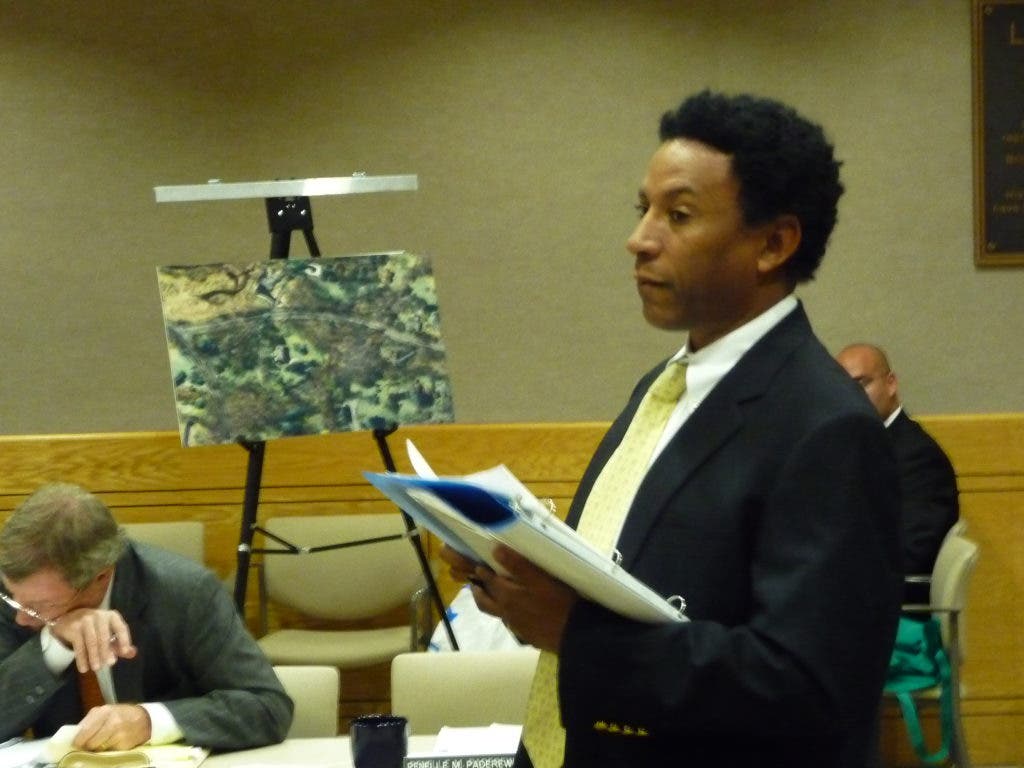


At a joint meeting Tuesday night, the New Castle and Mount Pleasant Town Boards each voted to give consent to the of the Graham property from Mount Pleasant to New Castle, paving the way for a special referendum on the matter and increasing the chance that the family members will be able to use their water normally.
Both boards decided that annexation of the 4.625-acre property, located at 233 S. Greeley Ave. (Chappaqua P.O.), bordering New Castle and across the street from Pleasantville, is in the public interest. The reasons for it being so, according to the adopted resolutions, included the fact that both boards have no objection to the petition, no environmental impact in either town and there not being any assumption of debt in the process. Many services would also stay the same, - exceptions include police, sewer and water - such as the coverage of the property under the Pleasantville school district.
The votes followed a plea from property owner Lawrence Otis Graham, who is a prominent attorney, commentator and one-time Congressional candidate, to allow for his property to be connect to potable municipal water from New Castle. He and his wife, Pamela Thomas-Graham – her background includes having been CEO of CNBC and working at Credit Suisse - jointly submitted the annexation petition in May because of years of problems they dealt with from their existing well water.
Find out what's happening in Chappaqua-Mount Kiscofor free with the latest updates from Patch.
“I’m not here tonight because we are seeking a convenience or a luxury,” Graham said. “I’m here because we’ve endured a tremendous personal and financial cost.”
Annexation to New Castle is being sought because other alternatives, such as extending Mount Pleasant’s municipal system or annexation to Pleasantville, were not seen as workable. In Mount Pleasant’s case, its water system is too far away for it to be practical, and Pleasantville’s lack of geographic contiguity to the property was cited by Graham as an issue.
Find out what's happening in Chappaqua-Mount Kiscofor free with the latest updates from Patch.
While the Grahams could theoretically get New Castle water while remaining part of Mount Pleasant, a separate water district for them would need to be creating, according to a requirement from the New York City Department of Environmental Protection; the municipal water comes from the city’s reservoir system. Creating a single district was judged to be costly. Given the circumstances, annexation is viewed as the most viable scenario.
Miscarriages, Health Problem, Cited as Having Come From the Well Water
The Grahams bought the property in 1998. Problems arose in 2000, when the couple and their son, who was just two years old, began experiencing bouts of diherria, he explained, as well as a “strange metallic odor” and taste in the water.
Realizing that the water was suspicious, Graham had tests done. In September 2000, he said, the water was rated as not being potable by the Westchester County Department of Labs, with high levels of coliform having been found. Eventually, the Grahams installed five costly filtration systems, ranging from an ultra-violet system to treat the well water, to setting up a water distillation unit. On many occasions, they used a “shock” process, where chlorinated bleach was poured into the well, which were limited in effectiveness.
Despite all of the work, the water’s use is limited. The Grahams do not drink it, using bottled water, and only use it for watering the lawn, washing dishes due to the hot temperature making it safer and with laundry. Bathing at the house and use of the swimming pool were also stopped.
The water issue became personal for the Grahams when they got in touch with a specialist regarding a series of miscarriages that Pamela Thomas-Graham had from 1999 to 2001. The specialist asked if they were on well water, which was acknowledged. The water was tested and a high level of nitrogen was found. The problem with nitrogen, Graham explained, is that it can lead to miscarriages. Despite the family’s personal tragedies, they had good news when they subsequently adopted two kids, in 2002.
The personal loss made the Grahams take notice to a potential source of the problem, a former industrial site across the street, on the Pleasantville side.
“This was a difficult conclusion for us, but it was one that was immediately made us think of the property across the street,” he said.
That property, roughly five acres, was once used by C.V. Pierce, which worked on fertilizer, repaired and stored tractors and maintained oil drums and chemicals for repairing engines, he said. In addition, Graham also said that illegal dumping took place on the site. The business closed in 2002 and the site has been slated to become a housing development.
Since that time, Graham has sought over the years to get their water status changed, including talks with Mount Pleasant, New Castle and Pleasantville officials.
Gerrard’s Past Donation to Graham’s Congressional Bid is Raised
Once people were allowed comment for the public hearing on the proposal, John Ehrlich, a Chappaqua resident, presented evidence of a 2000 donation, worth $1,000, from future Supervisor Barbara Gerrard to Graham’s run for the U.S. House of Representatives, an election that he lost then incumbent Sue Kelly.
In highlighting the donation, Ehrlich, who did not support or object to the petition, said he was “simply in the interest of transparency” and having the facts out. His concern was that everyone in Westchester was able to have the same process as the Grahams, and gets concerned when people “may or may not have influence because of who they are affiliated with.”
This assertion drew criticism.
“I don’t think he should be penalized for having run for public office,” said New Castle Councilman Robin Stout, who added that he supported Graham’s campaign.
Mount Pleasant Supervisor Joan Maybury, as well as Graham’s attorney, each noted that the annexation process is open to anyone, without special treatment, while Mount Pleasant Councilman Mark Rubeo noted that the matter has been looked at independently by its board, in response to Ehrlich’s concern about there being a potential conflict of interest.
Rob Greenstein, who is running as an independent in this year’s New Castle Town Board election, called Graham’s presentation “an unbelievably persuasive presentation with an incredible amount of evidence.” He questioned how the vote would benefit Gerrard, noting that she donated, rather than the other way around.
In response, Ehrlich spoke again, noted sympathy for the Grahams’ situation, while also reiterating his call for disclosure among elected officials overseeing the process.
Ultimately, Gerrard chose to abstain from voting, although she “failed to see a problem with my voting.”
Going Forward
With consent given by both boards, the next step is for a referendum to be held in Mount Pleasant, among voters in the area proposed for annexation. In this case, it will just be the Grahams. The date still needs to be set.
If the special referendum passes - almost certain because it just involves the petitioners - then the New Castle Town Board would vote on whether or not to make the change effective with a local law. If the board votes to do so, then the town will gain five new residents and grow in territory.
If given the chance to connect to New Castle's water system, the Grahams will pay for the costs of installation of engineering work.
Get more local news delivered straight to your inbox. Sign up for free Patch newsletters and alerts.