Neighbor News
DWI Detection and Standardized Field Sobriety Tests
Certification by NHTSA in DWI Detection & SFSTs

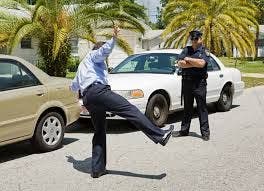
I recently completed training and certification in Driving While Intoxicated (DWI) Detection and Standardized Field Sobriety Tests (SFSTs). As a DWI attorney, I felt it was important to learn more about how the police are trained to investigate DWI cases. I attended a three-day course with fourteen attorneys from all over New York State, and a certified instructor.
The course was created, and is updated, by the National Highway Traffic and Safety Administration (NHTSA), and is used by law enforcement agencies to train police officers in specific protocols for investigating DWI crimes, including interpretation of observations of the vehicle in motion, of the driver upon personal contact, and, during the administration of the roadside Standardized Field Sobriety Tests. (This course did not include any information about the administration of any chemical test, like the Breathalyzer or a blood test.) The instructor is certified by NHTSA to instruct the course, and he provides the course all over the country to various groups (including the National College for DUI Defense) and law enforcement agencies.
In short, the course originally was designed to help police uniformly enforce DWI laws at a time when different agencies and different individual police officers were designing their own, often without any scientific correlation between performance and Blood Alcohol Content (BAC). The course used numerous scientific studies commissioned by NHTSA to determine which tests had a scientific correlation to BAC.
Find out what's happening in East Hamptonfor free with the latest updates from Patch.
The studies found that only three of approximately one dozen commonly occurring Field Sobriety Tests had any actual correlation, and that the correlation was limited. If these tests are not administrated exactly as taught by NHTSA, then NHTSA says that the results are invalid.
The SFSTs include approximately 44 individual instructions, 18 “clues”, and approximately 42 distinct actions that are evaluated. We practiced administering the SFSTs on live subjects, who consumed metered amounts of alcohol. We used our test results to attempt to estimate the subjects’ BAC. Then, the instructor gave us a written exam, and a practical exam. It’s a lot to keep track of, and that made preparing for certification stressful. The practice and preparation paid off when I passed the test and became certified by NHTSA in DWI Detection and Standardized Field Sobriety Testing.