Politics & Government
Supreme Court Denies East Hampton's Airport Petition
BREAKING: "The town board is deeply disappointed in the Supreme Court's order not to review the Second Circuit decision." — Larry Cantwell.


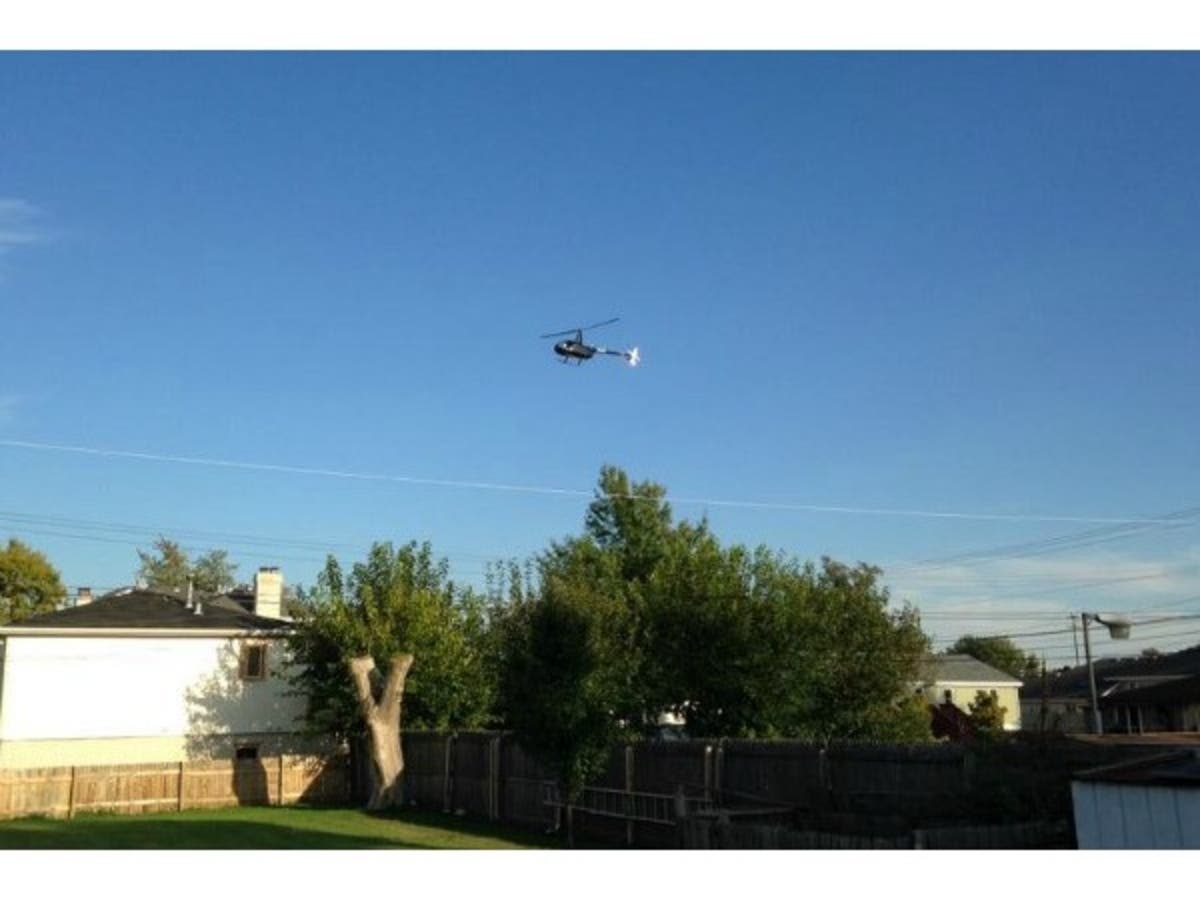
EAST HAMPTON, NY — It's a blow to East Hampton's battle to gain control of its airport and reign in aircraft noise that's plagued the East End for years.
On Monday, the Supreme Court denied the Town of East Hampton’s petition for certiorari, which had asked the court to uphold the town’s three local laws limiting aircraft noise at East Hampton Airport and to overturn the decision of Second Circuit Court of Appeals that held the laws preempted by federal statute.
“The town board is deeply disappointed in the Supreme Court’s order not to review the Second Circuit decision, which strips municipal airports like East Hampton’s of their traditional proprietary powers to limit airport noise," said East Hampton Town Supervisor Larry Cantwell. "Nonetheless, the Supreme Court gave serious consideration to our petition, ordering a response from the plaintiffs, as it does in only a small number of cases."
Find out what's happening in East Hamptonfor free with the latest updates from Patch.
The denial of a petition for certiorari has no precedential force, and does not mean that the Supreme Court has taken any view on the correctness of the Second Circuit decision, he added.
“Despite the outcome of this litigation, the town board will continue its efforts to find solutions to the problem of airport noise in our community, both through our elected representatives in Congress and through the onerous FAA Part 161 process,” added Councilwoman Kathee Burke-Gonzalez, the town board’s liaison to the airport. “We will not and can not stop fighting to regain local control of our municipal airport. The federal government, and in particular the FAA, is incapable of managing the airport in the best interests of our community. We need local control in order to bring the much needed relief from aircraft noise.”
Find out what's happening in East Hamptonfor free with the latest updates from Patch.
The decision came after the Federal Aviation Administration in June dismissed Southold Town's petitionregarding a decision to extend the North Shore helicopter route through 2020 that town officials believe is in violation of federal law.
The United States Supreme Court, in April, ordered the preparation and filing of additional briefing in the Town of East Hampton’s bid to overturn the appeals court decision.
The Supreme Court ordered that the respondents, led by commercial aviation interest group Friends of the East Hampton Airport, had until May 19 to submit a brief opposing the town’s petition for Supreme Court review, a release from the town said.
East Hampton Town was provided the additional opportunity to file a reply brief within two weeks of the filing of the respondents’ opposition, the release said.
Burke-Gonzalez was happy with the earlier April development.
“We are pleased that the Supreme Court is taking a serious look at our petition. The town welcomes the opportunity to be further heard by the filing of a reply brief, on the drastic impacts that the Second Circuit’s decision will have on our airport and airports across the country. The court’s order is a positive step in our march to regain local control of East Hampton Airport," she said.
Earlier that month, the Town of East Hampton’s petition to the United States Supreme Court to overturn an appeals court decision was endorsed when the City of New York also offered support, town officials said.
In a release from East Hampton Town, Cantwell said an amicus curiae, or “friend of the Court” brief, as well as two additional briefs, were filed on behalf of East Hampton Town.
The Committee to Stop Airport Expansion, an unincorporated association of residents living near the East Hampton Airport, and the International Municipal Lawyers Association, which represents more than 2,500
members composed of local government entities, filed a joint amicus brief, the release said.
The Town of Southold also supported East Hampton Town’s petition to challenge the Second Circuit Court of
Appeals decision, Cantwell said.
"We have been supportive of the efforts by East Hampton to assert its legal authority to regulate its own airport," Southold Town Supervisor Scott Russell said at the time. "The efforts the town has made and the costs it has incurred to date demonstrates the deep commitment it has made to being a good neighbor."
“The City has a strong interest in ensuring the stability of its programs and in correcting the Second Circuit’s erroneous view that private parties may destabilize the long-held expectations of state and local governments by hijacking the FAA’s carefully calibrated role under ANCA and unleashing a torrent of private litigation under the statute,” wrote the Corporation Counsel for the City of New York.
The Airport Noise and Capacity Act, or ANCA, was adopted in 1990 with an eye toward creating a more comprehensive approach to handling aircraft noise nationwide.
The Court’s “fashioning of a private remedy to enforce ANCA is at odds with congressional intent, undermines the statute’s purpose, and violates constitutional limits on federal-court jurisdiction. Responsibility for protecting local residents from aviation noise has historically been shouldered primarily by local governmental airport proprietors," the Corporation Counsel for the City of New York added.
Burke-Gonzalez, the East Hampton town board’s airport liaison, applauded the development.
“Today’s filing by the City of New York illustrates that this issue is all about local control. Whether it is our country’s largest city or a small town like East Hampton, local governments know what is
right for their community and should have the ability to make local decisions at their own airport. We welcome the City of New York to our fight to restore local control and protect the welfare of our respective communities.”
In the second brief submitted in support of the town, the Committee and IMLA assert, “. . . the
Second Circuit held that federal law preempts East Hampton’s reasonable restrictions on access
to its airport because the town did not follow procedures set forth in the Airport Noise and
Capacity Act of 1990 . . . when imposing those restrictions. Petitioner ably demonstrates
in its brief why the Second Circuit’s decision in this case conflicts with this court’s decision in
Armstrong v. Exceptional Child Center, Inc., why the court of appeals improperly invoked its
equity jurisdiction, how that court misinterpreted ANCA, and how its decision dramatically
expands federal regulation of local airports beyond Congress’s intention.”
In November, the Second U.S. Circuit Court of Appeals ruled in favor of the Friends of East Hampton Airport, Inc. regarding access restrictions at East Hampton Airport.
The restrictions, proposed by Burke-Gonzalez in 2015, included a mandatory nighttime curfew from 11 p.m. to 7 a.m.; an extended curfew on noisy aircraft from 8 p.m. to 9 a.m.; and a limit on operations by noisy aircraft of one trip (one arrival and one departure) per week during the summer season — the third restriction was enjoined in 2015.
For years, East End residents have been crying out about aircraft noise that's shattered their bucolic quality of life.
With an eye toward providing those impacted by aircraft noise "meaningful and deserved relief," East Hampton Town adopted the three local laws in April, 2015 imposing use restrictions.
Back in 2015, opponents, including The Friends of East Hampton Airport, sued in federal court to enjoin the local laws; in late June, 2015, Federal District Court Judge Joanna Seybert enjoined one of the laws that restricted noisy aircraft to one round trip per week.
The other two curfew laws have been in effect and enforced since July 2, 2015, the town said.
"The town board vigorously defended its enactment of these three reasonable local laws at both the District and Circuit Court of Appeals levels in attempt to effectuate the solutions arrived at through the deliberative process of the town board," East Hampton Town officials said.
Officials in East Hampton added that over the past two summer seasons of implementation, the town saw over 99 percent compliance with the curfew regulations.
When the restrictions were first enacted, the Friends of East Hampton Airport Coalition voiced opposition.
In a statement from spokesman Loren Riegelhaupt, the group claims they were "forced to consider legal action to remedy this unfortunate situation.”
The court's decision, written by Judge Reena Raggi, said that all three local laws were preempted by ANCA.
Locally, elected officials were seeing red over the news in November.
"I am terribly disappointed in the court's decision to enjoin East Hampton's local laws that help mitigate the noise the region has to contend with from loud aircraft coming and going to East Hampton's municipally owned airport," said Southold Town Councilman Bob Ghosio, who serves as liaison to the town's helicopter noise abatement committee.
Of the decision, Russell responded, "I would like to bypass Sen. Chuck Schumer, bypass the courts and post the names of the members of the Friends Of The East Hampton Airport on the town's website so we can take our complaints right to them."
Others, however, applauded the decision. According to a press release, The National Business Aviation Association lauded the decision by U.S. Court of Appeals for the Second Circuit, "which agreed with the argument made on appeal by NBAA and other aviation interests that the Airport Noise and Capacity Act of 1990 continues to apply to New York’s East Hampton Airport, making the town’s adoption of noise and access restrictions at HTO a violation of federal law."
In addition, the ruling, "which sets an important precedent for airports nationwide, holds that ANCA continues to apply to HTO, despite the town’s stated intent to no longer accept federal Airport Improvement Program grants," the release said.
“NBAA has long advocated against unlawful and unreasonable restrictions being imposed at East Hampton Airport,” said NBAA President and CEO Ed Bolen. “We are gratified that the Second Circuit agrees that East Hampton remains bound by ANCA and related FAA policy and regulations.”
ANCA requires airports to engage in a detailed study and obtain FAA approval for noise-based access restrictions before they can be implemented, the release said.
Get more local news delivered straight to your inbox. Sign up for free Patch newsletters and alerts.