Neighbor News
Who was Dollree Mapp?
An unsung American hero of sorts passed away recently. Dollree Map sought to assert the rights guaranteed to her by the Constitution.

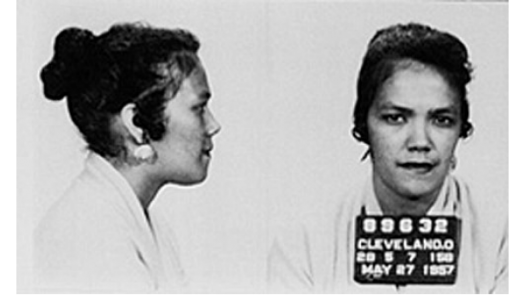
An unsung American hero of sorts passed away recently. Dollree Mapp comes from a line of Americans who, out of idealism, desperation, or both, got their backs up and sought to assert the rights guaranteed to them by the Constitution. Of improbable circumstance and improbable nature, Dollree Mapp’s simple act of defiance touched us all.
The Fourth Amendment requires that:
“The right of the people to be secure in their persons, houses, papers, and effects, against unreasonable searches and seizures, shall not be violated, and no Warrants shall issue, but upon probable cause, supported by oath or affirmation, and particularly describing the place to be searched, and the persons or things to be seized.”
Find out what's happening in East Hamptonfor free with the latest updates from Patch.
On May 23, 1957, police officers in Cleveland, Ohio, received information that a suspect in the bombing of Don King’s home (yes, the now famous boxing promoter), as well as some illegal betting equipment, might be found in the home of Dollree (or Doll Rae) Mapp (1923/24–2014). Three officers went to the home and asked for permission to enter, but Mapp refused to admit them without a search warrant. Two officers left, and one remained. Three hours later, the two returned with several other officers. Brandishing a piece of paper, they broke in the door. Mapp asked to see the “warrant” and took it from an officer, putting it in her dress. The officers struggled with Mapp and took the fake warrant away from her. They handcuffed her for being “belligerent.” The police searched the house thoroughly, including paging through a photo album and searching her young daughter’s bedroom, but did not find the bombing suspect or the betting equipment. They did, however, find some material that they dubbed “obscene” in a trunk that Mapp stated a previous tenant had left behind. Mapp was arrested, prosecuted, and found guilty of “knowingly having had in her possession and under her control certain lewd and lascivious books, pictures, and photographs.”
Dollree appealed the conviction, and eventually petitioned the US Supreme Court on First Amendment grounds. However, the Court was less concerned with the First Amendment claims about possible obscenity. The Court was concerned about the unauthorized search and seizure. They overturned her conviction and ruled that all state courts must suppress evidence gathered through police misconduct in certain kinds of cases. This rule applies to federal courts, but it was now extended to all state courts, too.
Find out what's happening in East Hamptonfor free with the latest updates from Patch.
The story of Mapp’s case ends their, but her interesting life continued, at times quietly. She moved to Queens, NY, in 1968. She was convicted in 1971 of possession of narcotics along with a co-defendant, Alan Lyons. She appealed that case, claiming that the search warrant in that case was the result of police targeting her for her role in Mapp v. Ohio. Oddly, the police officer responsible for obtaining the warrant was dimissed from the police department for accepting a $3,500.00 bribe from a narcotics dealer.
Mapp’s conviction was upheld, but her sentence was commuted in 1980 by Governor Hugh Carey.
Sitting at home and enjoying one’s privacy is a right that many people take for granted. The founders of our country did not, they wrote it into law as the Fourth Amendment; Dollree Mapp did not when she required the police to obtain a search warrant to search her home. By demanding a search warrant of police officers attempting to search her home for a suspect, Dollree Mapp enlarged the liberty of all who lived in America.