Community Corner
Woman's Horrifying Truth About Domestic Violence: 'He Killed Her'
"Only something drastic was going to end this situation. And then it happened. He killed her." A shocking story of domestic violence.


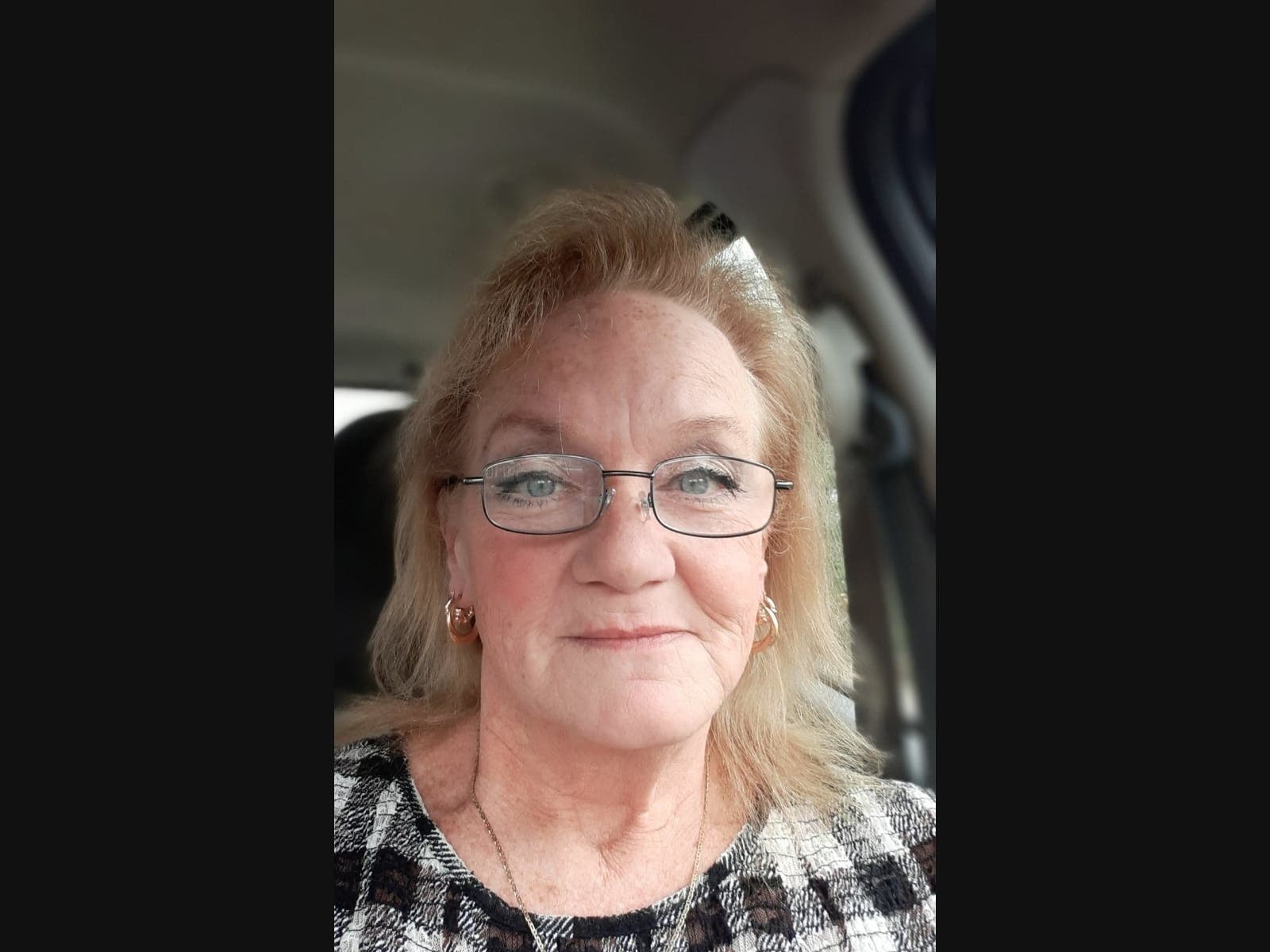
LONG ISLAND, NY — October is Domestic Violence Awareness Month in New York State — and across the state, individuals are uniting with the color purple to raise awareness.
But for one Sagaponack woman, the memories are vivid all year long.
Kathy Whittaker Coleman was born in West Sayville but living in Levittown when, at 18, she met the man who would change her future.
Find out what's happening in East Hamptonfor free with the latest updates from Patch.
"We threw an open party on my mother’s front lawn because she was away for the weekend and Daddy had passed in 1966, leaving nobody watching the roost, so to speak," she said. "There he was— very tall at 6 feet, 6 inches, well-built and very, very handsome. He was really putting on what was my first experience with the full court press. He was so charming and so funny but I was very wary — I had never met anyone like him," she said.
About a year into their relationship, Kathy was set "to meet him at the local fair. He was three hours late and drunk when he showed up. I, angry at this point, was not shy about expressing just how I felt. One question and he smacked me across the face. His hands were so big and he slapped me so hard I spun around and literally heard bells. I ran, as fast as I could, across the busy roadway almost getting hit by a car," she said. "Did I wonder if this was normal? Sure I did! Did I wonder what I had done or said to make him hit me like that? Without a doubt. So what else was I to do when he came around apologizing and blaming it on the alcohol? I forgave him. It was my first really serious relationship so it was what it was. I really didn't know anything different."
Find out what's happening in East Hamptonfor free with the latest updates from Patch.
Later, Kathy got pregnant. "He was increasingly violent, off and on," she said. "With great devastation that pregnancy became my first miscarriage after a beating. I lost my twin boys."
Soon after, she became pregnant again. "I went into labor early February, in the middle of the night and during an ice storm. My mother had me curled up in bed with her until about 2 a.m. then she decided it was time to take me to the hospital. I gave birth to a beautiful baby boy that afternoon but never even saw his father during labor, delivery, hospital stay — nothing. I called his mother’s house and was devastated to learn that he not only didn’t live there anymore — but a 'supposed-to-be cousin' was his other girlfriend, whom he'd moved in with when they had a baby girl together, just three months ago."
Soon, in an unbelievable twist, she learned that she was living in an apartment with her son — with her son's father's girlfriend and their now-three children, living just two blocks away.
"Between the beatings we had both regularly endured — and him actually leaving their daughters at my house while she was at work — she and I had become friendly," Kathy said. "Neither of us getting a fair shake from the law — domestic violence back then was not only no big deal, but the police paid very little attention. I suppose they felt we deserved what we got if we were still in the situation after the first time. What they didn’t seem to understand is that we were doing our part by calling the police and pressing charges. It was they who weren’t doing their part by continually releasing him. Then we would get an even bigger beating for pressing charges. We won’t even talk about the beatings endured for trying to leave him," she said.
Court orders of protection were "useless" because at that time there had to be a witness or police actually finding him at the scene in order to exercise protection orders, she said. "Calling 911 back then very often found us on the receiving end of a recording that said all operators were busy; please hold the line," she remembered.
"We both knew that only something drastic was going to end this situation. Her family had abandoned her when she hooked up with him and my family was none too happy with me, either. We made a pact — if the occasion presented itself we would care for each other’s children," Kathy said.
Her story then took a grim turn.
"Then it happened. He killed her. She was just 29 years old and the mother of three. Not only
beat her to death in front of her three small children but broke her neck and every bone in her
face. For some reason he placed her in a tub of cold water and that’s how the police found
him — sitting next to her body in the bathtub with the three little girls standing in the
bathroom crying. Reading about it in local newspaper is how I learned terms such as 'heinous,
gruesome and blood splattered,'" she said.
She added: "He had put several police officers in the hospital in the attempt to place him under arrest. I had just been released from the hospital with broken ribs and a broken arm, after a beating from him – it did not escape me that that could very easily have been me. I had been praying so very hard for some way out of this mess but I never wanted her, or her girls, to go through all of that for me and my son to be spared. God clearly had different plans."
Kathy, for a heartbeat, thought she was home free, her abuser "gone for life for murder — and that everything would be fine. Well, lo and behold, I took one last beating before I got up and stood strong and committed — only that beating came from the court system," she said. "Our penal system."
The judge, she said, offered her abuser a plea deal, dropping the assault charge on the police officers he had hospitalized; he was sentenced to four to eight years for a guilty plea of manslaughter, she said.
"I got a legal aid lawyer who listened to me and my son and I became the very first to get lifetime orders of protection. No contact for life. Oh, that false sense of security lasted about 18 months until he was released for, of all things, good behavior."
Describing her anguish, Kathy said: "This was not good. My son was now in first grade and all kinds of scenarios were running through my head. I had to protect us — no matter what."
And then she came up with a plan, driving through his "old stomping grounds, not looking for him — that didn’t fit into my plan. I found one of his close friends and asked him to give him my phone number, and ask him to call."
Her abuser, she said, was stupid, trusted her or both. "Either way, he played right into my hands. I was an EMT by now, so knew quite a few police officers. At the direction of a police officer friend of hers, she told her son's father that the man she was living with was very abusive to their son and to her.
"I told him that to protect him, I didn’t want him to get involved but that I needed him to get me a gun. I asked him to meet me at the park where we used to hang out and bring me the gun," she said. "I got there a half hour early, scared to absolute death. However, I was completely surrounded by plainclothes officers and had my lifetime order of protection in my pocket. He saw me and smiled radiantly as he approached me," she said. "I, however, was nauseous as hell and on the verge of vomiting. He got within inches of me and they surrounded him, threw him to the ground and cuffed him. I handed over my order of protection and, thank you Jesus, he had the gun I requested in his pocket. He looked at me and started making threat after threat. I literally fell to the ground shaking."
Half of the officers took her abuser away and the others attended to her, she said. "I must admit, to this day it was one of the most difficult things I’d ever done. Fast forward two more years and he was released again‚ on good behavior. Such an outrage. I mean, honestly — an outrage!"
Once again, she sprang to action.
"I knew what I had to do," Kathy said. "Only this time I had to actually spend time with him to get him to trust me again. He was easy to reach, disgusting to be near, but after a few months, he was set up again — with a large quantity of drugs on him. He, this time around, had to finish his sentence; that guaranteed me four years of peace before he would reach his eighth year of incarceration."
The years passed, and, once again, she was faced with the specter of the man who put fear in her heart, Kathy said.
"He was discharged, I was notified, and I took as many precautions as I could. It took him about nine months to find me. I don’t know how but he did. I quite firmly told him I was obviously not the little girl he left behind and that if it ever came down to me and him again it was absolutely not going to be me. We exchanged a few words," she said. "He tried to intimidate and scare me but here I was, a strong woman, honestly unafraid yet aware. He must have seen that. He must have believed me because he never bothered me again."
When her son turned 16, he asked Kathy to find his father. "He was ready to confront the issues his father had burdened him with his whole life. I did find him, still in the old neighborhood, and arranged a meeting between my son and his father. My son, at that age, was the same height as his father. I promised my boy that I would not leave them alone, that he had no reason to be frightened, no matter what, and that when he had enough he merely had to say so. I promised my boy he had absolutely nothing to worry about with this meeting and to take from it whatever it was that he needed and I meant it. My boy, not our boy, stood tall and strong, nose to nose with his father and held him accountable. Took him to task. Didn’t crack or show fear in any way, shape or form. When he had had enough, he said so and I took his father to the train station, never to be heard from again. My boy became a man that day‚ an unwitting man of my family. I was proud beyond measure."
Today, Kathy spends her life giving back to others. "I am now a life coach, after having retired from the medical field, and will counsel, support and pray for victims of domestic violence, as well as anyone else who reaches out to me for help, in any way I can, for the remainder of my days," she said. "Other than my extreme faith in God's plan, I can't imagine why I was spared and she was not, but will go to my grave giving back to my God and His universe," she said.
Her abuser died years later and can no longer hurt Kathy or her son again.
Domestic violence on the rise during pandemic
During the pandemic, domestic violence has escalated into an even greater concern. According to Gov. Andrew Cuomo, domestic violence reports were up 30 percent in April compared to last year and incident calls to New York State increased 15 percent in March compared to the previous year.
To that end, Secretary to the Governor Melissa DeRosa and the New York State Council on Women and Girls announced the creation this year of a new task force to find innovative solutions.
"Since the beginning of this pandemic New York has seen a dramatic increase in the number of domestic violence cases across the state," Cuomo said. "While we have already taken aggressive actions to help some of our most vulnerable New Yorkers get the help they need and get away from their abusers, there is more that we can do to modernize the services we provide as we begin to enter a new normal."
In April, the state launched a domestic violence hotline and a new text program and confidential online service to aid victims of abuse and provide potential lifesaving ways to get help. New Yorkers seeking help can call 1-800-942-6906, text 844-997-2121 or chat with a professional on the new confidential website at www.opdv.ny.gov. The text and online services will be staffed 24 hours a day, 7 days a week with OPDV staff who are experts in the area of domestic violence.
For the victims of domestic violence, the "stay-at-home" directive during the early months of the coronavirus pandemic did not mean hunkering down behind closed doors to keep themselves and their children safe. Instead, for many, it was not only a time of terror with no means of escape and nowhere to go — but possibly an explosive situation that put their lives at risk.
The horror of the night that changed her life and the lives of her children is always just a heartbeat away for East Hampton resident Noemi Sanchez, who was beaten, stabbed and then shot in the head with an air rifle by her estranged boyfriend in 2011.
Nine years later, Sanchez spoke to Patch to help other women hiding in the shadows of their homes, where, behind closed doors, officials said domestic abuse in Suffolk County was on the rise as the number of deaths related to the new coronavirus continues to skyrocket.
Women who find themselves in the home with their abuser, with no jobs to go to and no schools open, will feel "even more scared" than they normally would be in the house, Sanchez said. "It will be even more awful. You'll have more trauma than you had already. For those women, it's very difficult right now. They have nowhere to go."
Abusive partners, she said, "could become even more aggressive. All the anger they have about the situation, when they hear the news, or about possibly losing their jobs, they will take out on you."
Abuse can mean a barrage of verbal intimidation, she said, or being threatened. The words she screamed on the night that changed her life still echo, Sanchez said: "Call the police. Daddy's trying to kill me!"
In the month since the first case of coronavirus was reported in Suffolk County, domestic violence incidents rose by about 8 percent, according to Suffolk County Police Commissioner Geraldine Hart.
"This is a public health crisis first but what it is doing, in every aspect of society where people have challenges or issues, all of that is exacerbated by this crisis, and that includes domestic violence," Suffolk County Executive Steve Bellone said.
More than half the DA's cases related to domestic violence, Retreat says
The Retreat, a non-profit organization in East Hampton that provides services to domestic violence victims, is still available for help 24/7, despite coronavirus.
According to Loretta K. Davis, executive director of the Retreat, there has been an uptick in domestic violence incidents since coronavirus has begun keeping everyone at home.
"We know that there is an increase in domestic violence here on the East End," she said. "We know because calls are increasing from churches, community groups, employers, friends reaching out on behalf of a victim, and police reports. The district attorney's office says more than half of all their cases right now are domestic violence related."
Calls have been coming in on the Retreat's 24/7 hotline daily.
The Retreat, Davis said, is focused on direct services as well as the current needs of victims, and those are more about survival. Calls for help involve finding resources at the community level for families in need, including food, rental assistance or relief, and how to access unemployment, she said.
Domestic violence cases increased during the coronavirus pandemic because of the logistics of the stay at home mandate, Davis said earlier this year.
"There is an increase because victims are trapped at home with the abuser," she said. "The abuser may limit access to information or access to phones, computers, family, friends. The abuser may also provide inaccurate information about what services are available."
In addition, she said, there may be job loss, financial abuse, the feeling of isolation and despair, as well as stress from uncertain circumstances. The reduced access to health services, an inability to leave, and the exposure and vulnerability of children in the household are factors that also contribute to a tense and volatile situation, she said.
"It's a tinderbox, with a high potential for violence"
"Imagine being forced to remain in a household with an abuser for weeks on end. There is no escape by going to work. There is no escape by shopping or going to a medical appointment. Plus, confined spaces are making everyone edgy," said Kim Nichols, the Retreat's development director. "It's a tinderbox, with high potential for violence. But how can you reach out for help when your abuser is literally right next to you? That's the challenge many victims are facing right now; they can't reach out directly."
The Retreat's education director Helen Atkinson-Barnes said, with people confined at home, often with children, family members becoming sick, and others losing work or continuing to work but in dangerous or uncertain circumstances, stress and conflict are on the increase in many relationships.
"People who abuse others often react to conflict by attempting to force their preferred outcome on their partner instead of working things through in a mutually beneficial way," she said.
Power and control are central to domestic violence and relationship abuse in all of its forms, she said.
"Domestic violence involves one person hurting someone they are close to in order to get their way — to establish or maintain power and control in that relationship. Broken down, this means one person has an expectation that they are entitled to get what they want and they are willing to ignore the other person's wishes, hurt them or violate their consent, in order to get it," Atkinson-Barnes said.
Central to that concept, she said, is understanding that couples and people in relationships in general don't always agree on everything.
"Conflict is normal. Hurting someone in order to resolve conflict, and gain power in control is not. In healthy relationships people should resolve conflict by talking it through and finding creative ways to meet everyone's needs," she said.
Have an exit plan
Davis said the Retreat encourages individuals to have someone they can contact, have an emergency list of phone numbers, have a safe room to go to — and have an exit plan.
"It is important to work with survivors to create a safety plan and an exit plan and to encourage them to safely document everything," she said. "It is difficult for our counselors to teach victims to figure out how to safely disengage with abusers at home."
The Retreat began more than 30 years ago "with a grassroots effort of caring people who wanted to help families affected by violence," Nichols said. "During this time of crisis and limited options for victims, we need to go back to that grassroots model. We need neighbors to care about neighbors — but make sure you do it from six feet away."
She suggested that it is possible to reach out to someone who might be in danger by sending a message such as: "I know things feel scary and stressful right now. Could we talk on the phone sometime later today so we can support each other and check in?"
Davis said the Retreat's life-saving work continues even in the face of coronavirus: "While we can't change what's going on in the world, we can make a difference," she said. "For those who have suffered from abuse, the issues do not pause or take a break even during the declared national emergency for COVID-19. While the message to stay home and be safe may resonate for many of us, this is not the case for a victim who is isolated in a home with an abuser.".
On October 23, New York State's Office for the Prevention of Domestic Violence will host a Risk Reduction Summit in Albany. The free event will feature presentations from law enforcement agencies and service providers collaborating to identify and respond to victims of domestic violence who are at high risk of being killed or seriously injured by an intimate partner.
And, the Retreat is urging individuals to participate in the "#HearMyVoice" campaign this October; the initiative "allows you to lend your voice, standing up for those affected by violence and abuse. Together we can end the cycle of violence."
Here's how to Share on Instagram or Facebook, according to the Retreat:
- Take a selfie while wearing a face mask with the words "Hear My Voice"
- Post using #HearMyVoice and @AllAgainstAbuse
- Include in your caption why you lend your voice to The Retreat
Get more local news delivered straight to your inbox. Sign up for free Patch newsletters and alerts.