Business & Tech
Mayor Rothschild Addresses Chamber
Touches on many pressing issues during keynote address at season finale luncheon.


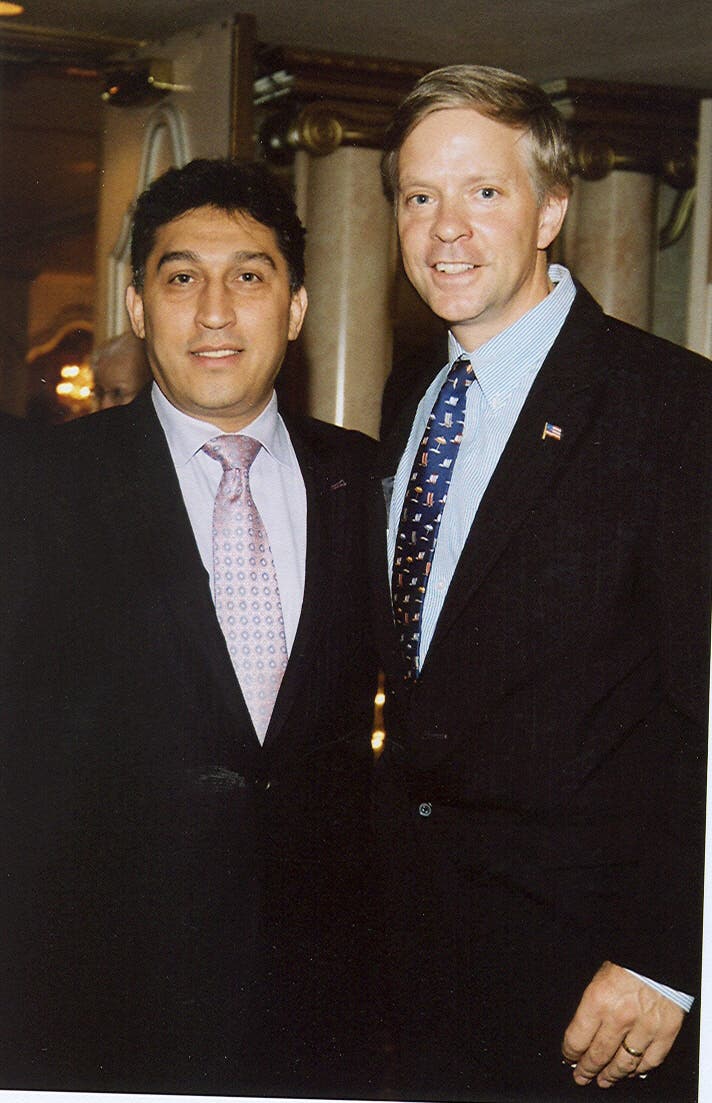


Robert Rothschild, Garden City's 43rd mayor, addressed the community Wednesday during the Garden City Chamber of Commerce's season finale luncheon at The Garden City Hotel.
A 28-year resident, Rothschild stepped up to the plate when his Estates section counterpart, former trustee John Mauk, announced he did not wish to serve as mayor back in 2008.
Rothschild began his address by acknowledging the "great team" leading the village, including his colleagues on the board, the village clerk, village administrator and village counsel, and Garden City's many department heads.
Find out what's happening in Garden Cityfor free with the latest updates from Patch.
"Our volunteer system and the Community Agreement are the most valuable assets I think we have in this village," he said.
With more than 21,000 residents, 9,000 households and approximately three million square feet of commercial and retail properties, Rothschild takes pride in knowing that Garden City is a village fully supportive of a "very strong commercial district" that he hopes will continue to entice major institutions like Mapfre Insurance and retailers to set up shop downtown.
Find out what's happening in Garden Cityfor free with the latest updates from Patch.
He touched on several pressing issues facing Garden City today, including the fate of St. Paul's, the quality of Garden City's drinking water, the state of the business district, the Lighthouse project, the village budget process and the proposal to add a third track to the Long Island Rail Road (LIRR) Main Line.
According to Town of Hempstead officials, the Main Line Corridor Improvements project has been "derailed." The plan to construct the additional track, which would have sliced through the heart of residential neighborhoods from Bellerose and Floral Park to Garden City and New Hyde Park, has apparently been "sidetracked" in the face of longstanding opposition.
Town officials said earlier this month that the MTA's 2010-2014 capital budget, which was recently voted on by the MTA board, does not include a third track.
"We have opposed that development since the beginning," Rothschild said. "It appears that it's dead at this point but we will continue to watch that for any upcoming events."
He praised the village's Joint Conference Committee, made up of the presidents and vice presidents of Garden City's four property owners' associations, and its appointment of the Citizens Budget Review and Advisory Committee (CBRAC) and their "ultimate total immersion" in the recent village budget review process.
"The Village of Garden City cannot continue to be a village where we place limitations on revenues but have ever increasing costs of operations and expect the village to continue supplying services at the same level expected by the commercial district and the residents," Rothschild said. "The board is very mindful that we cannot heed the advice and impart too much credence to those who want to haphazardly slash budgets and influence decisions from the base of minimum understanding of the real needs of the village as a whole."
Admitting the process isn't perfect, Rothschild said he is committed to improve it going forward based on many of the CBRAC's recommendations. Meetings with committee members will continue throughout the coming year, he added, not just during budget talks.
He spoke about the long awaited Draft Environmental Impact Statement (DEIS) on the proposed demolition of St. Paul's, which is expected sometime in June. The mayor announced at a recent Estates Property Owners' Association (Estates POA) meeting and then later at a recent board meeting that the current report from Greenman-Pedersen, Inc. is "inadequate" and that trustees are now awaiting additional information from AKRF, another environmental consulting firm the board engaged to supplement the current work document.
"Although no one wants to see this building demolished, myself included, after 18 years of making many attempts for alternative uses for the building, such as schools, library, village hall, apartments, assisted living, it appears we have come to the end of the road," Rothschild said. "We still have parties wishing to inspect the facility on a regular basis but there has been no entity with an acceptable use, sufficient financial backing or an economically viable projection since the residents rejected AvalonBay."
He assured residents that their water is "pure and very safe to drink" but that the safeguards to make it that way are costing Garden City millions.
"This cost is due to the process used to pull the water from our wells through contaminated soil in surrounding areas of the village," Rothschild said. "The board is committed to deliver pure water to the village and we are endeavoring to be reimbursed from the parties who caused the contamination through litigation."
In closing, the mayor warned that if the board is not proactive with these and many other issues, Garden City will decline - not over night - but incrementally.
"We cannot let that happen," he said.
Get more local news delivered straight to your inbox. Sign up for free Patch newsletters and alerts.