Community Corner
Mayor: We Are in Same Position as St. Paul's Headmasters
Robert Rothschild shares his thoughts on historic building's unknown future.


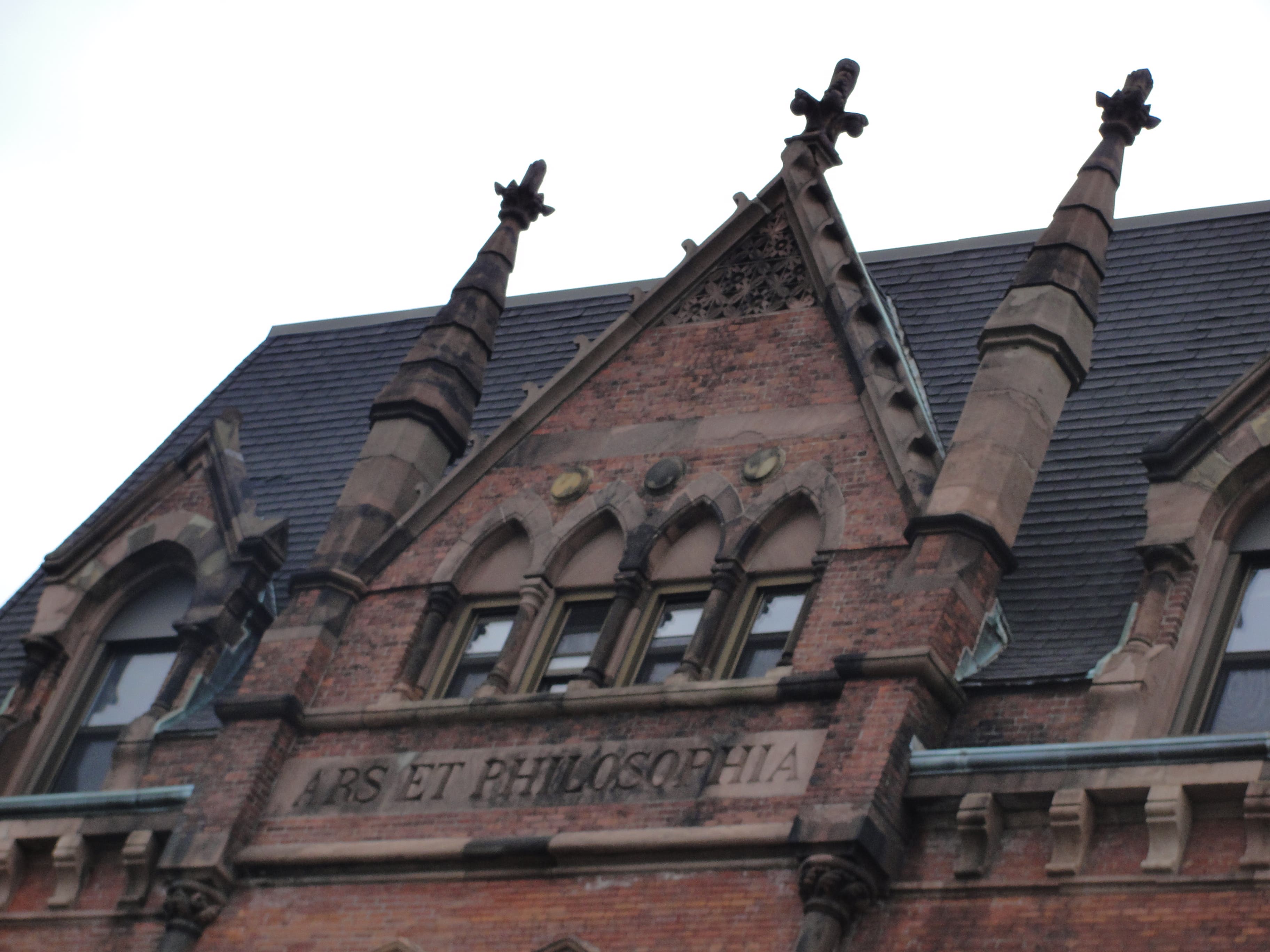
After listening to nearly two hours worth of citizens' comments during the public hearing on the Draft Environmental Impact Statement (DEIS) on the proposed demolition of the St. Paul's Main Building and Ellis Hall, Mayor Robert Rothschild made comments – many taken directly from the Informal History of St. Paul's by William F. Smith – about the 17-year saga:
"St. Paul's opened in September 1883, 127 years ago. Five hundred rooms with 642 windows conceived and built as a school under one roof with all the necessary facilities, and 'luxuries' to fulfill that function. In 1893 there were 90 students and in 1947 it reached 222, the highest in its history.
"Every administration of the school since 1885 began under crisis conditions, lack of money, dwindling enrollment, burdensome debt, tarnished reputation, deteriorating physical plant or whatever was needed to overcome the conditions at hand to establish a foundation for the future. In fact, a leaky roof destroyed 40 years of school records.
Find out what's happening in Garden Cityfor free with the latest updates from Patch.
"There's one thread through all of this. The ingredients of these patterns of crisis conditions are the inability to control events and, as always – as we've heard tonight from everyone who stood at that podium – money. How were funds going to be gathered and expended to preserve the school? How could the school stay independent? It needed to be independent of public funds. Funds for independent schools come from endowment funds, tuition, fees and gifts. Large portions of the Stewart estate were dissipated on the grandiose structures which the complex contains.
"These buildings have always required considerable maintenance and modification far beyond the founder's imagination. The American economy recessions and depressions account for where all the trust fund money went. By the end of WW II the Stewart money was gone, or nearly so.
Find out what's happening in Garden Cityfor free with the latest updates from Patch.
"The Cathedral authorities recognized that the complex of buildings endowed by Stewart was in reality a herd of white elephants which drained the Stewart well dry. They needed to answer the question of how the bills were to be paid, how the leaking roof was to be repaired. The headmaster's power was limited by the realities of money.
"In 1898, George Cluett donated half the funds, $40,000, needed to build 'Cluett Gym' with ground broken by students dragging the plow. Upon completion of Cluett the playing fields originally located across the street were set up west of the new structure. Money for this operation was donated by George Meany, chairman of NJ Telephone Company.
"In 1910, plumbing was installed at a cost of $20,000. In 1938, the pool was filled with sand and concrete and not renovated until 1957. In 1947 only a minor and shoddy roof repair and minor improvements to the campus were completed.
"In 1951, a half-hearted repair to the roof left gobs of tar on the sides of the building with little else done to stave off disaster. In 1954, it was estimated that $2 million would be required to put the building and grounds back into shape. Rev. Feringa arrived in 1953. The building was now 77 years old.
"Between 1955 and 1975, the Building Fund and the Mothers and Fathers Association, much like the Men's Association of Garden City High School, initiated projects for the restoration and expansion of the buildings totaling in excess of $2 million.
"The purpose of these organizations was to raise funds for the betterment of the school. The improvements made were many, such as redecorating rooms, the buying of an organ for the chapel and other additions. All of the school's fundraising organizations served the same purpose, raise funds and do things for the school which the administration would be unable to do without the funds they provide.
"In 1963, 20 years of debris was cleared out of the basement; eight new classrooms were built with four more in 1963. The elevator was placed back in service; swimming pool was filled and filtered; nine cottages were built in 1966. The playing fields, which became overgrown and useless, were leveled and reseeded by Fred Trump, Donald's father, along with trees and shrubs donated by others.
"Feringa Field house was built in 1963 and the culmination of the bricks and mortar was the dedication of Ellis Hall in 1969 at a cost of $600,000.
"In 1973, even with the successful Alumni Giving program, funds were in short supply, being eaten up by inflation and rising costs, which obviously are a perennial problem for St. Paul's we are still living with. In 1974, the roof was again repaired at a cost of $500,000.
"It is obvious the recent and the future history of St. Paul's contain many familiar elements. We are now in the same position as the St. Paul's headmasters and organizations during these events and each one of these periods of time ... The building has exhausted a few fortunes over a century.
"We all have the tendency to fail to see the whole picture, relying only on the part of it which is within our view to somehow tell us what the entire thing is like. The realities of the here and now must always take priority over the dreams of the future."
Rothschild said he received Smith's book from St. Paul's alum Ed Castagna (Class of 1986) , who said he now represents 500 alumni who are all willing to donate preservation funds. "It's a phenomenal conglomeration of the history of St. Paul's about the building and the people that made St. Paul's what is was," Rothschild said.
The mayor asked the multi-million dollar question: "What do we do with the building?"
He added, "As trustees, we have to be concerned with asking the residents of this village to pay their hard-earned money in this difficult economic time we're in and put it into a building that has no use. We look at it, we love it but let's all face it – it doesn't have a use. You can't turn it into a recreation center because the configuration and the utility of the building doesn't allow you to do that without a major cost and expense.
"It comes down to dollars. I think that's what this board is attempting to figure out. What to do with it at the least expense to the residents of this village ... We will be taking steps in the next couple of weeks to do things to get this to a point where we can hopefully get this to the residents with facts and information. I think that is the goal of this board.
"I don't think there's one trustee up here, and myself included, who wants to tear this building down. But we need to figure out something and we need to do something that all the residents agree on. We are never going to come to a full 100 percent agreement on this. Seventeen years and we never have yet. I don't think any decision this board ever makes we have a unanimous decision. We have trustees who disagree on this topic and where this building needs to go but hopefully we'll come to an end to this process.
"We have to establish a very definitive number of what it would be for demolition. I don't think there's any argument here that there's a lot of numbers floating around and needless to say I would say at the moment none of which are accurate. They go from very low numbers to very high numbers. In order to prepare any proposal anybody makes to use the building you have to also have a definitive answer as to what it is to knock it down. So once you have that number than you can either compare it to something or not," Mayor Rothschild continued.
"But I think a public vote on that number allows you to begin the process and if people get to vote on a specific demolition number – yes or no – if the public votes that they do not wish to authorize bonds than demolition is no longer an issue. It's removed. It does not solve what to do with the building because there currently is no plan. There is a plan to use part of the building but it tries to compare itself to a demolition number, which is incorrect because we don't have a demolition number yet. All I'm saying is, if we get to that point, than you would have the ability to compare."
Get more local news delivered straight to your inbox. Sign up for free Patch newsletters and alerts.