Neighbor News
SAFE GC Coalition: Support Programs for Opioid Use Disorder
Grants are supporting peer support services for people with opioid use disorder.

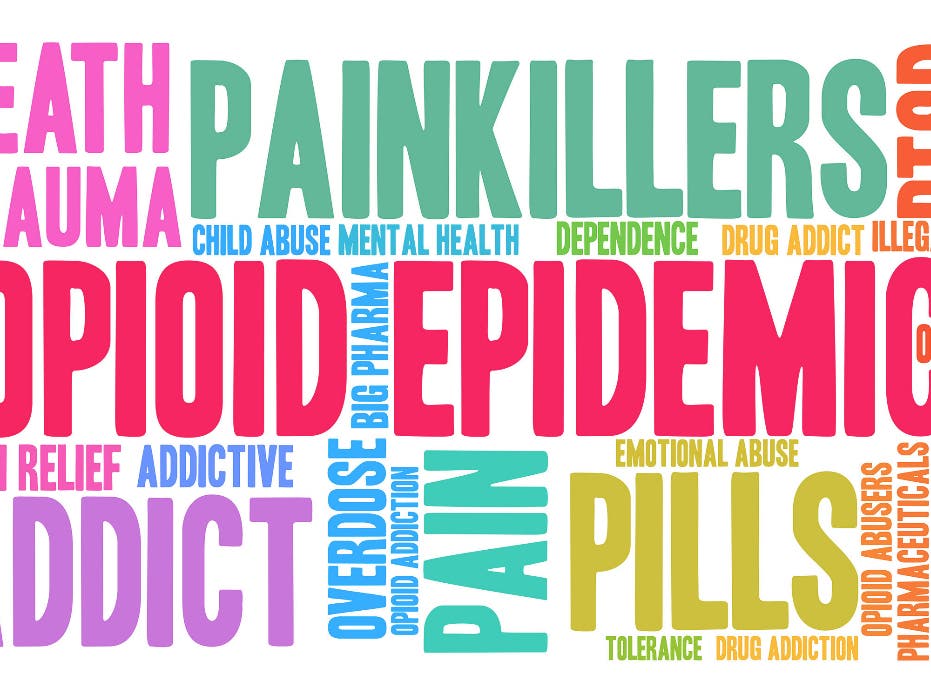
Authorized as part of the 21st Century Cures Act to combat the opioid epidemic, State Targeted Response (STR) grants via the Substance Abuse and Mental Health Services Administration (SAMHA) assists six states to support the integration of peer support services within emergency departments (EDs), with peers who are in substance use disorder recovery. Emergency department (ED)-based peer support programs aimed at linking persons with opioid use disorder (OUD) to medication for addiction treatment and other recovery services are a promising approach to addressing the opioid crisis. Research has linked peer-provided supports with positive outcomes such as reduced hospitalization and criminal recidivism and increased adherence to treatment.
Researchers were charged with examining progress of this support program in the States of Indiana, Nevada and New Jersey using 3 core functions of ED-based peer support: Integration of peers into the ED; Identifying and linking people with opioid use disorder with peer recovery support; Connecting people with opioid use disorder to medication assisted treatment (MAT).
Results point toward factors that may influence the selection of particular programmatic forms and how this may impact workflow and effectiveness. The volume of patients presenting to an ED with OUD seemed to impact the programmatic form. For hospitals where the volume of overdose patients was high, locating peers in the ED made sense as a way to ensure response times were quick and few calls were missed. In some higher-volume hospitals, peers employed by outside behavioral health or substance abuse treatment organizations were given space within the EDs and/or were provided volunteer or other hospital credentials to facilitate access.
Find out what's happening in Glen Covefor free with the latest updates from Patch.
The integration of peers into the ED subsequently affected the burden on ED staff in linking patients with peers. Many programs require active measures by ED staff to connect potential patients with peer recovery support providers. This may hamper enrollment. Prior research highlights the importance a new program's fit within a setting's existing workflow and processes. Programs that require multiple, active steps provide additional opportunities for referrals to be missed or lost and for longer delays between the patient presenting and being seen by a peer. Additional duties may be particularly unfeasible for busy ED staff. Finally, placing others between peers and patients obviates a central justification for utilizing peers—peers' potential advantage in engaging patients with opioid use disorder. Peers have been theorized to engage hard-to-reach populations based on their shared experience; to this end, prior research in intensive case management demonstrated patient engagement as the key advantage of the inclusion of peer providers on case management teams.
The effectiveness of ED-based peer support programs for OUD may ultimately be limited by the availability of effective OUD treatments, particularly MAT. In the study, MAT availability varied. In one case, there were no MAT providers in the county. Additionally, while naltrexone was more readily available, methadone and buprenorphine were often unavailable locally. This is consistent with prior research documenting limited availability of MAT and is problematic considering prior research has shown most patients are not interested in naltrexone as an option likely due to the need to go through detox before it is administered.
Find out what's happening in Glen Covefor free with the latest updates from Patch.
Finally, despite promising research very few EDs served by the programs provided ED-initiated buprenorphine.
The current study is a preliminary report and experience with these models in future settings may provide other important insights. While the programs examined present a broad sweep of existing programs, they are not all of the ED-based programs functioning in the targeted states, let alone the nation.
Future research should report how target programs fulfill these core functions and the presence or absence of the particular forms enumerated here. Such work will facilitate empirically establishing the impact of these particular elements on implementation and effectiveness.
The Substance Abuse and Mental Health Services Administration (SAMHSA) is a branch of the U.S. Department of Health and Human Services. It is charged with improving the quality and availability of treatment and rehabilitative services in order to reduce illness, death, disability, and the cost to society resulting from substance abuse and mental illnesses. For more information about SAMHSA please visit www.samhsa.gov.
SAFE, Inc. is the only alcohol and substance abuse prevention, intervention and education agency in the City of Glen Cove. Its Coalition is conducting an opioid prevention awareness campaign entitled, "Keeping Glen Cove SAFE," in order to educate and update the community regarding opioid use and its consequences. To learn more about the SAFE Glen Cove Coalition please follow us on www.facebook.com/safeglencove or visit SAFE’s website to learn more about the Opioid Epidemic at www.safeglencove.org.