Sports
Ice-Ho! Winter Sailing in Mamaroneck
Frostbite sailing may be a "niche" sport, however, it is quickly growing in popularity in the Larchmont-Mamaroneck area.
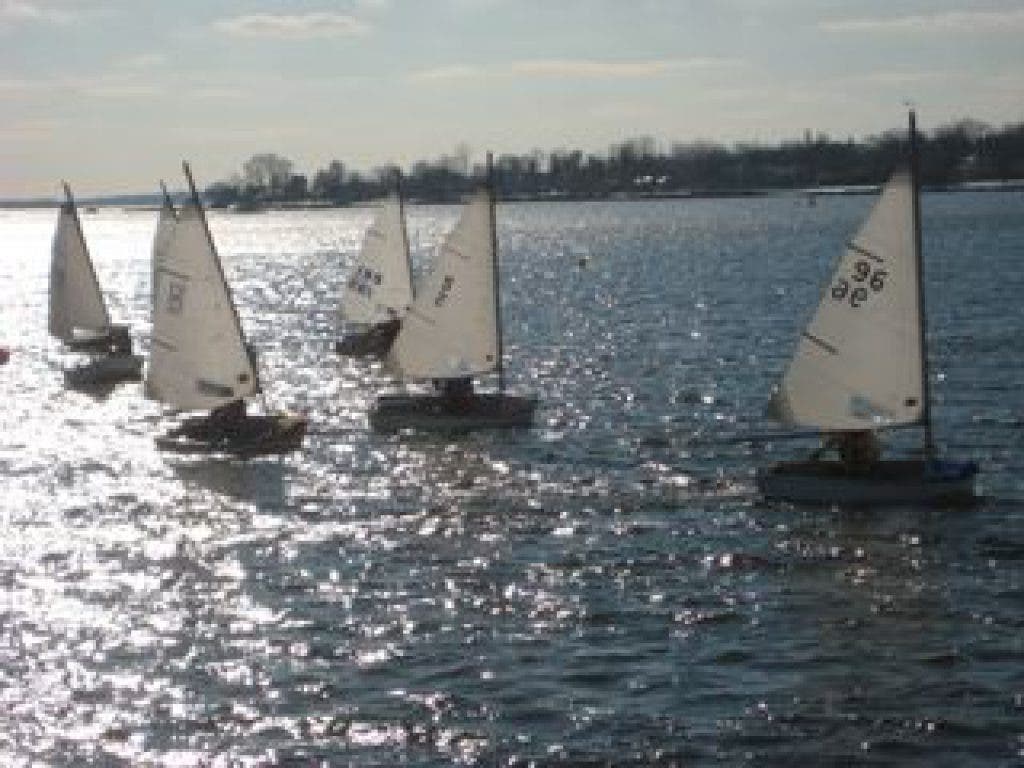


When most people envision a day perfect for sailing, images of warm breezes, t-shirts and sun-dappled waters come to mind. For some, however, frigid temperatures are the best time to get out on the water.
Frostbite sailing—the sport of sailing in winter temperatures—is gaining popularity among a small but dedicated group in Mamaroneck.
“Winter sailing is definitely a niche sport,” said Mamaroneck Frostbite Association (MFA) Fleet Captain Eva Burpee.
Find out what's happening in Larchmont-Mamaroneckfor free with the latest updates from Patch.
Her fleet contains approximately 40 members, who sail out of Beach Point Yacht Club in Mamaroneck. There are also about a dozen fleets up and down the Long Island Sound, each one containing between 10-30 members, according to Burpee.
The MFA fleet consists mainly of volunteers and owns many boats, allowing them to charter to those who don’t own a boat.
Find out what's happening in Larchmont-Mamaroneckfor free with the latest updates from Patch.
The MFA was founded over 50 years ago by Emil Mosbacher, Jr., Warner Willcox and Howard McMichael.
According to the MFA website, they are “one of the largest and best-established winter sailing fleets on the East Coast.”
So what are the benefits to sailing in the wintertime?
“In the winter months the wind tends to be a little more reliable than in the summer,” said Burpee. She pointed out that winter also carries less traffic on the water, resulting in fewer waves from motorboats and water skiers.
“So it’s kind of like you’re out there by yourself,” she said.
The racing group—which spends a couple of hours on the water during frigid winter afternoons—holds a series of short races—sometimes six or seven each day—according to Burpee.
The season starts in November and lasts through April. Membership consists of over 30 days of racing, three regattas, three informal team races, coaching sessions and the traditional after-sailing parties.
The benefit to summer sailors, according to Burpee, is that the races are shorter and it gives participants room to hone their maneuvering techniques.
“I always sailed in the summer and I wanted to improve my racing skills and I decided that [frostbite sailing] was the way to do it,” said Burpee. “If you’re sailing all the way through the winter, when the spring and the summer seasons come around, your skills are right there and you don’t have to dust them off.”
The MFA consists of a diverse group of people ranging in age from their early 20’s to the oldest member still going strong at age 90, as well as an equitable ratio of men to women, many of who come from assorted backgrounds.
Some of the sailors are local, while others come in from Connecticut and New York City.
Frostbiting isn’t as cold as other winter sports like skiing, mainly because sailing temperatures need to be above freezing.
However, all sailors agree the necessary dress is essential.
Most frostbite sailors start with a layer of thermal underwear with the traditional “long john” underwear recommended as a second layer. However, it is said that you can do without multiple layers if you purchase a dry suit—a one-piece rubber suit that covers the entire body to prevent water seepage. Two pairs of socks, a hat, and gloves also make up the outfit and are applied per the individual’s tastes.
Any sailor will boast of their own particular arrangement in applying their sailing gear.
“I don’t have a dry suit personally,” said Burpee. “I wear long underwear, and, for me, I get hand warmers which you can get at Home Depot. You can put them in your boots or gloves or both and that really helps keep the extremities warm.”
She added that modern advances permit people to stay warm much more easily these days and, despite the cold outlook, nothing seems to be stopping this fleet captain.
“People think about the cold, but you’re moving around quite a lot and you’re very active throughout the afternoon; sometimes you get so engrossed in what you’re doing that you don’t even notice the cold,” she concluded.
Think you've got what it takes to be a frostbite sailor? Contact the MFA at info@mamaroneckfrostbite.org