The Settlement Period (1630-1690)
This era is characterized by the acquisition of lands by Dutch and English settlers from the Algonquin-speaking native tribes and the creation of villages, townships, and counties as well as conflicts between local authorities and the mother country, between the Dutch West India Company and the New England Confederation and - after the Duke of York's seizure in 1664 - between religious and political factions amongst the English.
The last three decades were marked by the political and economic dissolution of most native tribes owing to disease and the era ended with the overthrow of the Duke of York (James II after 1685) by William of Nassau-Orange and the restoration of religious liberties and political representation.
The Late Colonial Period (1690-1770)
The era of political stability, economic expansion, and the growth of agriculture, fishing, and whaling, and slavery - but with a growing abolitionist movement towards the end of the 18th Century as the influence of Quakerism expanded on the western half of the Island.
The Revolutionary Period (1770-1790)
The political polarization of Long Island coinciding with the advent of conflict between Britain and the Thirteen Colonies; the military occupation of by British and mercenary forces following the defeat of George Washington at the Battle of Long Island; the restoration of civilian government and legal institutions after the Peace of Paris and the exile of many prominent Loyalist families to England and Canada thereof.
The Expansive Period (1790-1883)
Period started with the influx of New England entrepreneurs, scholars, and civil leaders who transformed Brooklyn from a Dutch-speaking village to a mercantile city with the beginnings of manufacturing, overseas trade, and urbanization. This fostered the creation of the Long Island Rail Road, explosive influx of European immigrants, establishment of new villages, expansion of whaling and fishing fleets, construction of mills and lighthouses, and the beginning of large-scale commercial agriculture.
This era witnessed the emergence of a distinct Long Island cultural identity - a Yankee/Yorker hybrid via the flourishing of local artists, writers historians, and craftsmen such as William Sidney Mount and Walt Whitman. This era also includes active participation in the abolitionist movement in the 1810's and 20's led by Ellias Hicks, "the Prophet of Jericho" and involvement in the Union cause during the Civil War. This period was also one of expanding ethnic and religious diversity with the growing influence of the Roman Catholic, Episcopal, and Lutheran churches after 1840.
The Gilded Age (1883-1930)
Period begins with the creation of the Brooklyn Bridge and the political and economic integration of Brooklyn and western Queens into the City of Greater New York after 1898 (and the consequent creation of Nassau County).
This was the age of the vast tycoon-era baronial estates, yachting marinas, country clubs, and seaside resorts whose residents and patrons not only dominated the social and political scene, not only came to introduce the automobile and aviation and other industries and technologies, but to establish many of our area's public institutions and hospitals and universities.
The Suburban Period (1930-Present)
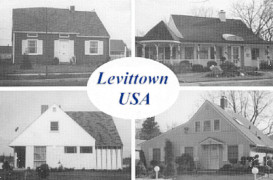
The most politically, culturally, and economically diverse and turbulent era since the Settlement Period. Notwithstanding such interludes as the Great Depression and World War Two, this era became typified by the decline of agriculture, explosive population growth, enormous commercial expansion, the erection of extensive highway and park systems by Robert Moses, and large-scale commuter suburban development revolutionized by the building of Levittown.
During these years, national and international events and trends - the Depression and WWII, the Cold War, globalization of the economy, and he growth of corporate media and popular culture - became the principal deterministic factors affecting life on Long Island.
Want to learn more about the history of Levittown and the surrounding communities? Visitwww.levittownhistoricalsociety.org