Health & Fitness
Levittown and the Brooklyn Yankees
A look at the history of Levittown from a local historian.

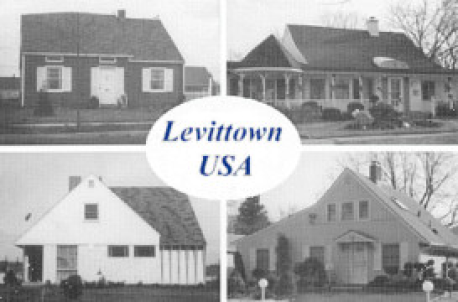
Ask anyone living in the heart of Nassau County where their grandparents came from and the most common answer is apt to be Brooklyn.
Oh, William Levitt, Sam Kelner, Jerry Spiegel, and Jerome Miller may have built the thousands and thousands of meandering lanes, parks, and shopping centers that comprise East Meadow, Levittown, Wantagh, Hicksville, Carle Place, Uniondale, and Seaford, but most of the people were provided courtesy of Brooklyn. So many of our families came from Brooklyn. But whence came Brooklyn?
The Brooklyn our grandparents and great grandparents knew, from brownstone rows to Prospect Park to egg creams to hot dogs as Coney Island to stickball in the street, to hanging out on the stoop was nothing less than a confluence of the burgeoning Industrial Revolution and, oddly enough, the explosive growth of New England that began in the middle of the 1700's. The second U.S. Census in 1800 shows a New England region growing so rapidly that, had the trend continued into the Civil War era, the majority of all Americans would be residents of Connecticut, Massachusetts, and Rhode Island.
Alas, this didn't happen because thousands of Yankee families packed their bags and sought greener pastures as far away as Illinois and as far south as Kentucky. Indeed, by 1850, nearly half of all New York State residents were New England-born or at least second-generation Yankee. But many people in this Great Yankee Migration were from wealthier clans who sought to be betwixt the growing industrial centers of New York City and Boston.
They settled in that northwest quarter of Kings County, a small largely agrarian hamlet where many of the residents still spoke Dutch and told their grandchildren tales of the ancestral Fatherland and of the horrific battle in the open fields of the Gowanus in which the row upon row of redcoats, kilted Highlanders, and Hessian soldiers in gleaming chrome helmets set George Washington fleeing for safety across the Hudson River.
By 1834, Brooklyn was a thriving community of merchants, artisans, factory workers, and ship-builders opening up the "China trade", founding schools and lyceums and churches and experimenting with a new-fangled technology called the railroad which, five years earlier, had been successfully established in England between Liverpool and Manchester. In that year, the City of Brooklyn was chartered and the Long Island Rail Road was organized with plans in the offing to run as far east as Orient Point. (People heading to Boston could then take a ferry ride out of the North Fork).
Droves of immigrants - initially from Germany and Ireland-took advantage of the economic expansion of Brooklyn in the first half of the 19th Century and were joined later by other groups after the Civil War - notably, Italians, Scandinavians, and eastern Europeans (including many Jews). Here were the building blocks of Levittown not merely because so many Levittowner's families began in America amongst these huddled masses, including William Levitt's grandparents, but because this Brooklyn melting pot forged the foundations of the surrounding communities that would have such an enormous impact on Levittown's future growth.
The famed potato farmers of old, from whom builders like Levitt & Sons acquired their land (and from whom, more often than not, Robert Moses kicked off their land) were principally the descendants of the German, Irish, and eastern European immigrants who originally settled the City of Brooklyn. The homecoming GI's who took Levitt up on his offer after World War Two were principally hyphenated third or fourth generation Americans whose families grew up in Brooklyn; the differences being largely the differences that emerge from the distinctions between the urban and heterogeneous experience and the rural and more homogeneous experience.
Finally, an intimation of the shape of things to come can be found in the Great Yankee Migration into Brooklyn. Half-a-century before Alexander Stewart created Garden City, Nassau and Suffolk counties first suburb in the modern sense, the Yankee merchant princes, civil leaders, and captains-of-industry settled Brooklyn Heights and commuted via ferry to New York City. Hezekiah Beers Pierpont, one of those visionaries I call "the prophets of suburbia", had created an upscale leafy suburban environment for the distinguished burghers.
Talk of erecting a bridge between the twin cities on the Hudson arose as early as the 1840's but that, and the technology needed to make it possible was still decades away. When it became a reality in 1883, it caused the rapid political, economic, and social integration of the two great municipalities that led to the Act of Consolidation and the collateral creation of Nassau County. The stage was set for the huddled masses to enter the middle class and Levitt & Sons would provide the vehicle that made it become a reality.
Want to learn more about the history of Levittown and the surrounding communities? Visit www.levittownhistoricalsociety.org