Community Corner
Form Follows Function in Long Beach
Learning the origins of the city's architecture provides lessons in its history.

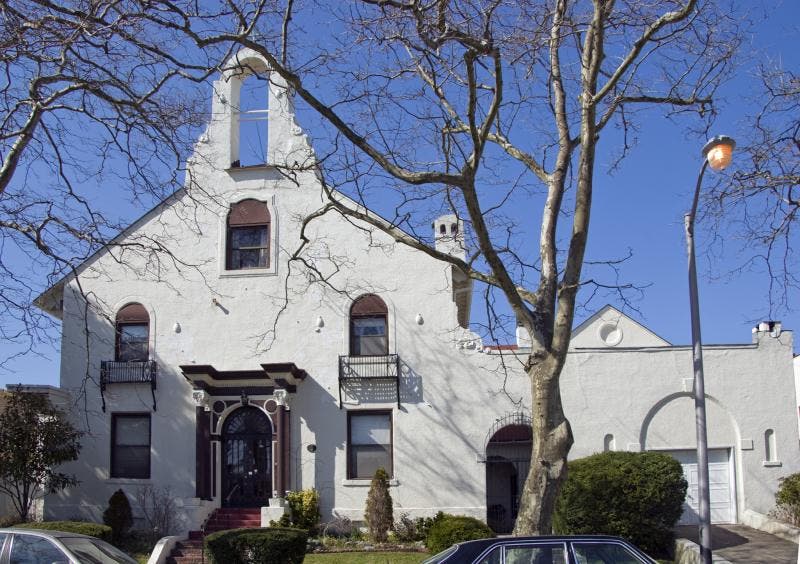


Learning about the architecture of Long Beach — with its many eclectic homes and styles, from Moorish to Neoclassical to bungalow — can be daunting.
But in studying the evolution of the Long Beach's homes, in part learning when and why a particular style was employed, can help architecture-lovers gain a greater understanding of the city's history.
Long Beach's original homes, churches and buildings were created under specific guidelines mandated by Sen. William H. Reynolds, the founder of Long Beach, in 1908. Reynolds wanted the island to evoke a Mediterranean atmosphere, so he ordered homes to be built in Spanish Revival style, with red terracotta roofs, stucco facades and 100x100 dimensions.
Find out what's happening in Long Beachfor free with the latest updates from Patch.
Today, that style helps residents distinguish between the city's original and earliest homes from later structures, and leaves some inquisitive about the Spanish design.
"I always questioned if it was the workers at the time that styled the homes this way, or if the town had originally been home to Spanish settlers," said Wendy Vassen, a neighbor to one of Long Beach's original homes on West Penn Street.
Find out what's happening in Long Beachfor free with the latest updates from Patch.
The first twelve homes built in Long Beach were created in the Spanish Revival style, but Reynolds loosened his restrictions and permitted construction in Mission Revival and Mediterranean Revival, both sub-styles of Spanish Revival.
Although these homes appear alike to the untrained eye, their architectural differences are found in their peaks and eaves. Three star peaks, such as those on the Historical Society Museum on West Penn Street, showcase Spanish Revival, while the curved gables on the rectory at St. Mary's Church on East Park Avenue reflect Mission Revival.
Another early style, Moorish Revival, is exemplified by the Lido Beach Towers in Lido Beach, and the Granada Towers, on Riverside Boulevard, which is listed on the National Register of Historic Places.
"It's a beautiful example of Moorish Revival," Alexandra Karafinas, president of Long Beach Island Landmarks Association, said of the Granada.
Karafinas has studied the barrier island's architecture for 30 years. Receiving her Bachelors of Architecture from New York Institute of Technology, she turned down an opportunity to move to Europe and remained Long Beach, the town she grew up in, to teach about and preserve architectural homes in the area.
"Long Beach has beautiful architecture," Karafinas said. "There's nothing else like this. Different styles and period pieces reflect every part of this town."
Last year Karafinas and the Landmarks Association hosted an architecture exhibit at the now defunct Evers Place gallery in the West End, complete with photographs, drawings and posters of Long Beach's diverse homes and buildings.
"Architecture is another art form but we never display it," Karafinas said at the exhibit. "We display our artists in town, but never our architecture. It's like a secret."
When Reynolds's restrictions were lifted in 1922, the year Long Beach became a city, popular home styles, such as the Tudor and English cottage, were erected. At the exhibit, the photos on display showed everything form the Spanish influence on the Romanesque arches at St. Ignatius Church on West Broadway, Roman arches at Temple Israel at Riverside Boulevard, Dutch colonials built between Neptune and Monroe Boulevards, bungalows on New York Avenue and an art deco home on Shore Road.
It wasn't until the late 1930s and early 1940s that Long Beach documents show homes being converted to heat, but as the community transformed it continued to build new architectural structures. Even today, styles new to the city are appearing, including a California-style modern built at the corner of East Walnut Street and Roosevelt Boulevard in 2008.
"Long Beach architecture is never pure, it tends to be eclectic," Franklin Perrell, a former Long Beach resident and one-time curator at the Nassau County Museum, said at last year's exhibit. "If it's art deco, yes, it's of that style, but it doesn't look exactly like Radio City Music Hall. Long Beach, because of the presence of the water and intense sun and the flatness topographically, has a tendency to influence the way certain styles are articulated. So whether it's Georgian or art modern or deco or art revival or Tudor, Long Beach has its own distinct qualities."