The Chennault Affair:
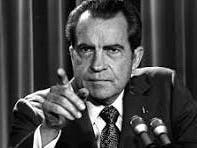
Before the 1968 Presidential Election, between Democratic VP Hubert Humphrey and former Republican VP Richard Nixon, the Nixon Campaign interfered with Vietnam Peace talks. Anna Chennault, a big Republican fundraiser was a vital player in this cover-up, urging South Vietnamese President Ngyen Van Thieu to delay planned peace talks until after the election in November.
President Lyndon Johnson was close to securing a cease fire, with peace negotiations planned in Paris before the upcoming presidential election. But Nixon Campaign associate, Chennault, passed on info to the South Vietnamese Embassy requesting that they pull out of the peace talks, delaying them until after the election. Nixon feared that a peace deal under the Johnson admin would give Humphrey an added advantage.
Find out what's happening in Long Islandfor free with the latest updates from Patch.
Johnson learned of this from FBI wiretaps but failed to release them to the public in order to protect intelligence sources. Instead he chose to confront Nixon privately and inform Humphrey, thus leading the country into a Nixon presidency. Perhaps, a grave error in judgement.
Since then, these declassified tapes have confirmed the extent of this operation, which sabotaged a peace deal, leaving two countries at war. 1968 proved to be the deadliest year of the war with 16,592-16.899 killed, almost 45% of which dying from the Fall of 68 to the end of December.
Find out what's happening in Long Islandfor free with the latest updates from Patch.
1969 – 11,780 killed servicemen
1970 – 6,173 killed servicemen
1971 – 2,414 killed servicemen
1972 – 759 killed servicemen
For stalling the peace talks, Nixon promised South Vietnam a better deal and stronger support against the communists with more military backing. After winning the election and being sworn into office, the Nixon admin sent massive amounts of military weapons to South Vietnam, along with tanks, jet fighters, helicopters and patrol boats. Finally in 1973 in Paris, the war ended for the US with the signing of the Paris Peace Accords, leading to the withdrawal of US military forces. Four years after Johnson’s 1968 deal that was sabotaged to win an election.
Iran Hostage Crisis:
On November 4, 1979, Iranian students seized control of the US embassy in Tehran taking 66 Americans hostage. They did this in response to President Jimmy Carter allowing the exiled Shah of Iran into the US for medical care. To get Iran to release the hostages the Carter admin froze 8 billion in Iranian assets in the US. Banned all US imports from Iran and cut diplomatic ties. Worked with allies to put pressure on Iran. Used Algerian intermediates to negotiate to unfreeze assets in exchange for hostages. The crisis went on for the last year of Carter’s presidency until the 1980 presidential election, between him and Republican California Governor, Ronald Reagan. Carter not being able to resolve the crisis made him appear weak to voters.
Before the Iranian Revolution, the US was the largest military supplier to Iran. After the students stormed the US Iranian embassy Carter imposed an arms embargo on Iran and stopped supplying weapons to them. In September of 1980, Iraq attacked Iran causing Iran to become desperate for weapons.
As Carter continued to attempt to reach an agreement with Iran, the Reagan campaign worked on their own deal, which has come to be known as the October Surprise. Top intelligence sources said that Henry Kissinger met with reps of Mohammad Beheshti during the week of November 12, 1980. And claimed that pro-Reagan British intelligence circles and Kissinger met with Iranians 6-8 weeks prior and interfered with Carter’s efforts to secure an arms for hostage deal with Iran. The hostages were not until freed minutes after Reagan was inaugurated on January 20, 1981.
The Iran Contra Affair:
Between 1981-1986 senior officials of the Reagan admin secretly sold weapons to Iran which violated an arms embargo, and used the money to secretly fund the Contras, a rebel group fighting to take over Nicaragua’s leftist government. This action broke the Boland Amendment, which was passed by Congress and signed by Reagan, banning military aid to the Contras. Reagan was intent on overthrowing the left-wing Nicaraguan government and supporting the Contra rebels, who were waging guerrilla warfare on Nicaragua’s new government. Reagan stated that he supported the goal of freeing the 7 hostages held in Lebanon but claimed he had no knowledge of the illegal funds to the Contras.
While all this was happening, the Reagan admin in Spring of 1983 and launched Operation Staunch, a diplomatic effort to get other world powers not to sell arms or military parts to Iran. When the Iran-Contra story broke in 1986 it proved to be a national scandal for the US and especially for the Reagan admin. It seemed hypocrisy and cover-ups were a big part of the Reagan presidency, a presidency possibly won by the making of an underhanded deal involving human lives.
Stay safe & keep informed.