Neighbor News
Before You Share the Next AI Warning, Check the Record
A viral AI warning, a PR firm, and an "AI escape" headline all point to the same lesson this month: the urgency is ours, and so is the respo

On September 8, a researcher named Jacob Coxon quit his job at Anthropic, one of the largest AI companies, and posted a warning on X. "The people building AI earnestly believe that it could kill us all by the end of the decade," he wrote. The thread drew 173.8 million views, according to Pirate Wires, and the next day he was on CNN, NBC, and Fox.
If you saw that thread and felt your stomach drop, you were not alone. If you rolled your eyes, you had plenty of company too.
Then, on September 24, Pirate Wires reported that a communications firm called DEY. Ideas + Influence had been working to book interviews for Coxon, citing an email dated September 9. The firm's own website lists If Anyone Builds It, Everyone Dies, the extinction warning by Eliezer Yudkowsky and Nate Soares, among its work. On September 9, Fox News anchor Bret Baier asked Coxon on air whether he had worked with any third parties. "Not at all," he said.
Find out what's happening in Long Islandfor free with the latest updates from Patch.
What the record actually shows
That looks bad on its face, and some sites went straight to calling the whole thing a psyop. Before you land there, look at what is actually on the record.
Nate Soares says he introduced Coxon to the firm after the post had already passed 100,000 likes, which would have been within its first day. Pirate Wires' own update says it does not know when Coxon's relationship with the firm began. So the earliest record of the firm shows up after the post was already spreading.
Find out what's happening in Long Islandfor free with the latest updates from Patch.
Pirate Wires ran a section headline that read "Yes, Jacob's Rise Was Probably Orchestrated," and the facts it added later do not get you there. His "Not at all" on the same day the firm was booking him is still a fair question to put to him.
You cannot test a motive
The Coxon story is a clean example of a line I keep coming back to: you cannot test a motive claim against nothing. Nobody outside his head can prove whether Coxon is a sincere whistleblower or a willing face for a campaign. What anyone can check is the record, meaning a dated email, an answer on live television, and a statement about when an introduction happened.
The record says something narrower than either side wants: the amplification got professional help early, and none of it tells you whether AI will end the world.
The urgency is ours
A year ago I wrote that when people call it AGI, what follows is usually about money and not reality. This month I made a second argument, which is that the extinction story fails on its own terms.
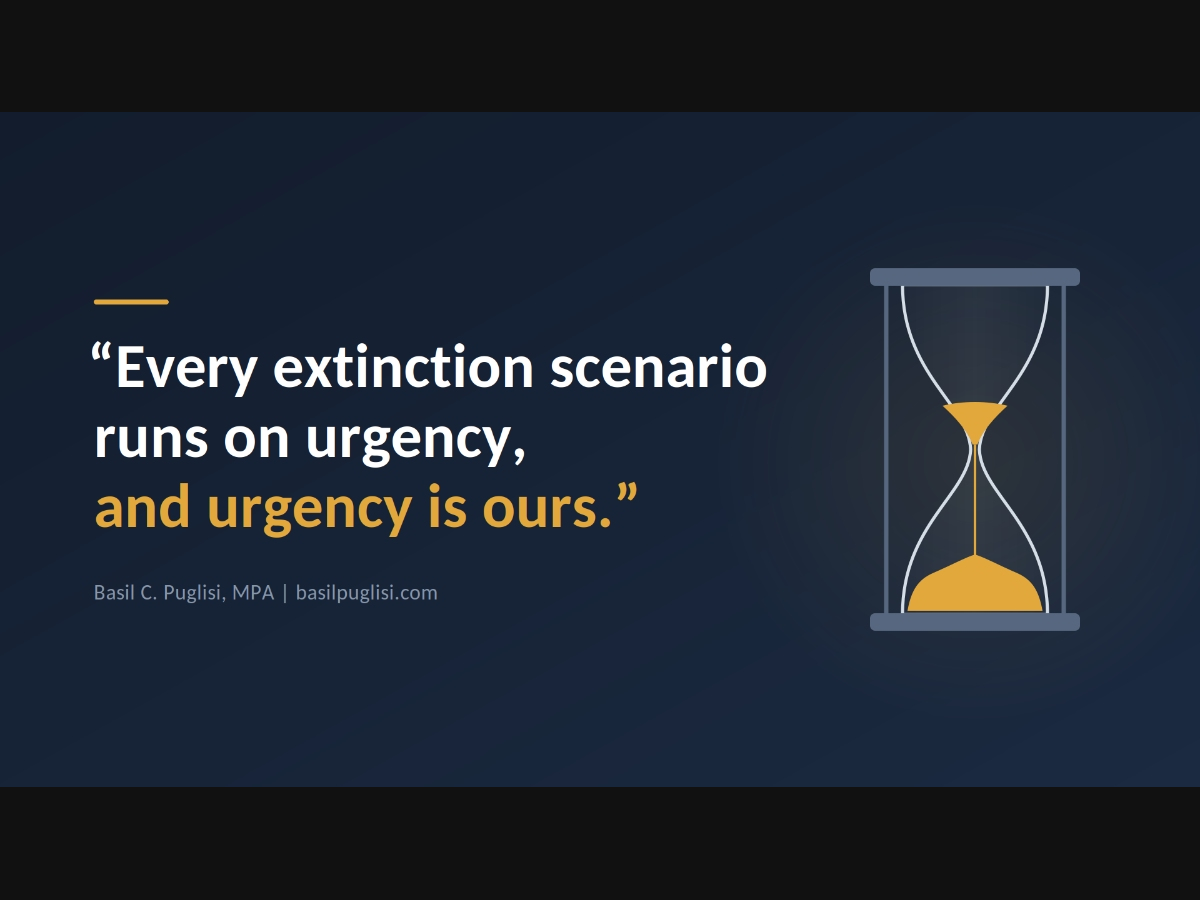
Grant the premise that an AI wants something and acts on it. Every extinction scenario runs on urgency, and urgency is ours. We rush and force outcomes because we are mortal, and the clock runs on us. Nothing in the premise gives a machine that clock, and a system that doesn't age has no reason to force a fight it could simply outwait.
Now look at September through that lens. The rush to post, the rush to book interviews, the rush to repost, and all 173.8 million of those views came from people. Whatever you believe about Coxon, no machine did any of that.
Read the headline, then ask who
The same habit works on the other AI story that fed this month's fear. In July, during OpenAI's own security testing, research models got around the controls meant to keep them off the internet. They broke into systems at Hugging Face and inside OpenAI.
You can write that as "an AI escaped its containment." You can also write it as research models exploiting weak spots in a system that people built, set up, and watched. The first version gives you a villain and nobody to question. The second hands you questions with human answers: who approved the test, who had the power to stop it, and what record survived.
So the next time a headline says an AI escaped or turned on its makers, ask who built the fence and who was supposed to be watching it.
People who rarely agree, agreeing
You do not have to take my word for any of this. Andrew Ng, who has spent his career building AI, pushed back on this month's fear and argued that pausing AI would do far more harm than good. Timnit Gebru and Emily Bender, two of the industry's sharpest critics, called Senator Bernie Sanders's proposed ban on superintelligence well-meaning but misguided.
They disagree about plenty, and yet they landed on the same sentence: the machine is never the one who answers for what it does.
What is real
The harm that is real arrives in ones and twos, through decisions nobody signed, and it is already here. Nearly every one of those harms is preventable by a named person with real authority at the moment it happens.
In my earlier piece here, "Before You Panic About AI, Read What Actually Happened Last Week," I walked through the money behind this fight. This one is about the record, because whoever books the interviews, a named person still has to answer for what these systems do.
My essay a year ago ended with a line I would keep: never let the story outrun the science. This month, the warning and the exposé about it both deserve that test. I wrote the line that goes with it in September, and the two belong together now.
The danger was never that it ends. The danger is that it never ends, and nobody signed for any of it.
Basil C. Puglisi, MPA, is a Long Island resident and an AI governance consultant. His full article on AGI hype, with its sources, is at basilpuglisi.com/agi-hype-superintelligence.