Neighbor News
I’m Sticking With The Union…And You Should, Too.
The Janus decision threatens to undermine unions, and it could be disastrous for working Long Islanders and the local economy.

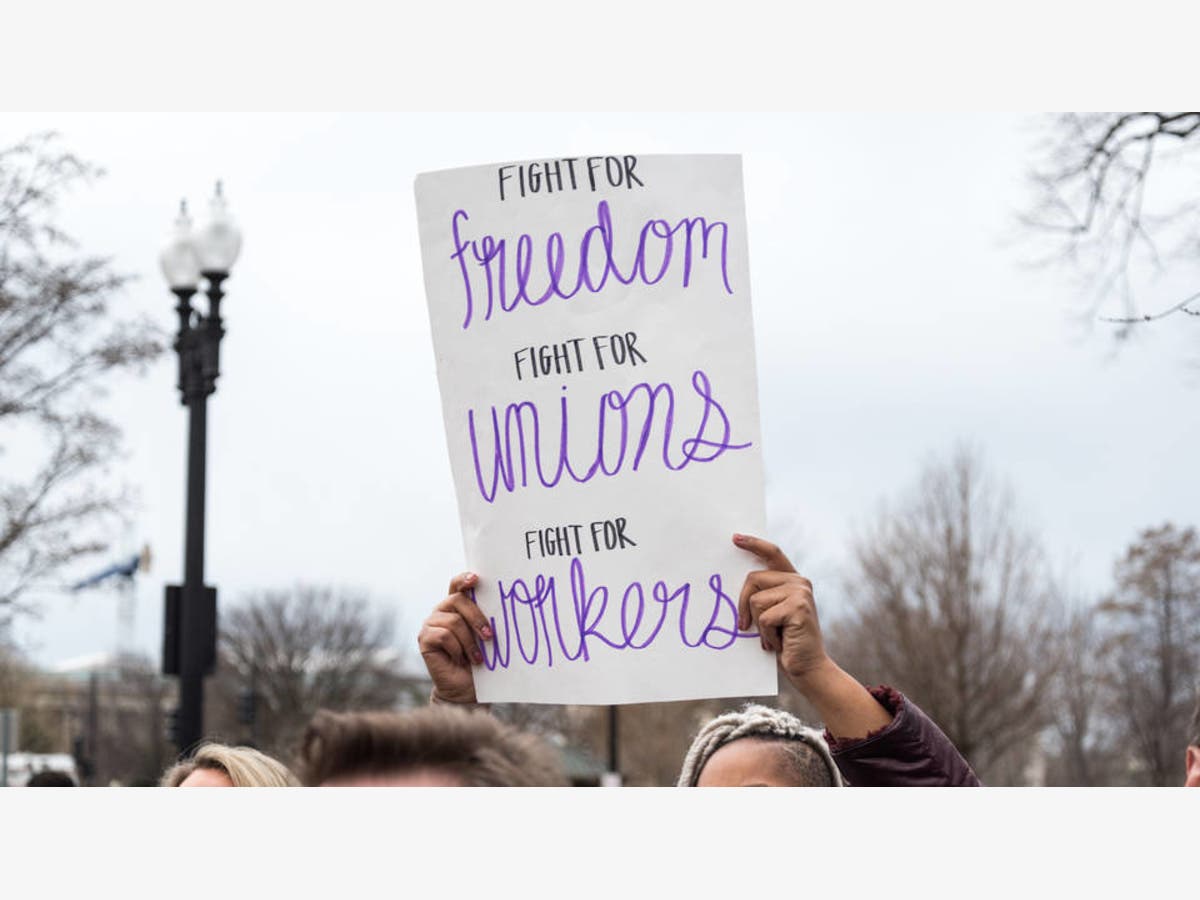
This week the Supreme Court of the United States made its long-awaited ruling in the case Janus v. AFSCME Council 31. In this decision, which dealt a major blow to labor unions, the nation’s highest court decreed that public sector employees, who choose not to be part of the union that represents them, cannot be required to pay union dues or ‘fair share’ fees. The case was brought before the court by child-support worker Mark Janus from Illinois, who argued that the mandatory fair share fees that are withheld from his paycheck violated his First Amendment rights to free speech. It should be noted, however, that the Janus case is part of a decades-long effort by high-profile antilabor lobbyists and think tanks to weaken the power of unions.[1] In fact, groups like the Mackinac Center, the Empire Center, the Freedom Foundation, and the National Right to Work Center have already begun to call and email employees who are represented by public sector unions to ask them to opt out of paying union dues or fair share fees. The mechanics and political arguments embedded in this case are up for debate, and shall not be discussed here, but the implications for unions and workers are clear. Non-union members won’t have to pay fair share fees, and even union members could opt out of paying their union dues, while under federal law, both could remain ‘free riders’ who would still be entitled to union representation and benefits. But how are unions supposed to continue to provide these perks without the funds necessary to operate in the first place?
While on the surface the outcome of the Janus case may sound like a win for workers who choose not to be dues-paying union members or to pay fair share fees, this ruling is a Trojan horse which carries the potential to erode worker representation and collective bargaining. A comparable scenario occurred in the late 19th century. In 1898 Congress passed the Erdman Act, which established procedures to settle disputes between labor unions and corporations. The law prohibited employers from requiring their workers to sign agreements – so called yellow-dog contracts - which mandated that employees could not join or be part of a union. The law also forbade employers from black-listing active union members and employees who engaged in strikes. But much like the Janus case today, the Erdman Act was not exactly a victory for workers. Samuel Gompers, President of the American Federation of Labor (AFL), staunchly opposed the law because he considered it to be “destructive of the best interests of labor” and “ruinous to the liberties of our people.” Gompers resented that the law allowed for injunctions to be used against strikers, and that it required workers to give notice to terminate their employment.[2] Despite the alleged benefits of the Erdman Act on the surface, Gompers and the AFL believed that the law would be detrimental to the union’s core ideology of industrial liberty, and that it “would form a precedent which labor organizations cannot indorse [sic].”[3]
As most people would probably acknowledge, unions and organized labor are behind many of the benefits we take for granted today. After all, it is thanks to the collective bargaining efforts of organized labor that many of us get to enjoy reasonable work hours, basic workplace safety, workers’ compensation, weekends and holidays, maternity and sick leave, as well as paid vacation and other crucial benefits such as health insurance and pensions. Historically, unions have been part and parcel of all of these accomplishments. Unfortunately, union membership on the whole has been in a steady decline since the 1970s, and as a result, working people today have less influence and control over workplace matters.[4] The ruling in the Janus case is yet another attempt to further undermine the power of organized labor. Unions can only represent their members, and collectively bargain on their behalf, if they can raise the necessary funding base that is required to operate in such capacity. If paying one’s union dues or fair share fees is no longer mandatory, unions will be effectively deprived of that funding base, and will no longer be able to fight for the rights and benefits of working people.
Find out what's happening in Miller Place-Rocky Pointfor free with the latest updates from Patch.
‘But why does any of this concern me?’ some you might ask. Doesn’t the Janus ruling only affect public sector unions? Isn’t it a good thing if those bloated public sector unions get a good ol’ shake-up? Actually, you have a point. Not every union is the same, and not every union always does what’s best for their membership. There is something to be said about trimming the overhead cost and the excessive bureaucracy of some unions out there. Unfortunately, by weeding out the few bad apples in the bunch, the majority of good unions and their hardworking members would get hit in the process. Moreover, who’s to say that private sector unions aren’t next? About a year ago, many Long Islanders from all walks of life and all sorts of political opinions came together and supported the striking Teamsters at Clare Rose in their fight against corporate greed. The Yaphank-based beverage distributor had tried to slash their drivers’ pay by 30% and to take away their pensions. Thankfully, Long Islanders put their political differences aside and supported the striking Clare Rose workers in great numbers. In the end, the company gave in, and the union was able to renegotiate acceptable conditions for the workers. In this rare moment of solidarity, Long Islanders realized that if working people in their region were to be exploited and taken advantage of, it would have significant negative knock-on effects on the local economy and on the ability of neighbors, friends, and co-workers to provide for their families.
So, whom do public sector unions represent? Well, we’re not talking about cutting back on some soulless bureaucracy in Albany here. We’re talking about the livelihoods of working Long Islanders. As a matter of fact, Long Island is union country! A report by the Center for the Study of Labor and Democracy at Hofstra University on ‘The State Of New York Unions’ in 2017 notes that on Long Island “71 percent of its more than 237,000 public sector workers are in unions,” which not only “represents a larger proportion” of public sector workers than New York City, but which also “accounts for the majority (54.3 percent) of all Long Island residents in a union job.”[5] These thousands of public sector employees are precisely the ones who would feel the Janus effect the most, and they are right here in our communities. They are our great public school teachers, our town clerks and workers, our police and first responders, and many thousands of employees at public institutions, such as Stony Brook University and Stony Brook Medicine, which is the largest single-site employer on Long Island. Stony Brook’s economic impact on our regions runs close to 5 billion dollars annually.[6] If you think that the Clare Rose effect would have been a drag on our local economy, just imagine what the implications would be if thousands of employees at Stony Brook had to fear for their benefits and livelihoods. Not only would they feel it in their paychecks or in a reduction or elimination of their benefits, but their purchasing power would also be severely curtailed, which would then reverberate throughout the local economy, and affect local businesses. So, you see, just because public sector unions are suffering it does not mean that anyone who isn’t part of such a union won’t be affected. Now, you might argue, New York has strong labor laws, and unlike states such as Wisconsin, it isn’t a ‘right-to-work’ state. That is true. However, New York, along with California and Illinois, also has the highest share of unionized public sector employees in the country. A sweeping Supreme Court decision, such as the one in the Janus case, often sets a precedent for further legal challenges. There is no guarantee that either public sector or private sector unions in New York will be safe from further attempts to weaken and undermine their ability to represent working people’s interests.
Find out what's happening in Miller Place-Rocky Pointfor free with the latest updates from Patch.
So, what can be done to strengthen unions on Long Island and across the state? Since union dues and fair share fees are no longer mandatory, unions need to be more active in mobilizing their members and those whom they represent. In that sense, the Janus decision could be a blessing in disguise as it might actually animate unions to go back to the grassroots and to actively organize working people. Unions will likely ask their members to opt in and continue to be dues-paying members. If you’re already paying dues or fair share fees to a union that represents you, then this is precisely what you should continue to do. If you have family members or friends who are represented by a public sector union, you should talk with them and explain to them why it is so important to continue to pay those union dues and fair share fees. I myself intend to lead by example. I have two jobs and I am represented by a different union at each of those jobs. Since one of them is a part-time job, I do not qualify for most of the benefits that come with that particular union representation. Now, under the Janus ruling I could opt out of paying my dues to that union. But I won’t do that. I will continue to be a dues-paying member because I understand that, even though I may not directly benefit from that union myself, so many other employees and co-workers do in fact get to enjoy those benefits. Only if working people stand in solidarity with one another will we be able to protect ourselves from further encroachments by corporate greed or antilabor entities and institutions. Our governments, both state and federal, are unlikely to stand up for the rights of working people. This is our own fight to win.
[4] “The State Of New York Union 2017,” Center for the Study of Labor and Democracy at Hofstra University, p. 4, https://www.hofstra.edu/pdf/academics/colleges/hclas/cld/cld-state-of-ne...
[5] “The State Of New York Union 2017,” Center for the Study of Labor and Democracy at Hofstra University, p. 18, https://www.hofstra.edu/pdf/academics/colleges/hclas/cld/cld-state-of-ne...
[6] Office of Economic Development, Stony Brook University, https://www.stonybrook.edu/for-business/