Politics & Government
A Jury — And Lawyers — Of Their Peers
Nassau County Youth Court lets teens take the reins of proceedings of youthful offenders.


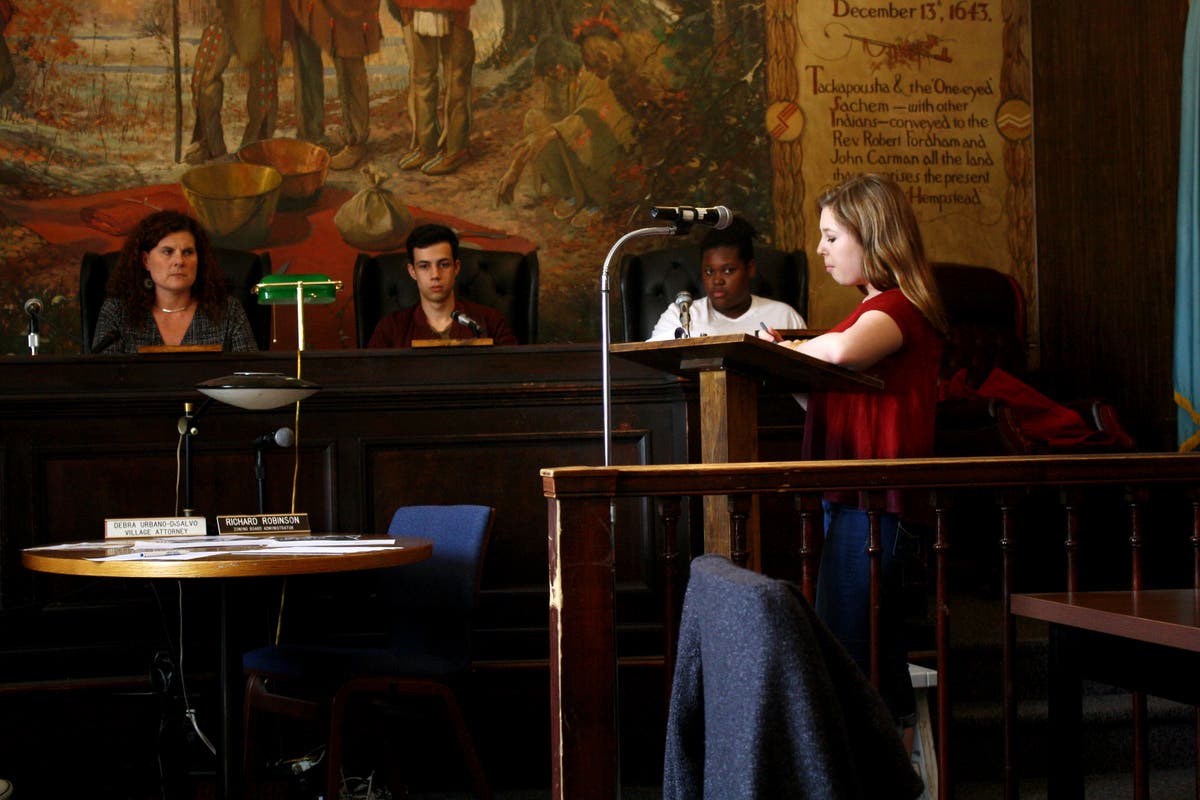
John Smith sits on the witness stand, adjacent the judge that is overseeing the proceedings. The 17-year-old defendant is dressed casually, having come to court straight from school. No one minds, though, because they are all in the same boat.
With the exception of the judge, everyone involved in the trial is dressed similarly to Smith (which is not his real name), because like him, they all came to court straight from school.
Smith’s defense is led by Madisyn Minsky, a sophomore from East Meadow High School. The one arguing against her is Jovawn McNeil, a sophomore from The Waldorf School in Garden City. Smith already admitted to the petty larceny charge against him, so they’re not arguing his guilt or innocence. Instead, they’re trying to convince the jury — who, as can be surmised, have also just come from school — what an appropriate sentence is.
Find out what's happening in Mineolafor free with the latest updates from Patch.
Scenes like this, odd though they may seem, play out every Thursday in Hempstead Village Hall as part of the Nassau County Youth Court. The program seeks to give teenagers with minor, nonviolent offenses a second chance while still imposing consequences for their actions.
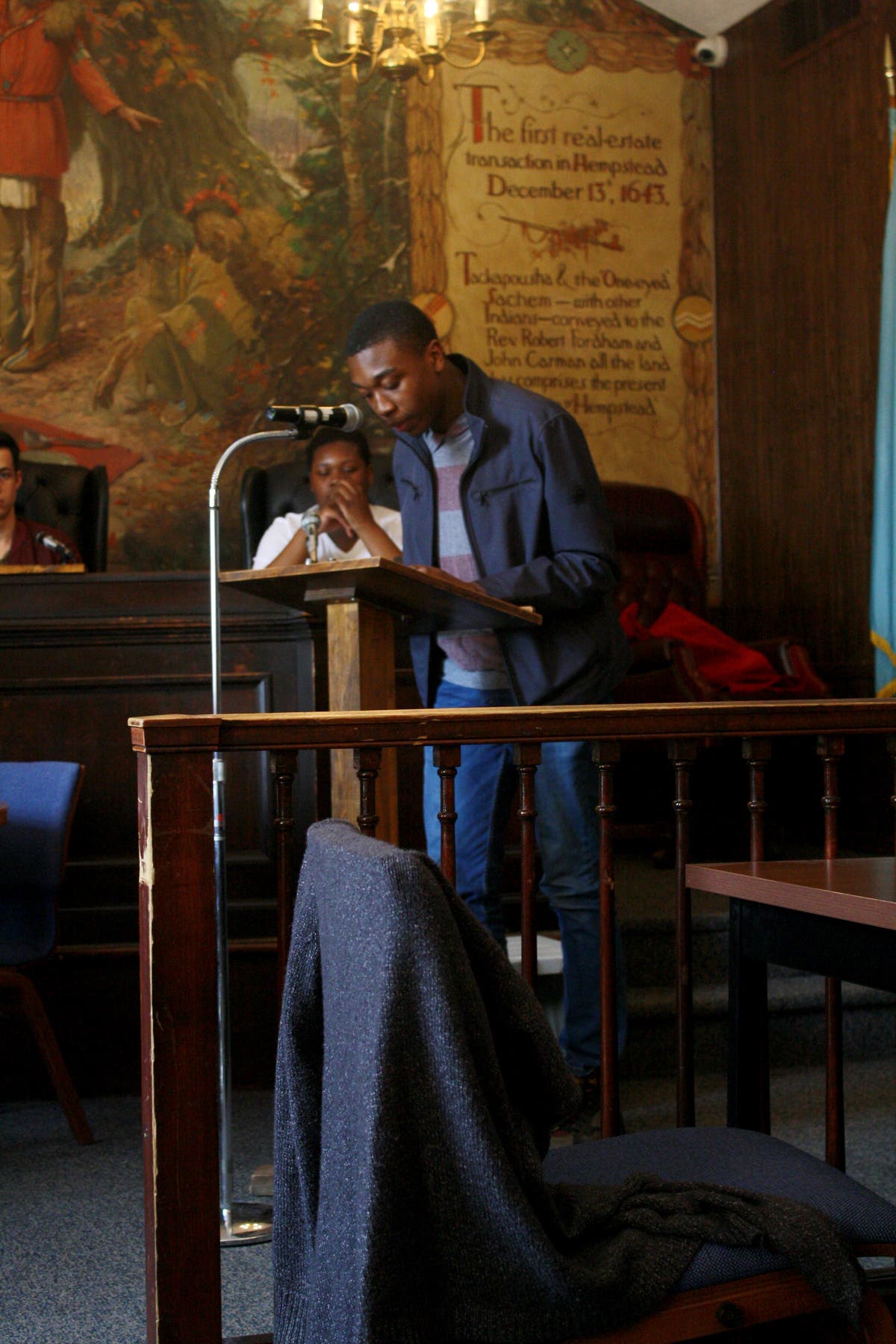
Everyone who comes to Youth Court as a defendant can expect to walk away with a sentence of community service. In addition, everyone who comes as a defendant must return to act as a member of the jury for future cases.
Find out what's happening in Mineolafor free with the latest updates from Patch.
“It’s about giving back to the community,” said Arianne Reyer, an assistant district attorney with the Nassau County District Attorney’s Office. Reyer, along with ADA Kara Kaplan, have been running the Youth Court for years.
In addition to community service, the Youth Court seeks to help its defendants in other ways. They are all introduced to an adult mentor who specializes in things the teens are interested in. Smith, for instance, is interested in photography. So the Youth Court introduced him to a professional photographer in his community to teach him what the job takes and how Smith could one day make money being a photographer.
When Youth Court is completed, the defendants’ records are sealed, so it won’t affect their future. If they commit another crime, though, they are sent through the regular justice system. The same applies if they don’t complete their Youth Court sentencing.
But for most of the people who come before the Youth Court, that isn’t a problem. Recidivism averaged about 10 percent over the last five years, and was down to 6 percent in 2016. According to statistics, children who go through the adult justice system have a recidivism rate of upwards of 80 percent.
“We established Youth Court to give first-time, nonviolent offenders a chance to turn their lives around,” said District Attorney Madeline Singas. “We found that this program – funded with forfeiture funds – helps make our communities safer and puts young offenders on the path to becoming productive, law-abiding citizens.”
And it’s not just the offenders who get helped by the program. Many of the members of the defense and prosecution (called the Community Advocate in Youth Court) are students who want to go on to study law. Participating in Youth Court gives them an idea of what it’s like to be in a real courtroom and the work that goes into it. And it looks great on their college resumes.
“My teacher told me about it, and I was so excited to be able to help people with everything they’ve been going through,” said Jovawn McNeil, who’s been working at the Youth Court for six months. “I just wanted to be involved in my community.”
Smith’s case was a pretty typical one for Youth Court: the high school student was charged with petty larceny after he and his friend stole a package valued at about $75 from the stoop of a house near their school in March.
The defense argued that Smith was a good kid who made a mistake, and should only be sentenced to eight hours of community service and two jury appearances. The prosecution argued that his actions showed a disregard for others’ property, and he should therefore get 16 hours of community service, four jury appearances and have to write a letter of apology to the people he stole from.
The jury was kind to Smith. They went with the defense’s recommended sentence, but also said that he must write the letter of apology.
“It’s not about winning or losing. It’s about helping people,” said Madisyn Minsky, a one-year Youth Court veteran. “And helping people is a great thing, because it’s basically giving people a second chance. Everyone learns from their mistakes, and this will definitely reinforce that.”
Photos: Alex Costello/Patch
Get more local news delivered straight to your inbox. Sign up for free Patch newsletters and alerts.