Schools
Afterschool Robotics Program Inspires STEM Learning In Mount Vernon
The Mount Vernon Educational Foundation hopes to raise enough money to bring the program to every school in the district.


MOUNT VERNON, NY — In many ways, the future of machines is already here — but for the next generation of scientists and engineers in Mount Vernon, that future is just beginning.
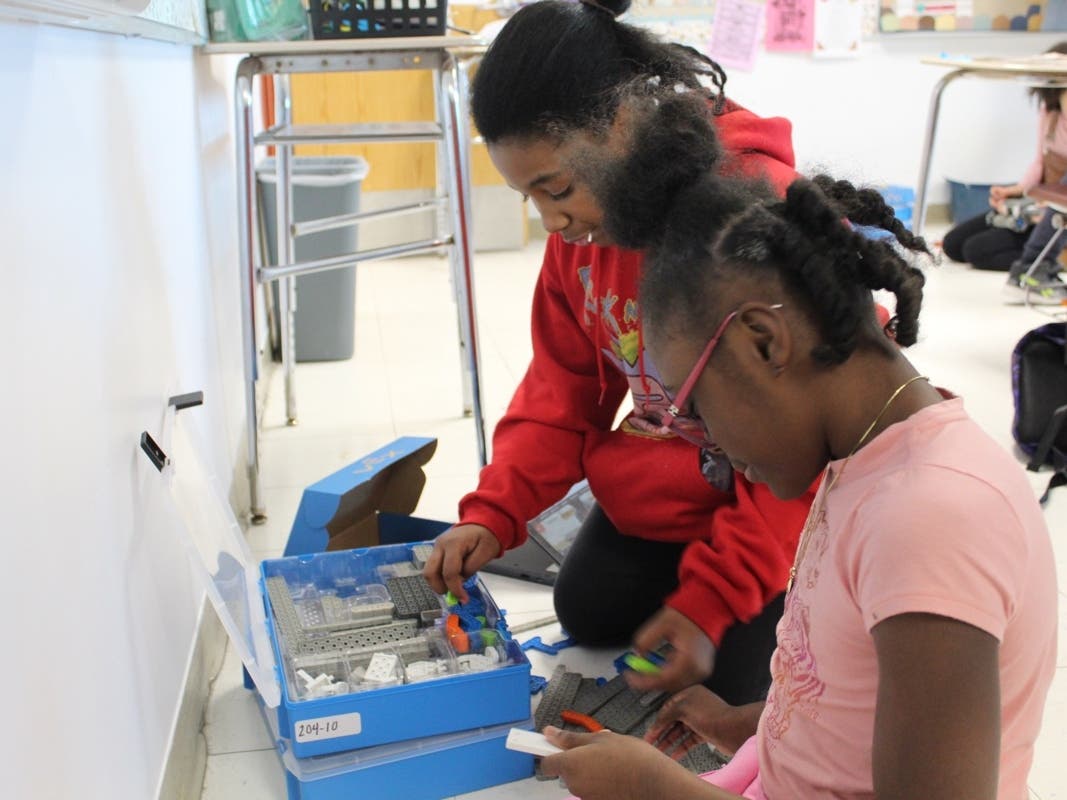
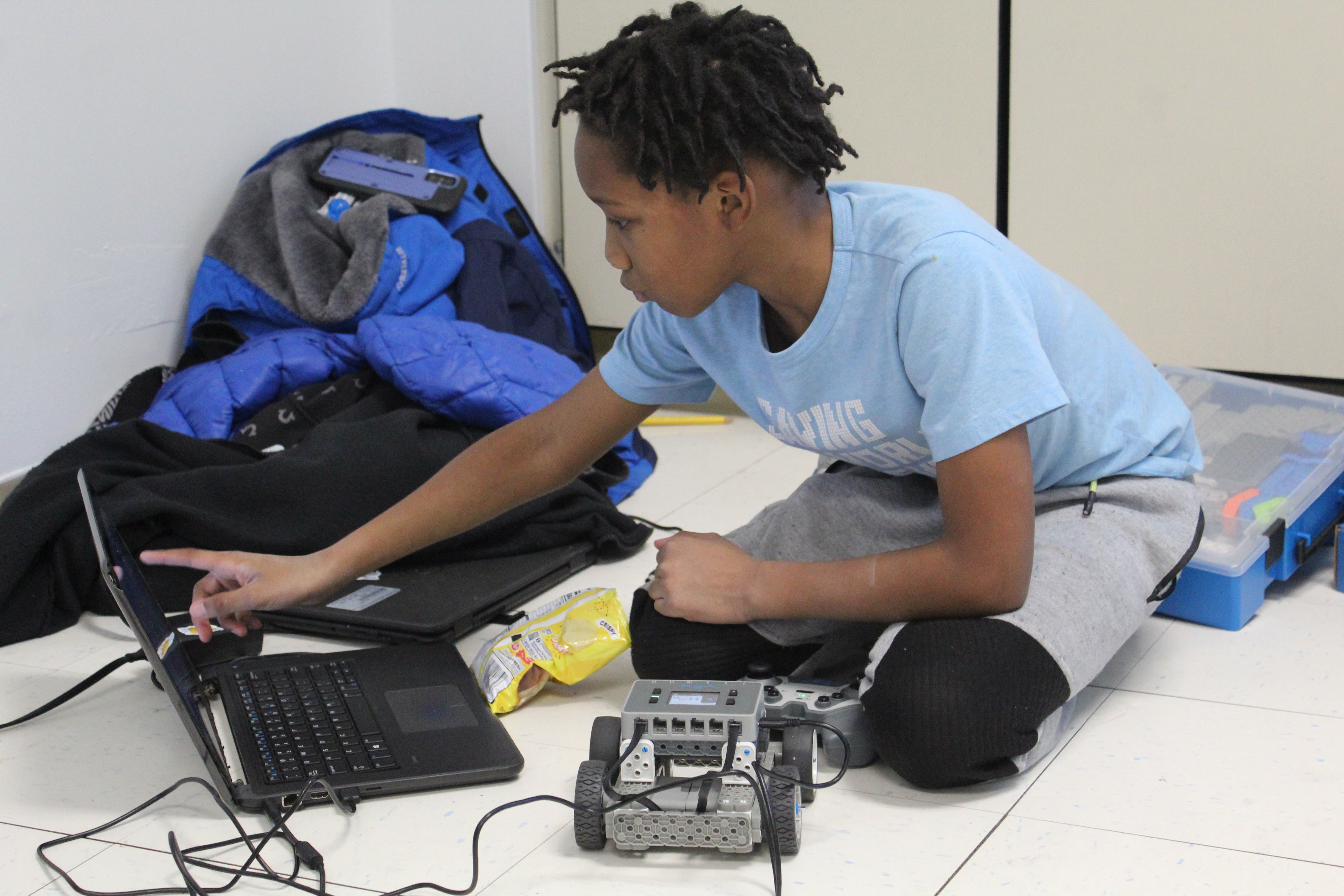
The Mount Vernon City School District announced that through funding made possible by the Mount Vernon Educational Foundation (MVEF), 25 students in the Afterschool Robotics Program at Benjamin Turner Middle School have built VEX robots and learned to program and code them to perform in weekly competitions with peers.
"I really like challenging myself and learning new things," sixth grader Jelani Burgess said. "This program has taught me so much about robotics and technology."
Find out what's happening in Mount Vernonfor free with the latest updates from Patch.
The MVEF hopes to raise about $70,000 to bring this program to all middle school students in the district. Cecil H. Parker, Hamilton, Lincoln, Nelson Mandela/Dr. Hosea Zollicoffer, Pennington and Denzel Washington School of the Arts will start their programs in the fall of 2023. Graham, Grimes, Mount Vernon Honor Academy, Mount Vernon Leadership Academy, Traphagen and Williams will start their programs in the Fall of 2024.
"STEM learning is important for all students’ futures," Acting Superintendent of Schools K. Veronica Smith said. "The district recognizes that technology is advancing faster than ever and providing our scholars with opportunities to expand their knowledge and critical thinking skills is essential."
Find out what's happening in Mount Vernonfor free with the latest updates from Patch.
The foundation’s goal is to work with the Mount Vernon City School District to improve student access to Science, Technology, Engineering and Mathematics (STEM) learning. It is expected that this will inadvertently improve student performance on NYSED grade 6-8 science and math assessments and increase enrollment into Mount Vernon STEAM Academy.
"We want to expand the students’ learning experiences outside the classroom in order to expand their awareness of opportunities and incorporate these new concepts into new possibilities for their future," Eileen Justino, president of the MVEF, said. "We want to broaden the student’s horizons and open the door for greater potential in their lives."
"This program is way more hands-on than anything we learn in class," fifth grader Anais Davenport said. "I want to be a social security analyst and now I have more of an understanding of how technology works."
School officials said there is a growing need to enhance STEM learning in classrooms, especially in elementary and middle school levels, where there is a call for integrated learning programs that allow teachers to engage students in creative and meaningful ways.
"Research stresses the importance of this hands-on learning as an important way to spark interest in critical and fast-growing STEM fields,” Director of STEAM Satish Jagnandan said. "The Mount Vernon City School District’s shared goal is to give more students access to the high-quality STEM learning they’ll need to succeed. We have learned that STEM education is most successful when students develop personal connections to specific STEM activities and the associated academic fields and that both formal (courses or integrated content) and informal (afterschool and summer programs) opportunities can support such experiences."
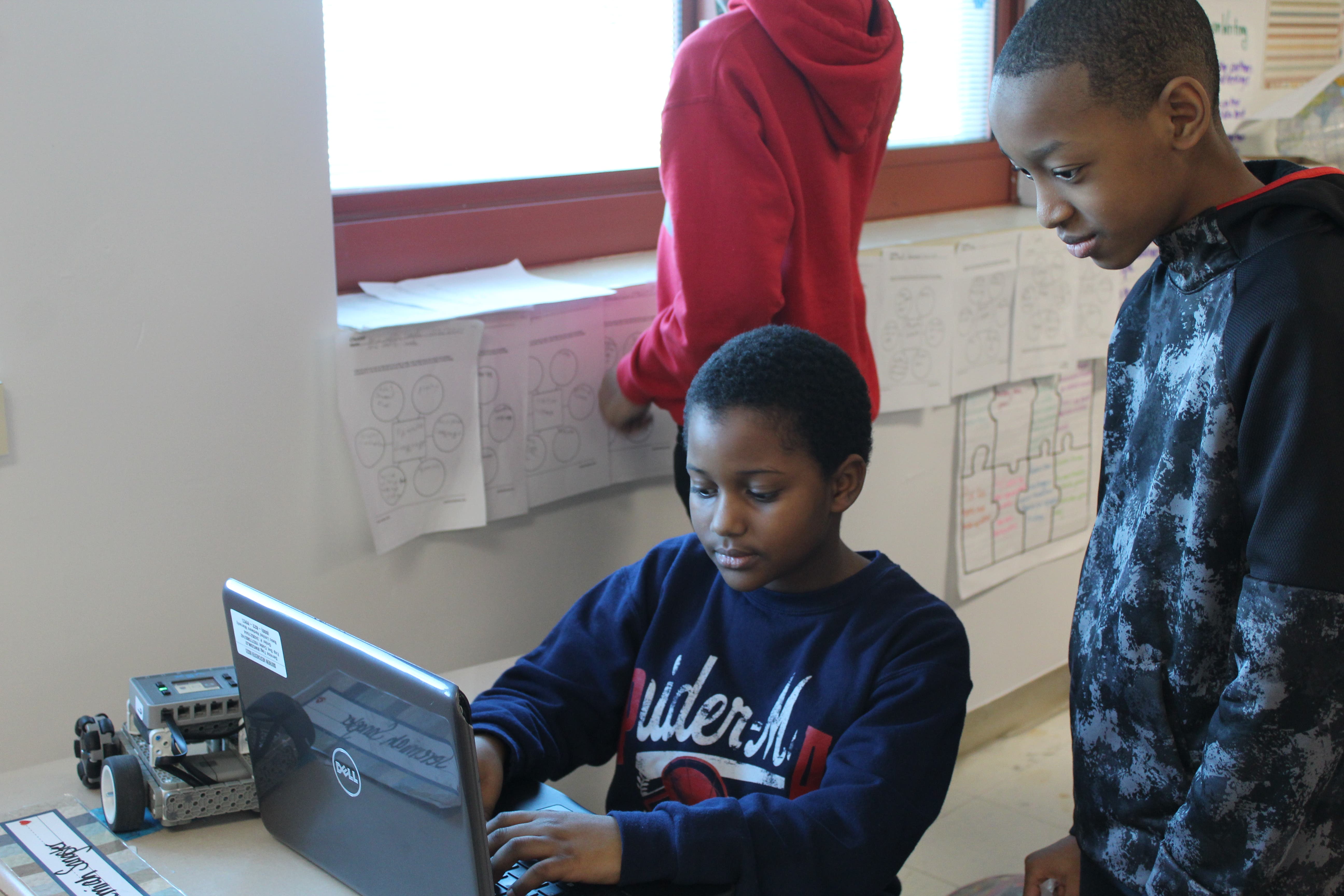
Students in the program say they have taken learning to a new level by incorporating teamwork, communication, and critical thinking by solving problems and ironing out bugs.
"We are learning to code the robot to play tug-of-war against another robot," sixth grader Timari Jenkins said. "My favorite part of this program so far is driving the robot."
The afterschool program has been meeting weekly since January 31, and will finish on June 23. In the coming years, this afterschool program will take place throughout the entire school year, concluding with students participating in competitions against other schools. The program is open to students of all abilities, including students with disabilities.
Throughout this program, students learn to build VEX robots from scratch and learn to code them to move any which way on command. VEX robots are interactive, programmable machines that create hands-on experiences for students.
"We actually built the robots," sixth grader Layla Humphrey said. "They were in pieces when we started this program and now we are able to code it to do what we want. If you are interested in coding and you like building things, you will really enjoy this program."
According to Vex Robotics, "familiarizing students with programming, sensors, and automation, they hone critical computational thinking skills needed to succeed in both the 21st century's workforce and in everyday life."
"I really enjoy doing the challenges, which happens at the end of class each week and I like doing it while hanging with my friends,” sixth grader Dash Bess said. "It’s really cool to see how far the robots have come since we started. Technology is advancing every day and I know it will be useful to know all these things in my future."
Teachers report that the sentiment is shared by classmates as well.
"Students are really enjoying the club," fifth-grade teacher and program instructor Katherine Olson said. "Tuesdays have quickly become their favorite day of the week and it has been so fun watching their determination and creativity each week."
The MVEF hosted a fundraiser in the fall of 2022 that raised over $20,000 to begin this initiative. Each VEX IQ Classroom bundle (one per school) costs $5,000 and can be used year after year as it does not become obsolete. If necessary, the district has the option to add modules in the future. Teachers take a 13-hour course to facilitate the program. The foundation funds these training modules.
The Mount Vernon Educational Foundation has played a key role in many programs. Most recently during the pandemic, the MVEF raised over $35,000 to provide laptops for students as they navigated at-home learning.
You can learn more about the MVEF and make direct donations to help fund the afterschool robotics program here.
"We are extremely excited to know that there are so many students eager to participate, and we are looking forward to providing this opportunity across the school district," Justino said.
Get more local news delivered straight to your inbox. Sign up for free Patch newsletters and alerts.