Crime & Safety
Mayor's Power Over NYPD Should Be Reduced, AG Protest Probe Says
Attorney General Letitia James' investigation of NYPD's behavior during protests found they need an "entirely new accountability structure."


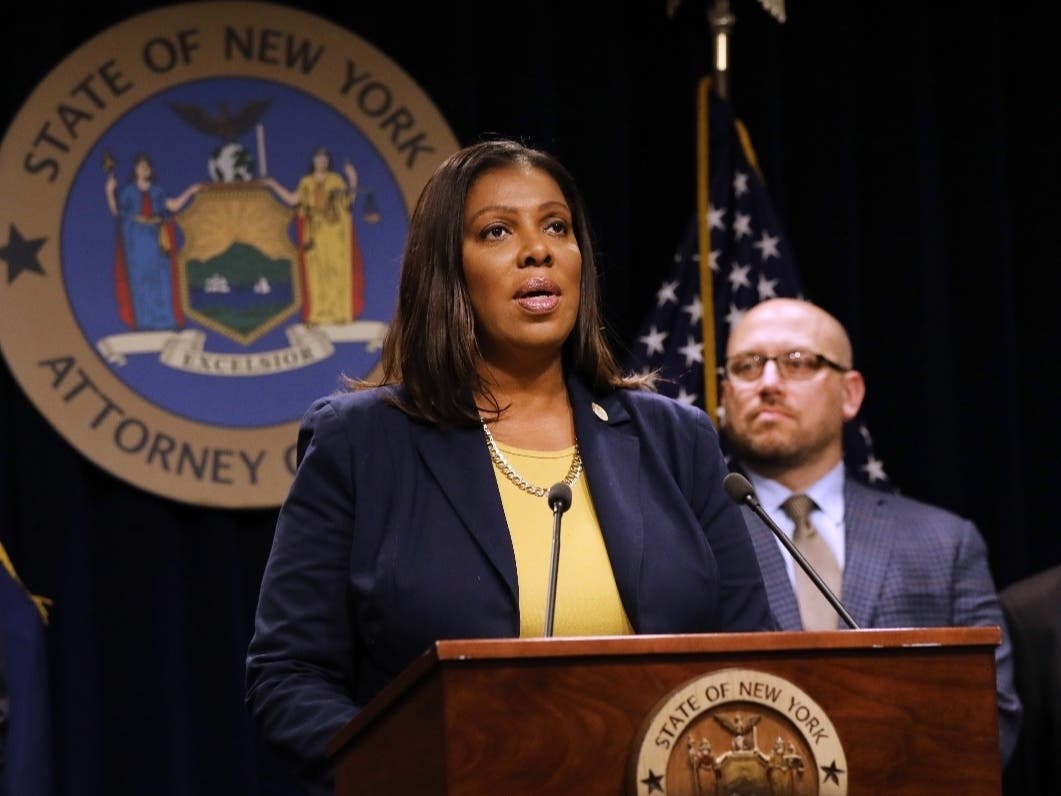
NEW YORK, NY — A probe into the New York City Police Department's behavior during recent protests found that the department is in need of an "entirely new accountability structure," including reducing Mayor Bill de Blasio's role in overseeing the force.
A 57-page preliminary report released Wednesday by New York Attorney General Letitia James outlines several recommendations for the NYPD after a weeks-long investigation into interactions between police and protesters during ongoing demonstrations spurred by the death of George Floyd.
"While OAG’s investigation into NYPD’s response to the protests remains ongoing, it is clear that too many New Yorkers no longer trust the police to do their jobs effectively and fairly," James wrote.
Find out what's happening in New York Cityfor free with the latest updates from Patch.
"To rebuild this trust will take significant time and effort. The OAG has several recommended reforms to reimagine and rebuild this relationship."
James' recommendations include creating a commission of the City Council, Public Advocate, Comptroller and the Mayor, who would have control over the NYPD's budget, disciplinary appeals and leadership.
Find out what's happening in New York Cityfor free with the latest updates from Patch.
The commission would replace the current structure where the mayor-appointed police commissioner has sole power over the department and its policies.
The idea wasn't welcomed by City Hall. Freddi Goldstein, the mayor's press secretary, contended Wednesday that a commission would lack accountability rather than create more of it.
She pointed to NYPD reforms throughout de Blasio's administration, including the reduction in infamous stop-and-frisk practices and more recent reforms from the last few weeks.
“While we thank the Attorney General for her investigation and look forward to reviewing the report in full and working together to further reform policing in this city, we do not believe creating a commission to oversee the NYPD does that," Goldstein said. "...If we want to continue moving forward, more bureaucracy is not the answer.”
James also recommended "redesigning public safety" by decriminalizing certain minor offenses and putting social workers or other agencies in charge of things like mental illness, homelessness and school safety.
"...Police have become the de facto response to many of society’s problems," James writes.
The NYPD's disciplinary and accountability structure also must be overhauled, James said, including giving more power to the Civilian Complaint Review Board and creating clear standards and consequences for the use of force.
The report was already met with disdain from the NYPD's union, whose leader accused James of telling only "one side of the story."
“Instead of an impartial review of the protests and their aftermath, the report...delivers reheated proposals that have been part of the anti-police agenda for decades," Police Benevolent Association President Patrick J. Lynch said in a statement.
"If the goal is to heal the rift between police officers and the public, that won’t be achieved without giving meaningful consideration to the perspective of police officers on the street.”
James' report comes a few weeks after she heard from more than 100 protesters, elected officials and advocates in live hearings about the demonstrations, which began at the end of May and continued even as widespread looting sent New York City into a controversial weeklong curfew.
She also took testimony from NYPD Commissioner Dermot Shea, the PBA and other police associations.
Including written submissions, James' office heard from more than 1,000 people, most of whom told stories of indiscriminate pepper spraying, violent mass arrests and other excessive force at the hands of police, according to the report.
James found that between May 28 and June 7, there were more than 2,000 protest-related arrests, averaging 190 per day.
A "major driver" of the arrests was de Blasio's 8 p.m. curfew, which was in place between June 2 and June 6, James found.
Of all those arrested, 39 percent were Black and 44 percent were white. Black protesters were charged with a felony 16 percent of the time, while less than 4 percent of white protesters and Asian protesters were charged with a felony.
Get more local news delivered straight to your inbox. Sign up for free Patch newsletters and alerts.