Health & Fitness
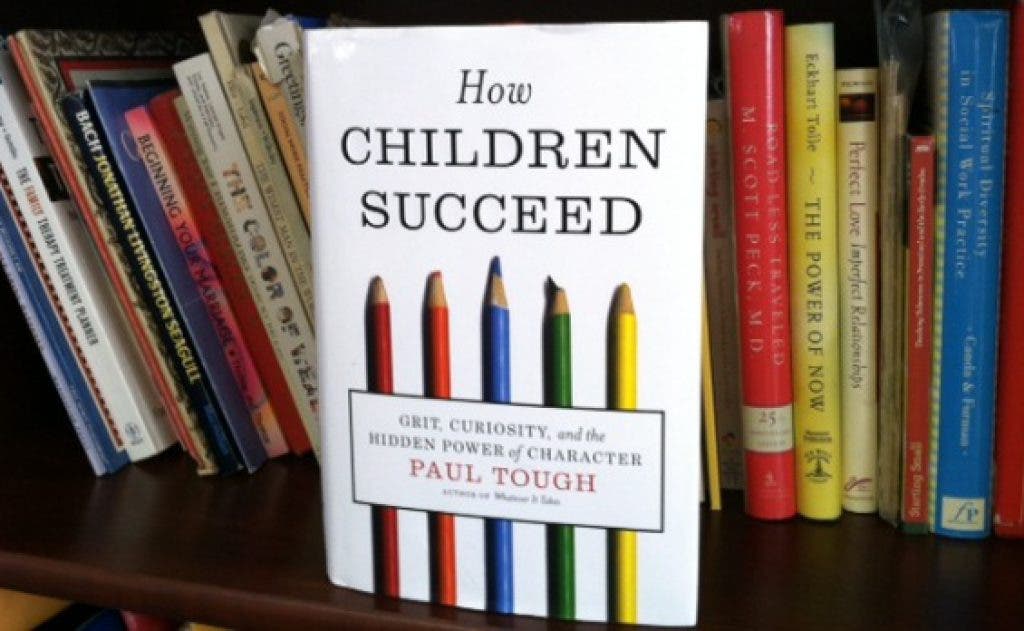
'How Children Succeed' Book Review
We go out of our way to make sure our kids never fail, but should we?
How do we promote the development of skills which result from experiences that we simultaneously condemn?
That was the conundrum that my brain entertained as I read How Children Succeed by Paul Tough. I have long been convinced that resilience is a necessary asset in the lives of individuals who want to progress. But I’ve also seen firsthand that the same adversity which builds resilience can damage. So as I read the book, I kept wondering, “how does one maximize the benefits of hardship while at the same time, minimizing the harm?” I turned every page urgently, excited by what I was learning, comforted by the familiarity of things I had long known to be true, and confused by what it all meant for the work we do with young people.
How Children Succeed: Grit, Curiosity, and the Hidden Power of Character is a thought-provoking piece of work which blends literature review with case study. The book is a compilation of arguments pointing to the value of overcoming adversity as a key strength in the lives and personalities of youth. Through this journey, author Paul Tough highlights a plethora of academic studies and anecdotal descriptions of instances when intelligence and hard work were simply not enough to yield success. The work’s central thesis is that it takes “grit” to move people forward toward victory.
Find out what's happening in New Rochellefor free with the latest updates from Patch.
The problem is the idea of grit is just as elusive as the term. The characteristic is referred to in different ways: sometimes as a skill, other times as a tool, and even further as a gift, trait, strategy or habit.
Yet, despite the variety of terms used, the assertion is the same: there is an undeniable value to “child-size” adversity that, in Tough’s well-researched opinion, must influence the way that youth are cultivated. In fact, using his own parenting as a microcosm of this epiphany he states, “… if we really want him (our son) to succeed, we need to first let him fail. Or more precisely, we need to help him learn to manage his failure” (pg. 183). According to this work, “kids who worked very hard but never had to make a difficult decision or confront a real challenge and so entered the adult world competent but lost” (pg.184) are at a disadvantage. Tough argues that, “what kids need more than anything is a little hardship: some challenge, some deprivation that they can overcome, even if just to prove to themselves that they can” (pg.84).
Find out what's happening in New Rochellefor free with the latest updates from Patch.
And while the book’s evidence of such a theory is overwhelming, one can’t help but feel tugged at the heartstrings by some of the challenges and deprivation that our youth face today. For any employee of the helping professions, the idea that hardship is necessary to produce success is counterintuitive. We walk the earth convinced that decreasing hardship increases a person’s life chances. So how do we reconcile these ideas and incorporate that reconciliation into the work that we do?
Two themes emerged as I contemplated the book’s insights, discussed key points with colleagues and tossed and turned at night hearing my dad’s voice whisper, “what doesn’t kill you makes you stronger:”
- There is a delicate balance between adversity which breaches your sense of comfort and adversity which breaks your sense of spirit. We can help people recover from harm with skills that transfer to social and emotional success without condoning the systematic disempowerment of people that we know can break more spirits than build character.
- The power is not in the experience, but in the “take-away.” We need to better understand the skills, qualities and characteristics that lead to success and how they work, so that we can find ways to cultivate them in youth while still keeping our children emotionally and physically safe.
The larger question for us to answer as a community, however, is how?
TGCW Guest blogger: Dr. Dinorah Nieves