Health & Fitness
The Voice of New Rochelle: '42' in 2013
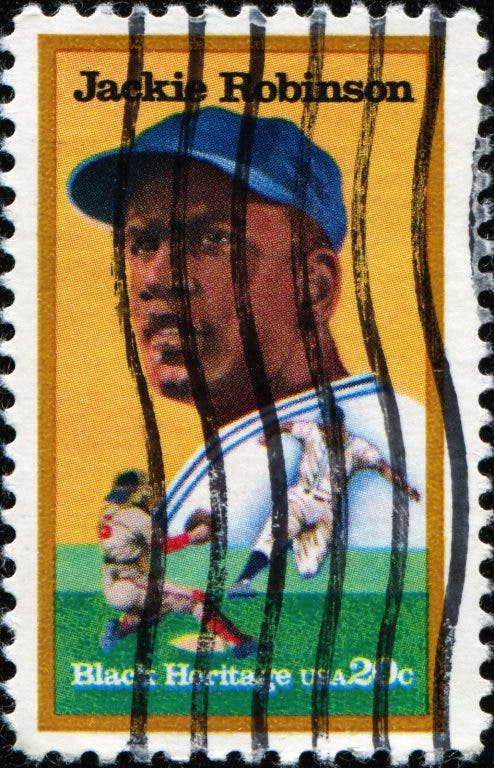
'42,' the movie about Jackie Robinson, has sold out audiences cheering at the screen and clapping at the end. What did the people see that the reviewers didn't?
It has been at least 35 years since I heard people in the movie theater cheer and clap. The last time was during the now cult-like film Death Wish. New York City was a dangerous place in the 1970s, and people did not feel safe on the streets. Each time Charles Bronson’s vigilante character shot some would-be thug, mugger or rapist, the audience would cheer. And they clapped at the end of the show.
So I was startled this weekend to experience a sold out theatre made up of 98 percent white people cheering at comeback lines, and clapping at the end of the movie 42, about the struggle of Jackie Robinson as the first black man to play in the major leagues. Yes, I cheered and clapped, too.
I spent a lot of time after the film trying to understand what I had just seen; not so much the movie, but the reaction. Obviously, I know a lot of white people, and while most—let me say a majority—of them are not racist, most are reluctant to call their fellow Caucasians on their biases. It’s certainly true, that the ignorance that gives way to descrimination is seldom erased from the minds of those afflicted. It is kind of like trying to turn a pickle back into a cucumber. So many people don’t try. They go along to get along, or they don’t want to cause family discord.
Find out what's happening in New Rochellefor free with the latest updates from Patch.
Somehow, theater-goers got something the reviewers missed. Most of the reviews were too focused on the manner in which the specific scenes unfolded and the lack of what they felt was under- or over-dramatizations of certain events. Too focused on movie making and whatever is their boilerplate way of looking inside out at a film, they failed to understand the reactions of decent human beings to simple truths. They see a man ridiculed and called the "N" word unmercifully; to witness the coldness of teammates and white fans of the day toward this heroic man; to observe authorities threaten to arrest Robinson while in the field because he was black; all these scenes were truthful, heartbreaking and generated tension and discomfort in the theater that could only be released in overt reactions to Robinsons triumphs.
People who won’t tell their brother-in-law to stop using the "N" word, were cheering at the screen.
Find out what's happening in New Rochellefor free with the latest updates from Patch.
In our politically correct, racially timid world, no one talks about race sincerely. People are unable or unwilling to separate their feelings from what they believe, or feel inadequate to engage in the nuanced debate that is necessary to do so. Most of us are sheltered from the reality that is prejudice in the United States. It goes beyond the black, white, extending itself to Latinos, Native Americans, Arabs, women and gay people. But the movie succeded in making you feel what it must be like to be ostacized. The anonymity of the movie house also made it OK to cheer justice and condmemn descrimination openly.
It was a pleasant surprise. But it was also a grim reminder about how far we have to go. Some of the reasons used for not letting blacks play baseball are eerily similar to the reasons we had to not let gays in the military. Slogans stressing that allowing blacks to use white facilities or playing baseball with whites would endanger the "American way of life," are all too commonly heard from the extreme right with respect to gay marriage, science and immigration
On some of these more contemporary issues, I look forward to their day, when the reviewers don’t get it and the audience cheers.