Health & Fitness
The Voice of New Rochelle: Precious Sons
The thousands of men and women going off to war and dying, or coming home badly damaged, represent a bias of sorts. They are not "resources." They are someone's precious child.
Authors of books, columnists and bloggers write extensively and with great justification about the misogyny which has existed over the millennia. The world still aches with the unequal roles of men and women in these early years of the 21st century. Many women are still without rights in the largest parts of the middle-east. In India and South Africa, the crime of rape does not receive the attention or justice that a civilized society demands. And most of our great religions, stuck in the mud of antiquity as they are, still relegate women to second-class status.
Here in America, the freedom to express and to petition has brought the feminist movement a long way. We may well see our first woman president in this decade, and the drums continue to beat for equal pay, opportunity and freedom with respect to health-care choices.
This is all well and good. Somehow, as the years have unfolded, the necessary smoke and dust stirred up by the women’s struggle has blinded us, desensitized us really, to a different problem, that of young men sent off to war, many to return in flag draped coffins, or with broken bodies or souls. The essence of this problem is that, also for millennia, men have been expected to fight and die for their country, and we have become hardened to it. I cannot help but think of Adolf Hitler’s words, in the movie Downfall, when in response to a general’s plea in the closing, losing days of the World War II, that young men were dying needlessly: “That’s what they’re for.” The heartless madman was not all that more callous, perhaps, then society overall has become.
Find out what's happening in New Rochellefor free with the latest updates from Patch.
This notion occurred to me recently after having spent a long weekend with my grandson. I did not have a father or any grandfathers, nor did I have a son of my own. My brother was considerably older when I went to live with him, and I did not know him when he was a child. Like most boys, I was brought up to believe that a man must be strong and hard, and that it was indeed his role to fight our wars and die, in the same way it was a woman’s right of passage to bear children.
It is fair to say that these roles still fall into these categories. But where I was remiss, and so to, I believe are many others, was in recognizing the unimaginable pain of mothers and fathers who lose children in war, or as the result of collateral damage. The efforts by the military, particularly the reverence shown by funeral platoons and the guards at the Tomb of the Unknown Soldiers, are wonderful—if such a word can be used for such a solemn practice. But I don’t think we citizens give enough thought to the enormity of the loss. I am late to the party, but now I do.
Find out what's happening in New Rochellefor free with the latest updates from Patch.
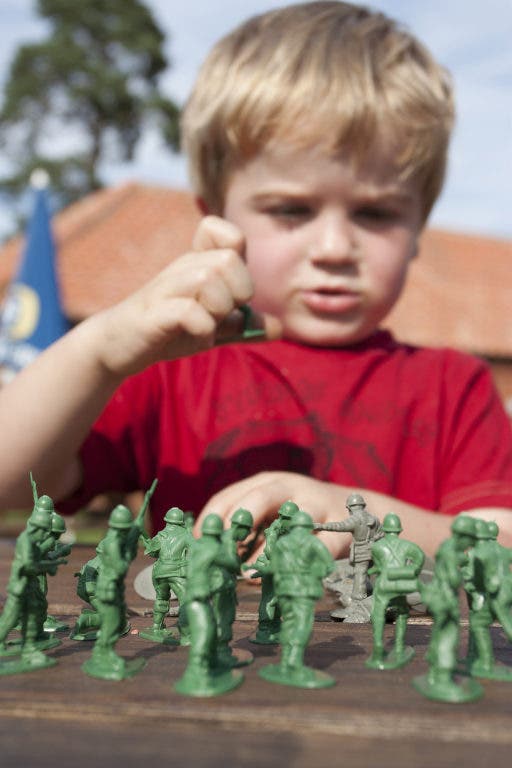
As I have watched my grandson grow to middle school age—he will soon be 11—I have witnessed his curious and sensitive soul play with his toys, learning to read and write, watching Spiderman movies and asking about the workings of the world. The love in his heart and his innocent and sometimes troubled wonder about life is quite enough to hold the wall that keeps what hope I have for a higher power from spilling over into despair. I love him without question or condition as I did my daughter before him.
This boy! This boy may one day decide that he wants to be marine or a sailor or a pilot. This boy who may well elect that this country needs him, and that he has evolved upon his soul the toughness and insulation necessary to risk his life for others—enough to allow that love in his heart to fuel his courage.
Then, ignorant I will know what it is to risk my inner peace inside the body of another. My grandson, like all the other sons, grandsons and now their sisters, might not come home. It is when I contemplate this that I conclude two things. We have no business going off to a war that is not absolutely necessary. Second, everyman who dies on the battlefield is still that loving soul who wondered about life, hoped for his future, and was hopelessly loved by others.
We need to think about this more.