Health & Fitness
Tree Talk: Planting for Pollinators
Native plants that attract pollinators can make beautiful healthy gardens. These plants help support the ecosystem that brings food to our tables.
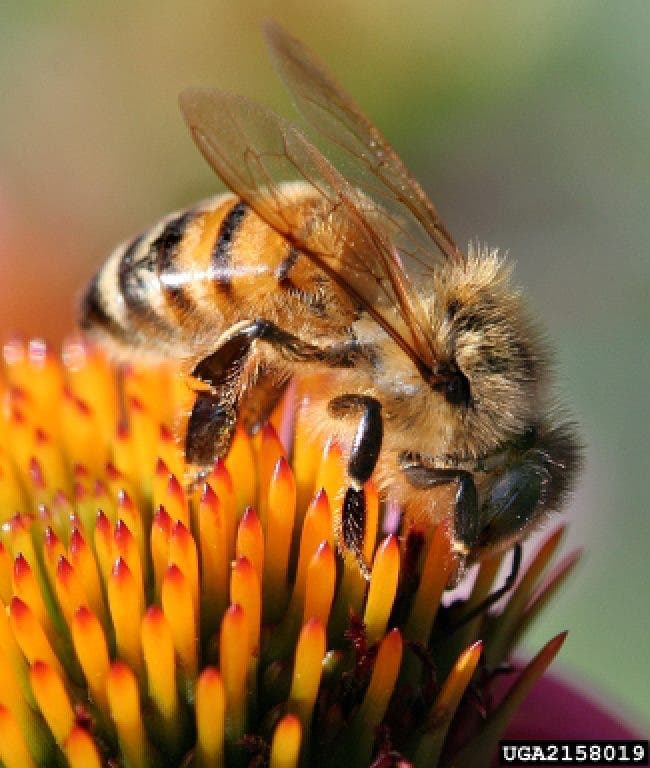
Do you have a favorite pollinator? Most of us would choose butterflies or hummingbirds. Bees are much less popular than their non-stinging competitors, but they are vital for the perpetuation of our environment.
Bee populations have declined dramatically, from disease and from changes in how and what we plant. The decrease is so precipitous that farmers are seeing declines in their output. Just as more of us have come to appreciate the value of locally grown produce, it’s becoming more difficult to attract enough pollinators to get the job done.
What has changed? As we build homes and landscape our yards, we’ve decreased the habitat that pollinators love. Short of turning back the clock, is there anything we can do? Yes. We can plant more native plants.
Find out what's happening in New Rochellefor free with the latest updates from Patch.
There’s a very direct and simple correlation between native plants and native bees. While some bees are able to adapt to plants whose origins were on other continents, many simply can’t. You can often walk through a garden and identify native plants by the (quite literal) buzz of activity compared to their non-native neighbors. When we add more native trees, shrubs and perennials to our yards, we are giving a boost to an ecological system that puts food on our tables. As we provide a more diverse buffet of plants, we help to promote a diversity of bee species as well.
So, as you consider what to add to your yard this year, think about adding some of the beautiful, pollinator-friendly plants that are native to our area. Native plants also tend to be more hardy and disease-resistant as well.
Find out what's happening in New Rochellefor free with the latest updates from Patch.
Here are just a few examples: coneflowers, rudbeckia, hyssop, coreopsis, Joe-pye weed, sunflower, lupine, clethra, abelia, wild roses, poppy, penstemon, salvia, aster, goldenrod and sedum.