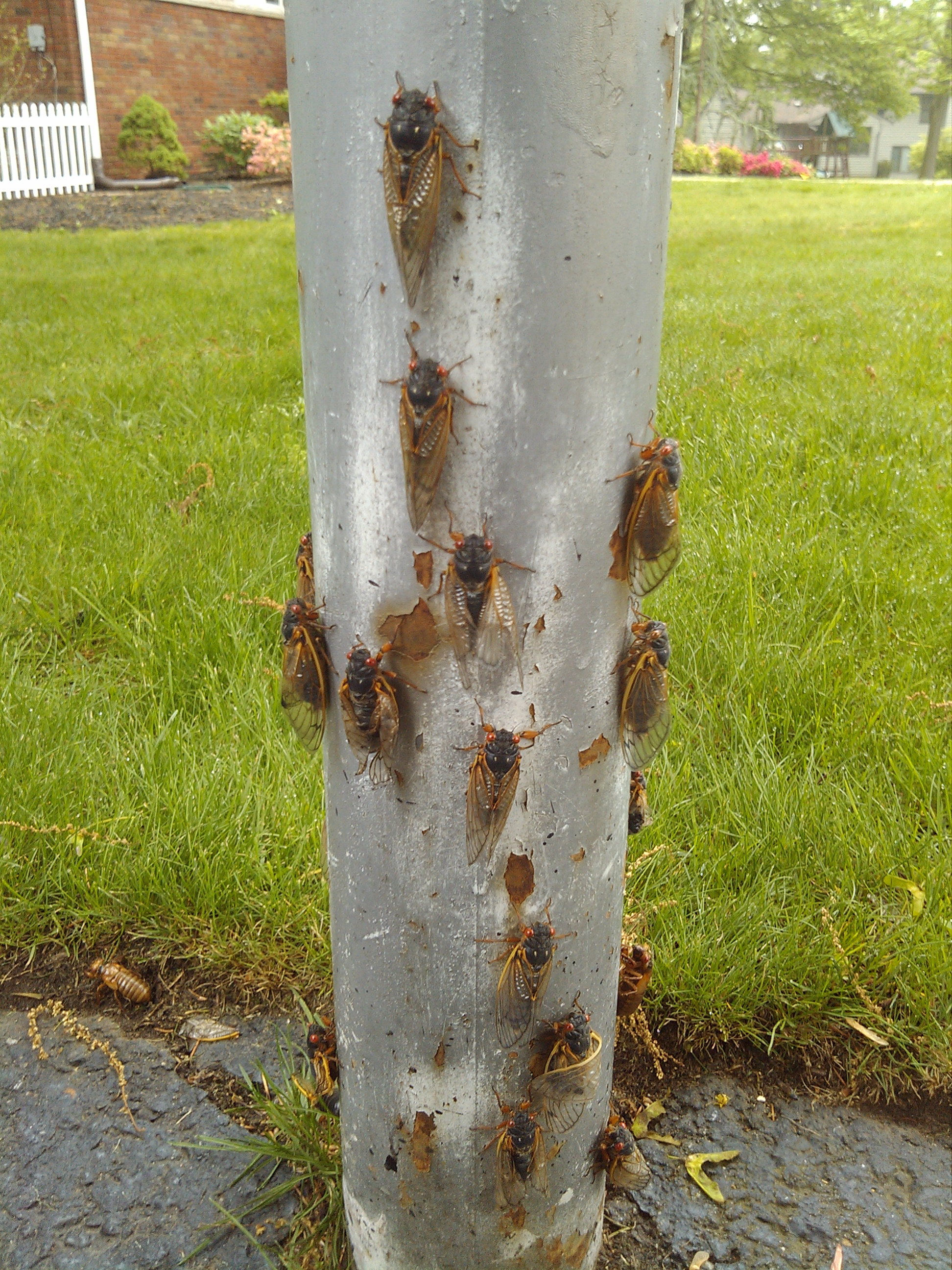


This is the year of the Magicicada in our area. In May, they emerge from the ground, spend several weeks noisily chirping to attract mates, lay their eggs and die. Their children will crawl out of the ground in 2030.
There are 2 types of Periodic Cicadas in the U.S.: 13 year and 17 year. Each group has several large “hordes” that are synced to appear in different years. Our horde of 17-year cicadas is emerging now. We’ve had sightings throughout our region.
The life cycle of the 17-year cicada is odd, even by insect standards. When the soil warms to a steady 64°, wingless cicada nymphs emerge from holes in the ground near deciduous trees. The nymphs stay in the leaves for a couple of days while their bodies harden, then crawl up the nearest tree and shed their skins, emerging as adult, winged cicadas. In less than 2 months, they will mate, lay their eggs in the twigs of a tree, and die. The eggs soon hatch and the larvae fall down to the ground where they crawl into the soil, find a juicy root and wait out the 17 year cycle.
17 year cicadas are 1” long (or more), red-eyed, and have translucent orange-veined wings. They are harmless to us (aside from the “ick” factor), and cause little damage to mature trees. Young deciduous trees and shrubs can be vulnerable, however and may be covered with netting to keep the cicadas from splitting open twigs to lay their eggs.
Cicadas are usually more of a nuisance than a threat: a horde of cicadas is annoyingly loud, drips honey dew from the trees, bumps into people and windows and leaves thousands of molted skins in our yards. Is your property home to 17 year cicadas? Due to building, paving and tree removal, areas that have been developed have often lost their 17 year cicada colonies. Properties in less disturbed areas may be home to much larger populations.
What should you do if the horde visits your yard? Vulnerable trees and shrubs can be covered with small-holed netting, tied securely around the trunk at the bottom. Sometimes a ring of aluminum foil will prevent them from crawling up the trunk. Once they are in the tree, it becomes difficult to eliminate them. If you are concerned, I suggest you contact an arborist.
Coping with a cicada horde isn’t fun. People have been known to wear earplugs against the noise and carry umbrellas against the rain of honey dew. At least you can be sure it will take 17 years before you have to do it again.
If you want to learn more about these strange and fascinating insects, they have a fan club at: http://www.cicadamania.com. There’s lots of information as well as an interactive map of sightings.