Politics & Government
Trustee Pitches Plan To Designate Greenport 'Welcoming Community' To Immigrants
"Please join me in working to keep our residents safe." — Greenport VIllage Trustee Doug Roberts says, with immigration raids nationwide.


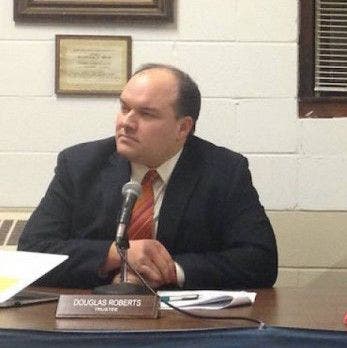
GREENPORT, NY — As immigration raids and sweeps across the nation have many undocumented individuals living in terror, Greenport Trustee Doug Roberts is continuing his efforts to protect immigrants in the village.
Roberts' monthly report to the village board will include a proposed resolution declaring the Village of Greenport a "welcoming community."
To that end, he said, Roberts is requesting that the board "join me in supporting this symbolic but important gesture to communicate to our residents that we honor diversity and recognize the contributions of immigrant residents to our economy and community. In adopting this resolution, we not only send a message to our own community, we set an example for governments across the East End and beyond."
Find out what's happening in North Forkfor free with the latest updates from Patch.
The resolution, he said, would state that the community's success depends on ensuring all Greenport residents feel welcome, and that "foreign-born Greenport residents and US-born residents transplanted to Greenport are a vital part of our community — bringing fresh perspectives and new ideas, starting businesses, and contributing to the vibrant diversity that we all value."
The resolution will say that the village honors "the spirit of unity that is bringing neighbors together and making our community the kind of place where diverse people from around the nation and world feel valued and want to put down roots; and . . . regardless of where we are born or what we look like, we are Greenport residents united in our efforts to build a stronger community."
Find out what's happening in North Forkfor free with the latest updates from Patch.
Resident Privacy Protection Policy
In addition, Roberts is poised to request a "Resident Privacy Protection" policy that would prohibit village staff and officials from asking any resident to disclose his/her immigration or residency status, and prohibit village staff and officials from disclosing to any outside agency any personal or private information about any village resident, "including but not limited to, personally identifiable information, immigration status, criminal history, address, names of family or friends, or any other information that is not part of the public record, except when specifically ordered to by a warrant issued by a court of law."
In addition, the policy would direct village staff and officials "to leave matters of immigration and residency to the agencies charged with enforcing those matters" — for example, United States Immigration and Customs Enforcement, or ICE — "and promises to comply with any and all investigations by such outside agencies only in accordance with this policy, court-issued warrants, and the laws" of the State of New York and the United States of America, he said.
Roberts pointed to studies indicating that a "combination of adopting a welcoming policy and a privacy protection policy will increase public safety because immigrant residents will feel more comfortable reporting crimes to authorities." One study, he said, noted that 45 percent of Latino people surveyed said they were less likely to report crimes or violations because they are afraid authorities would ask about their immigration status.
"Even immigrant advocates, and I consider myself one, know that the present federal immigration policy situation is challenging because so many people are here without having cleared legal hurdles. That is something that needs to be addressed at the federal level. As a local government, our job is to take our residents at face value and serve their needs without prejudice as to their skin color, national origin, gender, sexuality, etc.," he said.
Immigration policy and its enforcement is not a village issue, Roberts said. "If we make a clear statement to our community as such, we should see an increase in the reporting of code violations in buildings that create unsafe conditions for residents. This should reduce overcrowding and improve safety for all of our residents. Please join me in working to keep our residents safe."
Sanctuary designation discussed
Recently, with fears escalating rapidly among the immigrant community, many who attended a "Synergy Greenport" meeting asked if it were possible for the village or Southold Town to be designated a sanctuary and offer a safe haven.
"Synergy Greenport," was described by organizers as "an open and respectful conversation between the police and the community of Greenport."
Southold Town officials and the Anti-Bias Task Force, as well as Greenport Village officials, hosted the event, aimed at creating dialogue during a time when the nation stands divided by tensions between law enforcement and sometimes disenfranchised communities.
Greenport librarian Poppy Johnson kicked off the discussion by thanking Greenport Village Trustee Doug Roberts for taking a public stand to protect immigrants.
Roberts vowed: "To my immigrant neighbors and constituents: I will be vigilant and I've got your back."
She asked if the village could make an official statement declaring itself as a sanctuary.
Johnson recalled 2007, when an ICE raid in Greenport had officers "dragging people out of their houses in the middle of the night. We all felt helpless and hopeless. . . We may consider ourselves a sanctuary but we have to figure out how to actually be one."
Greenport Village Mayor George Hubbard said he's not sure the village could be a sanctuary because it doesn't have its own police department; Suffolk County is a sanctuary, he said.
Some asked if Southold Town would consider researching how to become a sanctuary. Southold Town Police Chief Martin Flatley said any such decision would have to be made jointly with the town and village since they share a police department.
According to former Greenport Mayor Dave Kapell, who responded to the question after the meeting, since Greenport Village no longer has its own police department, and the definition of a sanctuary city is one with a police department that "refuses handover custody of arrestees. . . This is a moot point."
Councilman Bill Ruland and Jim Dinizio were at the meeting; Dinizio said the town has never considered it and he'd need information and much discussion, as well as talks with the ABTF.
Dinizio, who said he voted for Donald Trump, said he did so exactly because solutions needed to come from the federal level so people weren't being dragged from their homes in the middle of the night.
"I voted that way because our country is in such a state of disrepair," Dinizio said. "We have people we have elected that have done nothing. They've allowed people to come across our borders and live in the state they're living in now. . .not knowing if someone will knock on their door tonight and take their family away. I'm not saying I don't want them here. I'm saying we need to do something" on the federal level "to settle whatever that dispute is." Questions on whether or not those people are illegal or should be allowed to stay "are not for a town to consider, in my opinion," he said.
Most of town business involves issues such as town paving, Dinizio added. Of the idea of a sanctuary, he said, "At this point in time we have never addressed that and I don't know how we possibly could. I don't live in that world."
In an email after the event, Southold Town Supervisor Scott Russell, who was not at the rescheduled Synergy event due to a prior speaking commitment, addressed the question.
"I can't speak for the rest of the board but, no I wouldn't support Southold becoming a 'sanctuary town'. Federal issues are best left to federal officials to sort out," Russell said.
Flatley said the police department participates in a Protective Enforcement Program and if someone is arrested and convicted, their fingerprints are forwarded to ICE; whether or not someone is deported depends on a set of priority levels including if they are a threat to national security or have committed a "heinous felony or gang related crime," he said.
If a person's charge is dropped from a finger-printable to non-printable offense, those prints don't stay in the system, he said.
"Our department is here to protect and serve our community. I have no plans on dedicating officers to do any kind of immigration work," Flatley said. But, he added, "We have a President now — none of us are sure where he's going with immigration and how he's going to get there."
Johnson asked if the Southold police would be informed by ICE if additional raids were planned.
Greenport resident Oscar Cruz asked, if there were to be an ICE raid, if ICE officials even had an accurate list of who was living in rentals, since oftentimes, the offenders may have already moved. Dinizio said he did not believe the town should keep a list of renters.
Loretta Hatzel-Geraci, director of the North Fork Parish Outreach, said Cruz didn't believe there had to be a list of rental occupants but if there was one, it should be accurate so innocent people weren't woken up in the middle of the night in a raid after the alleged criminals had moved on to a new location.
Cruz added that such raids hurt the children of immigrants born in the United States. "In the Latino community, a lot commit crimes," he said. But those criminals do not represent the whole of the Latino community, he said. "We try to be good people, good neighbors. We love America. We love this country. We try to get involved."
Down the line, the possibility exists that a decision might be made on a federal level that Southold has to deputize officers to execute such orders. "But we have no plans to do that right now," Flatley said.
Some residents asked about the the rights of immigrants if ICE should come; they agreed public education needs to ensue so that all are aware of their rights.
A community in fear
Jim Shaw of Greenport said he works as an electrician and many in the Hispanic community discuss their fears during lunch. "They are extremely nervous."
Cutchogue business owner Anne Trimble spoke passionately about her employees, who represent an array of nationalities and all have green cards and drivers' licenses.
"I'm appalled that in 2017 we are dealing with this. They are terrified of what's going to happen to them in this new environment we have."
She added that immigrants are critical to the local canvas.
"We would tank as businesses, the North Fork would tank, without our immigrant population," Trimble said. "I want to assure my staff when they come back in the spring that they can feel safe in the community, walking and shopping."
Her remarks were met with loud applause.
Some employees, she said, went into a local restaurant after Trump was elected and were told, "Trump's in. It's time for you to go."
Another Mattituck resident said many immigrants have taxpayer identification numbers in lieu of Social Security numbers. "They are not citizens. They are taking their taxes without any benefits."
One of her workers, she said, began picking grapes. Now his wife has three stores and they have a nanny for their three American born children. "This man is the American dream. It behooves us to embrace them."
Mark Woolley, representing Congressman Lee Zeldin, said Zeldin has "zero tolerance for bias at all levels." He said both the congressman's Patchogue and Riverhead offices are working with residents and discussing concerns, as well as issues such as tourist visas integral to the East End's resort economy.
"You should feel free, citizens or non-citizens, to approach us," he said.
Roberts addressed the crowd. "This is a community conversation," he said. He added that he didn't like a word that he said Zeldin used, which was "they," in reference to immigrants. "There is no 'they.' You're here, we're here. We are here. The way we work on this as a community is to use the word 'we.' We are all here."
Eric Melrose, a small business owner in Southold, said he's in the construction business and there's "a lot of fear. A lot of uncertainty on the federal level, about what this already means. 'If I get pulled over, what will happen?'" He said while he didn't mean to be "inflammatory," there should be a plan to inform the public about their basic rights and clear up the gray areas.
"The politics of fear is driving this nation right now — and we need to stop."
Councilman Bill Ruland agreed, mentioning the last line of the Pledge of Allegiance. "Liberty and justice for all. Not some. . . .All walks of life. The common thread here is people who care. That's the important thing. In the meantime we must be aware. To define who we are is how well we can come to a consensus."
Get more local news delivered straight to your inbox. Sign up for free Patch newsletters and alerts.