Health & Fitness
What is solar emergency preparedness?
Why wouldn't you add emergency preparedness to your solar system? It is very cost-effective and will allow your system to power your critical load during any outage.

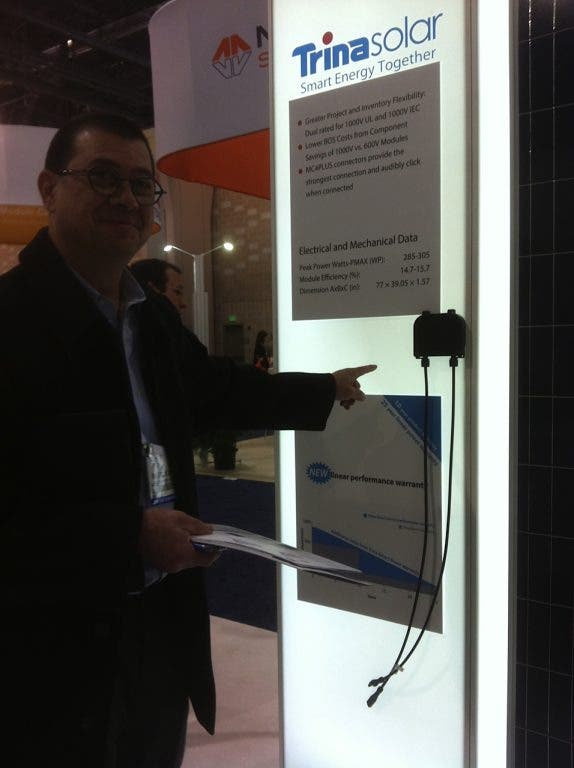


Earlier this week, we went down to the PV America 2013 East conference in Philadelphia to soak up the newest ideas in solar system design as well as the latest developments in solar products. (We did run next door for some awesome cheesesteaks at the Terminal Market too!)
Solar emergency preparedness was a big topic of conversation and of a special session.
“Sandy has raised the role that solar and DG (distributed generation) can play in energy supply,” noted Laurie Reilly of Sustainable CUNY.
Find out what's happening in Ossining-Croton-On-Hudsonfor free with the latest updates from Patch.
“NREL called us to ask how solar systems in the city had fared during Superstorm Sandy,” continued Reilly.
“The 600 solar installations in New York City did just fine with virtually no damage. The inverters did their job and shut down when the grid went down.”
Find out what's happening in Ossining-Croton-On-Hudsonfor free with the latest updates from Patch.
In short, these solar systems were no help to anyone, when the electricity was most needed: As designed under UL 1741 standards, the inverters cut off supply to the building from the roof top solar to avoid back feeding the grid when the grid is damaged.
Fifty percent of the PV (photovoltaic) systems in New York City were located in neighborhoods where the power went out during Sandy. This means that 201 systems with a combined 5.5 megawatts of generation capacity were out of commission for the duration of the outages.
“On average, … that represents 6,500 kilowatt-hours per day of solar energy that was all lost,” explained Tria Case of Sustainable CUNY.
That is a LOT of electricity that could have charged a LOT of cell phones!
How can we tap a solar electric system during an outage?
The solutions lie in how to handle the solar system’s inverters. These key components change the DC current from the solar panels into AC current for building use. Inverters constantly monitor the grid for voltage and frequency. They need to “see” stable AC current in an electric service in order to send their new AC into that service.
Solar Emergency Back up: AC coupling with variable speed generator
Lyle Rawlings of Advanced Solar Products described is a solution to supply electricity during the day in the event of an outage. Rawling’s design is elegant, but does access to a variable speed fossil fuel generator. This design worked flawlessly at a large site in northern New Jersey that stayed lit throughout the entire post-Sandy outages.
- If you have an existing solar system, you will need a second inverter, an emergency service panel supplying critical load appliances, and a variable speed generator (gas, propane or diesel).
- Your solar system’s existing inverter is pushing electricity to your main panel. The new second inverter will route solar or generator electricity to the new emergency panel.
- You will plug your diesel generator into the new emergency panel for nighttime power and to supply at least a minimal AC current 24/7. In other words, your generator will run in slave mode at a low “idle” setting most of the day just to show the inverters some AC voltage and frequency.
- That signal will tell the second inverter to let the solar electricity keep flowing to the critical appliances.
This method of AC coupling “fools” your inverters into thinking the grid is still up–in your building at least–while disconnecting from the grid at large as required under UL 1741 rules.
Solar Emergency Back up: AC coupling with batteries
If you are planning a new solar system, you can achieve AC coupling by adding electric storage (a.k.a. solar + batteries).
- You will need the same electronics as above (second inverter, etc) and but the variable speed generator is optional and is replaced by a battery bank.
- Under normal conditions, the grid supplies the emergency subpanel with AC supply. When the grid drops out, the batteries supply that AC voltage (via the second inverter).
- The solar + battery system’s electronics disconnect your service from the grid and main panel and inverts DC power from the PV array and batteries to AC power and sends that to the emergency panel.
- The solar + battery system charges the batteries with power from the PV array during the day.
- The solar + battery system can charge the batteries from a fossil fuel generator, which will only need to run for limited time to do so.
- The system monitors the grid for reconnection.
As above, this solar + battery method of AC coupling keeps the needed AC voltage available for the solar system's inverters to operate.
Darren Hammell of Princeton Power Systems described the cost of solar + battery back up as very price competitive.
“The price for PV plus batteries plus electronics today is about the same as is was for PV alone just 5 years ago in 2008,” noted Hammel, as the solar module prices keep falling.
“Batteries add between $2 to $3 per watt. A diesel or natural gas generator–depending on size–adds $0.50 to $2 per watt. And the electronics–such as inverters that are off-grid capable and battery compatible–have a negligible cost difference between 2008 and today.”
Both these solar emergency preparedness methods–Solar + variable speed generator or Solar + batteries– are fully compliant with anti-islanding regulations of UL 1741 and will keep your building’s critical load on during the next outage.
In short, why wouldn't you add emergency preparedness to your solar system?